Explore this post with your favourite AI tool:


Share this article with AI tools to summarise, remember, or explore the content further.
Managing the risk of a legionnaires disease outbreak remains a critical priority for facilities managers and building owners nearly five decades after the disease was first identified. This landmark case in Philadelphia changed the landscape of building water safety and established the foundation for modern compliance standards across the globe.
The 1976 American Legion convention at the Bellevue-Stratford Hotel in Philadelphia was intended to be a celebration of the US bicentennial. Instead, it became the site of a medical mystery that would redefine our understanding of environmental health. Within days of the event, 182 veterans were hospitalised with severe pneumonia; ultimately, 29 people died from what was then an unknown pathogen.
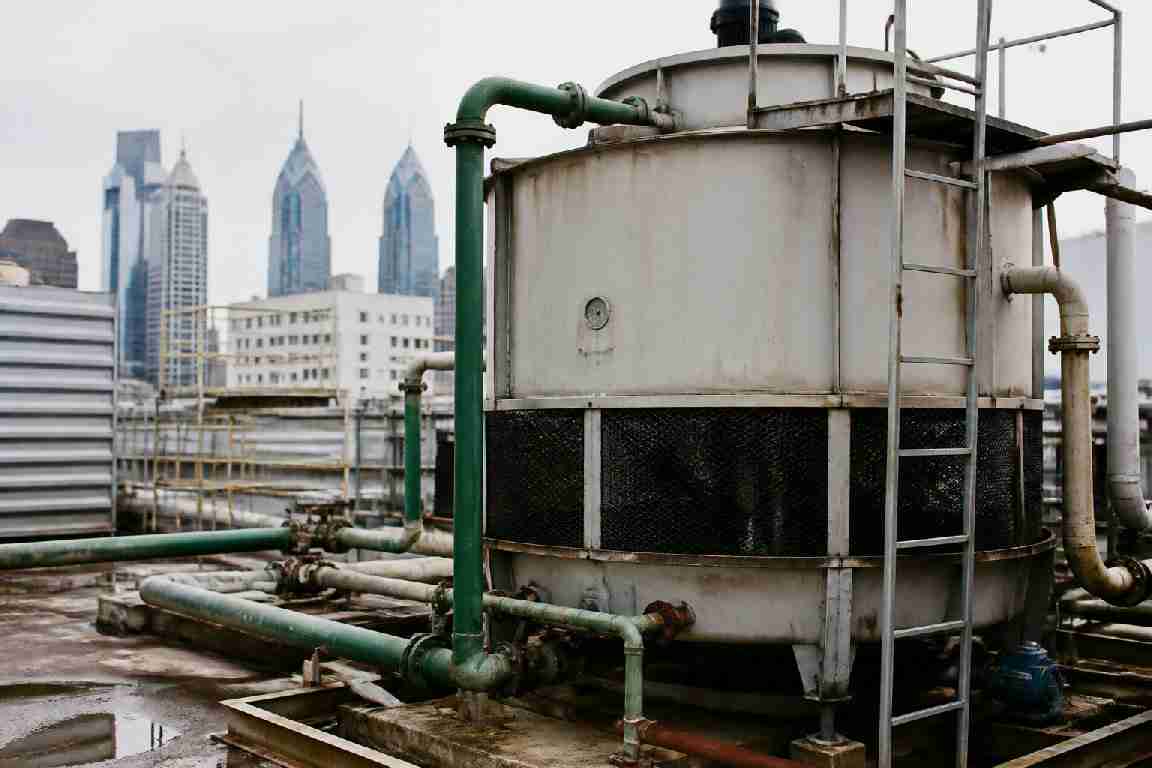
The scale of the illness sparked a massive investigation by the Centers for Disease Control and Prevention (CDC). It took months of painstaking laboratory work to isolate the cause: a previously unidentified bacterium, eventually named Legionella pneumophila. Researchers discovered that the bacteria had survived and multiplied within the hotel’s cooling tower, eventually being dispersed into the air and inhaled by those at the convention.
While this event took place in the United States, its legacy is deeply felt in the UK regulatory landscape. The Philadelphia case proved that large-scale buildings could unintentionally become incubators for deadly respiratory pathogens. It shifted the focus of public health from person-to-person transmission to the way we design, maintain, and manage complex water systems in built environments.
The lasting impact of the 1976 legionnaires disease outbreak on modern safety
Before the Philadelphia crisis, there was little understanding of how HVAC systems and water storage could harbour bacteria. The investigation revealed that traditional cleaning methods were insufficient for complex plumbing systems. Today, this knowledge forms the backbone of the Health and Safety Executive (HSE) Approved Code of Practice (ACOP) L8, which governs the control of Legionella in British workplaces.
The Philadelphia incident highlighted that the culprit was not just the presence of the bacteria, but the conditions that allowed it to thrive. Stagnant water, temperatures between 20°C and 45°C, and the presence of nutrients like rust or scale are the primary risk factors. This remains as true today as it was in 1976, which is why UK dutyholders must maintain rigorous temperature controls and regular flushing regimes.
Despite 50 years of scientific advancement, the threat has not disappeared. Modern building systems are often more complex than those found in the 1970s, featuring decorative fountains, spa pools, and intricate cooling networks. Each of these represents a potential aerosolisation point if the underlying water management plan is flawed or neglected.
Experience from a legionnaires disease outbreak often shows that the failure isn’t just mechanical; it is administrative. In many historical and contemporary cases, the equipment might be capable of safe operation, but the lack of a clear “responsible person” leads to missed inspections or incomplete monitoring logs. This human element of risk management is where many UK organisations still find themselves vulnerable during audits.
For those managing property portfolios, the lessons from Philadelphia suggest that complacency is the greatest risk. The bacteria are naturally occurring and ubiquitous in environmental water sources. Compliance is not a “one and done” task but an ongoing cycle of risk assessment, water testing, and system maintenance that acknowledges the ever-present nature of the threat.
Climate change is adding a new layer of complexity to this challenge. Rising ambient temperatures and increasingly frequent heatwaves make it harder to keep “cold” water below the 20°C threshold. When water temperatures creep up, the risk of a legionnaires disease outbreak increases, requiring facilities teams to be more proactive with insulation and pipework routing than they might have been in previous decades.
Building owners must also consider the risks associated with building occupancy levels. The shift towards hybrid working has left many office blocks with low-flow areas or “dead legs” in the plumbing. Without a repurposed maintenance strategy to account for these changes, the conditions that led to the 1976 disaster could easily be replicated in a modern city centre office.
The American Legion case also underscored the importance of transparency and rapid response. In 1976, the “mysterious” nature of the illness caused significant public alarm. Today, UK employers and landlords are expected to have emergency procedures in place. This includes knowing exactly how to shut down a suspect system and having clear records ready for environmental health officers or the HSE should an investigation occur.
Looking back at Philadelphia serves as a sobering reminder that many of our current safety protocols were written in the wake of tragedy. The 1976 legionnaires disease outbreak taught the world that the air we breathe indoors is only as safe as the water systems running through the walls. For the modern compliance manager, staying on top of Legionella control is not just about avoiding fines—it is about ensuring that a building’s infrastructure never becomes a threat to its occupants.