Explore this post with your favourite AI tool:


Share this article with AI tools to summarise, remember, or explore the content further.
Efforts to improve railway safety culture across major transit networks remain a top priority for operators looking to mitigate high-risk operational hazards. By implementing proactive engagement programmes, major infrastructure projects are moving beyond mere compliance to embed safety as a core organisational value.
Qatar Railways Company (Qatar Rail) has launched a new internal initiative designed to strengthen its health and safety framework. The programme focuses on enhancing employee well-being and operational security through a series of structured workshops, site inspections, and leadership engagement sessions. By fostering a more transparent environment for reporting risks, the operator aims to reduce the likelihood of incidents across its network.
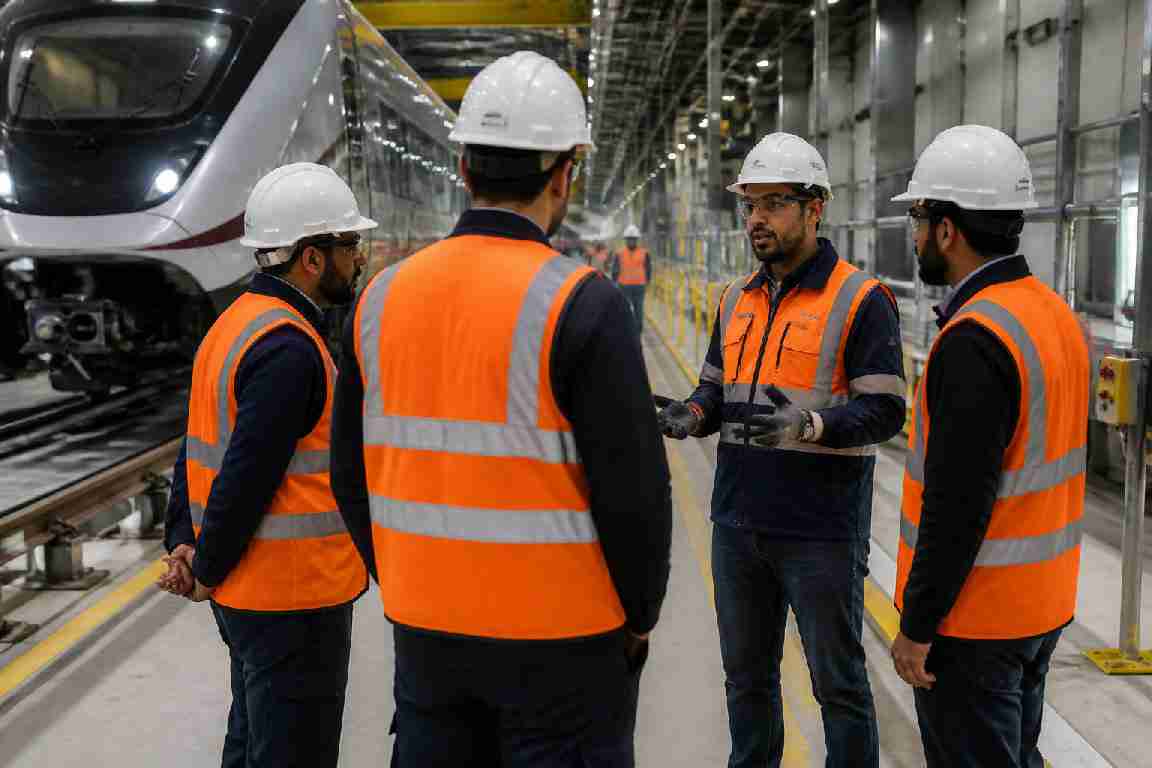
The initiative, which involves both direct employees and third-party contractors, highlights the growing trend of “active leadership” in high-risk environments. Senior management at Qatar Rail have been participating in frontline safety tours, a move intended to bridge the gap between boardroom policy and the reality of day-to-day maintenance and operations. This approach is similar to the visible felt leadership models often advocated by UK safety professionals in the rail and construction sectors.
For UK dutyholders and facilities managers, the Qatar Rail case serves as a reminder that safety in complex environments is never static. Whether managing a light rail system, a heavy rail terminal, or a large-scale infrastructure project, the transition from a reactive “tick-box” culture to a proactive one is essential for long-term risk management. The programme specifically targets the identification of “near misses,” encouraging staff to speak up before a minor oversight escalates into a major failure.
Building a resilient railway safety culture through engagement
A central pillar of the new programme is the empowerment of the workforce. Rather than viewing safety as a set of restrictive rules handed down by a compliance department, Qatar Rail is attempting to frame it as a shared responsibility. This shift is critical in environments where human error can have catastrophic consequences, such as during trackside maintenance or when managing high-voltage electrical systems.
The operator has introduced reward and recognition schemes for teams that demonstrate exemplary safety behaviours. While some health and safety purists argue that rewarding safety can lead to the under-reporting of minor injuries, Qatar Rail’s focus appears to be on rewarding the identification of hazards and the suggestion of practical improvements. This nuance is vital for maintaining a healthy railway safety culture where information flows freely in both directions.
Training sessions delivered as part of the programme have been tailored to specific roles, ensuring that technicians, cleaners, and security staff understand the unique risks associated with their work areas. In the UK, this aligns with the principles of the Management of Health and Safety at Work Regulations 1999, which require employers to provide adequate health and safety training that is relevant to the specific risks employees are exposed to.
From a compliance perspective, the integration of contractors into this programme is particularly noteworthy. In large infrastructure and FM contracts, the “contractor-client” divide often acts as a barrier to consistent safety standards. By mandating that supply chain partners adhere to the same rigorous reporting and engagement standards as internal staff, the operator is attempting to eliminate “silos” of risk that often lead to accidents at the interfaces of different work packages.
The practical implications for UK facilities managers and property owners are clear. When managing large-scale assets, the railway safety culture must extend to every person on-site, regardless of their employer. This requires more than just a site induction; it necessitates ongoing monitoring, joint safety committees, and a shared platform for reporting hazards. If contractors feel they will be penalised for stopping work due to a safety concern, the culture is fundamentally broken.
Furthermore, the focus on employee well-being within the Qatar Rail programme reflects a broader industry shift toward holistic health. Occupational health is no longer just about preventing physical injury; it involves managing fatigue, stress, and mental health—all of which are significant contributors to human error in the transport and built environment sectors. A tired or distracted worker is far more likely to miss a critical safety protocol than one who is well-supported.
As the UK continues to upgrade its own rail infrastructure and integrated transport hubs, the lessons from international operators like Qatar Rail provide useful benchmarks. Building a sustainable railway safety culture requires constant reinforcement from the top down and a genuine willingness to listen from the bottom up. Without this two-way communication, even the most sophisticated safety management systems are liable to fail when put under operational pressure.
Moving forward, Qatar Rail plans to use the data gathered from these proactive inspections and reports to refine its long-term safety strategy. By identifying trends in near misses and equipment wear, the operator can move toward predictive maintenance and targeted interventions. For any dutyholder, the goal remains the same: ensuring that every worker returns home safely at the end of their shift, underpinned by a culture that values life over operational convenience.