Explore this post with your favourite AI tool:


Share this article with AI tools to summarise, remember, or explore the content further.
Emergency traffic measures have been introduced in Cumbria to facilitate safe asbestos removal at a local site. The restrictions, implemented by Cumberland Council, highlight the logistical complexities often faced by dutyholders when managing hazardous materials in proximity to public highways.
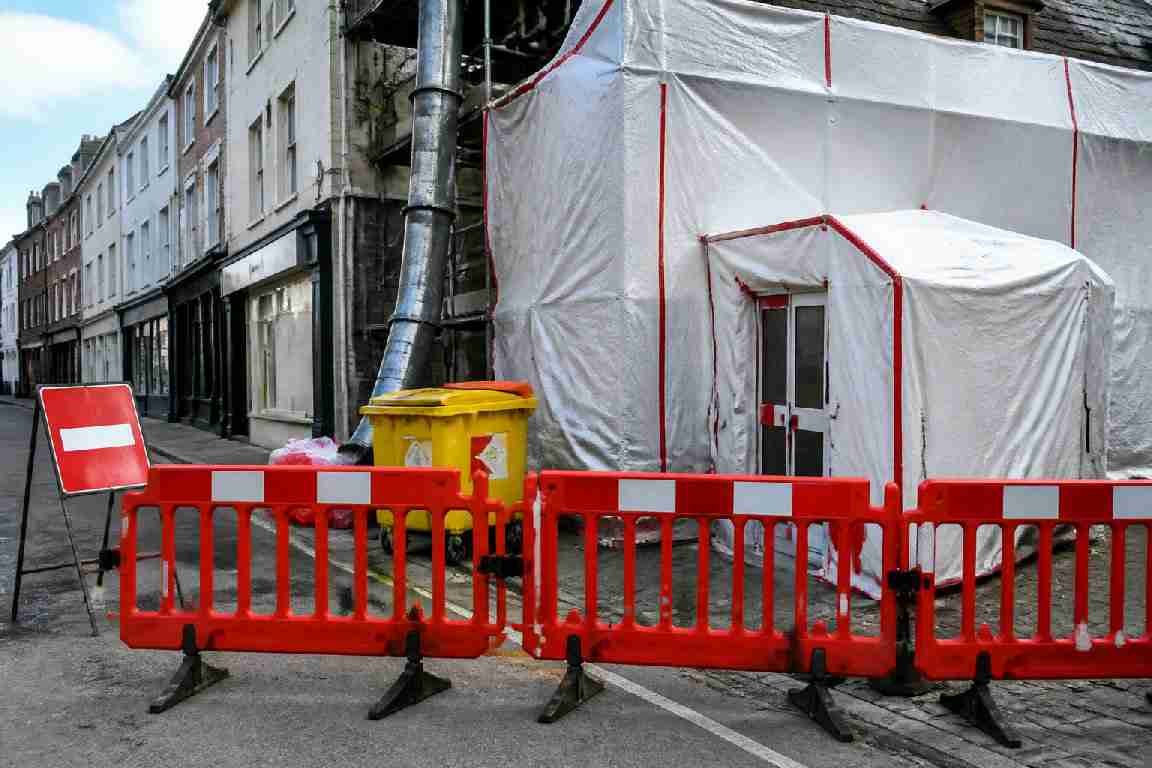
Work is currently focused on a property on New Lowther Street in Whitehaven, requiring a temporary prohibition of vehicles to ensure the safety of both the public and the specialist contractors involved. The restriction is expected to remain in place for a short duration while the high-risk elements of the project are completed.
According to local authority notices, the closure affects a specific stretch of New Lowther Street, extending from its junction with Lowther Street for approximately 25 metres in a south-westerly direction. While the road is closed to vehicular traffic, pedestrian access is being maintained where it remains safe to do so.
For most property managers, the presence of ACMs (asbestos-containing materials) is a manageable internal risk, typically handled through a robust management plan. However, when the condition or location of the material necessitates its extraction, the project scope often expands beyond the building’s footprint.
Logistical challenges during asbestos removal
The situation in Whitehaven serves as a practical reminder that asbestos removal is rarely just a matter of internal health and safety. When a building is situated directly on a busy street or the structural integrity of the property is a concern during the works, the local authority and highways department become essential stakeholders.
In this instance, the use of emergency powers to restrict traffic suggests that the work could not be safely delayed or performed under standard traffic management. For facilities managers, this underscores the importance of early engagement with local councils. Securing a road closure or parking suspension can take weeks of lead time under normal circumstances, and failing to account for this can lead to significant project delays and increased costs.
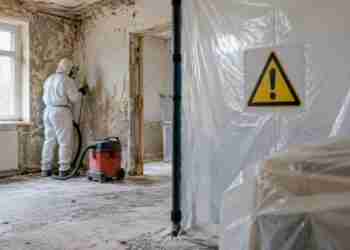
Contractors working on the New Lowther Street site must ensure that the worksite remains fully segregated from the public. The removal process often involves creating a negative pressure enclosure; if this enclosure is close to a public footpath or road, the risk of accidental damage from passing vehicles or vibration becomes a factor that the licensed contractor must mitigate.
For the dutyholders involved, the legal obligations under the Control of Asbestos Regulations 2012 remain the priority. This includes ensuring that the asbestos removal is carried out by a licensed professional and that the waste is disposed of correctly. However, under the Construction (Design and Management) Regulations 2015 (CDM), there is also a broader duty to coordinate the work in a way that protects anyone who might be affected by the site, including pedestrians and motorists.
When asbestos removal occurs near a public interface, the “controlled zone” effectively extends beyond the walls of the building. This requires clear signage, physical barriers, and sometimes, as seen in this case, the total diversion of traffic. The cost of these external safety measures often falls on the property owner or the employer, making precise surveying and project planning vital before any onsite work begins.
The Whitehaven restriction is expected to be a temporary measure, with Cumberland Council indicating that the road will reopen as soon as the immediate risk has been neutralised. For local businesses and residents, it is a brief inconvenience, but from a compliance perspective, it is a necessary step in discharging the duty of care owed to the community during hazardous works.
Property owners and compliance managers should view this case as a prompt to review their own environmental risk assessments, particularly for buildings with an external-facing façade or those located in high-traffic urban areas. Understanding the intersection between health and safety law and highways legislation is key to delivering a successful remediation project.