Explore this post with your favourite AI tool:


Share this article with AI tools to summarise, remember, or explore the content further.
Effective legionella cooling tower management is back in the spotlight after health officials in New York City ordered the immediate disinfection of systems at one of the world’s most iconic sporting venues.
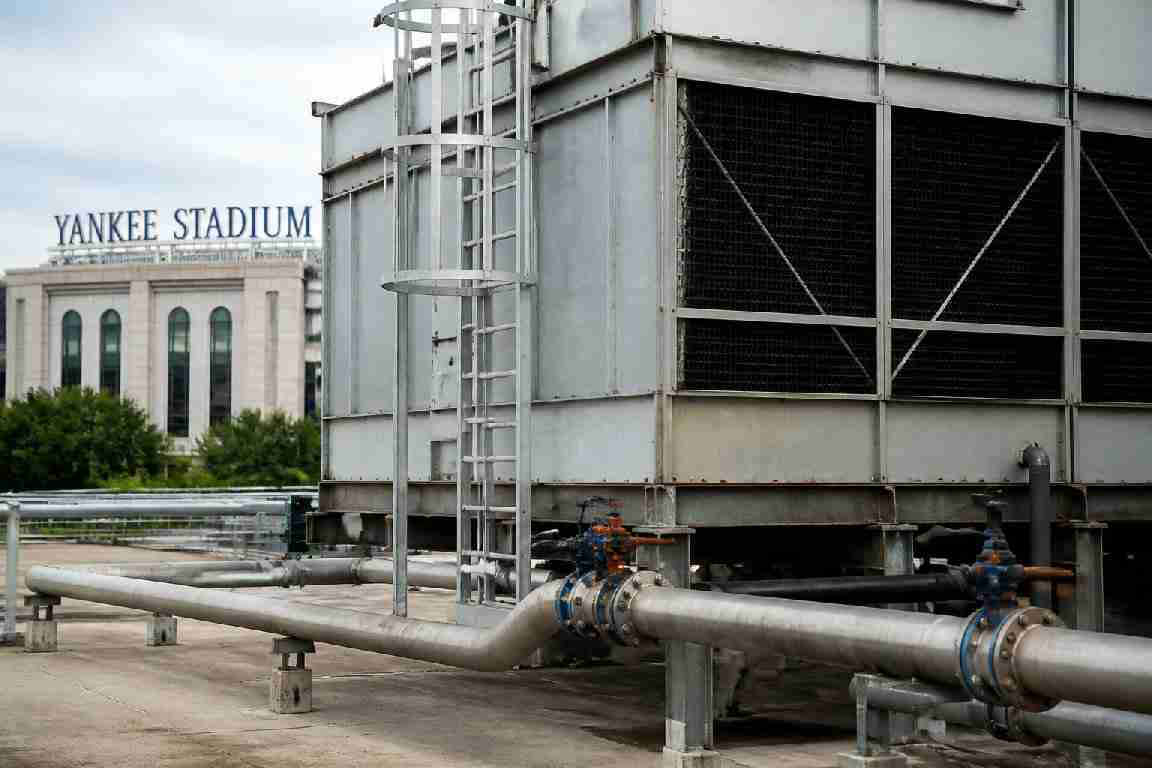
The New York City Health Department has mandated the rapid cleaning of 10 cooling towers located in the South Bronx area. Among the sites identified was a cooling tower at Yankee Stadium, following preliminary test results that flagged the presence of Legionella bacteria. While the stadium remains open, the order underscores the persistent risks associated with large-scale HVAC infrastructure in densely populated urban environments.
Health officials issued the directive as a precautionary measure to mitigate the risk of Legionnaires’ disease, a severe form of pneumonia caused by inhaling aerosolised water droplets contaminated with the bacteria. The department confirmed that the disinfection process at Yankee Stadium and the nine other affected sites is either underway or already completed. Importantly, officials stated that the cooling tower in question is not part of the stadium’s drinking water system, meaning the risk to fans and visitors remains low.
The mechanics of a legionella cooling tower outbreak
Cooling towers are an essential component of large-scale climate control systems, but they are also a primary source of Legionnaires’ disease outbreaks if not managed correctly. These systems use water to remove heat from a building, often through an evaporative process that naturally creates a fine mist or plume. If the water within the system becomes stagnant or reaches temperatures between 20°C and 45°C, it becomes an ideal breeding ground for bacteria.
The situation in the Bronx is not an isolated incident for the city. New York introduced some of the world’s most stringent cooling tower regulations following a major outbreak in 2015 that resulted in multiple fatalities. These rules require building owners to register their towers, conduct regular testing, and perform annual certifications. The fact that the bacteria was detected during routine monitoring suggests that the city’s oversight framework is functioning as intended, catching potential issues before they escalate into a public health crisis.
For UK-based facilities managers and dutyholders, the news serves as a timely reminder of the requirements set out under the Health and Safety Executive’s (HSE) Approved Code of Practice L8. Much like the New York regulations, the UK framework places the burden of responsibility firmly on the employer or the person in control of the premises to ensure the legionella cooling tower is safe to operate.
Understanding the UK compliance landscape
While the Bronx incident is currently a US-based issue, the technical failures that lead to Legionella colonisation are universal. In the UK, cooling towers are classified as high-risk systems. Under the Notification of Cooling Towers and Evaporative Condensers Regulations 1992, anyone in control of a premises must notify their local authority in writing if they have a cooling tower or evaporative condenser on-site.
The HSE is clear that a lack of a robust maintenance regime is the most common cause of outbreaks. This includes failing to keep the system clean, inadequate water treatment, or a failure to properly maintain the physical components, such as drift eliminators. Drift eliminators are crucial because they are designed to catch water droplets before they leave the tower; if these become damaged or scaled, the risk of a contaminated plume reaching the public increases significantly.
A legionella cooling tower requires a site-specific risk assessment that is reviewed regularly—not just tucked away in a drawer. This assessment must identify potential sources of risk and outline the measures required to prevent or control them. When health departments or the HSE find bacteria during testing, it often points to a breakdown in the water treatment programme, such as an empty biocide drum or a failing automated dosing pump.
Implications for facilities managers and building owners
Managing a legionella cooling tower is not just a technical task; it is a significant legal and reputational responsibility. As seen with the Yankee Stadium headlines, the reputational damage of being linked to a Legionella find can be substantial, even if no one has fallen ill. For those managing commercial property or stadia in the UK, the focus should always be on the “written scheme of control.”
Dutyholders must ensure that they have a competent person—either an internal staff member or a specialist contractor—monitoring the system. This involves regular temperature checks, sampling for aerobic bacteria (TVC), and specific testing for Legionella. However, sampling should never be used as a substitute for good system hygiene. A “clear” test result is merely a snapshot in time; it does not mean the system is permanently safe if the underlying maintenance is poor.
If a legionella cooling tower returns a positive result above 1,000 colony forming units per litre (cfu/l) in the UK, the HSE guidance (HSG274 Part 1) requires immediate action. This typically involves a review of the control measures and a re-test. If levels exceed 10,000 cfu/l, the system usually requires immediate disinfection and a full investigation into the root cause of the failure.
The New York Health Department has not reported any illnesses linked to the current cluster of towers, and the swift move to disinfect reflects a modern, proactive approach to urban health. For UK compliance professionals, the takeaway is clear: rigorous monitoring and rapid response to preliminary findings are the only ways to prevent a routine maintenance issue from becoming a national news story or a fatal outbreak.