Explore this post with your favourite AI tool:


Share this article with AI tools to summarise, remember, or explore the content further.
health and safety resources have been gathered into a new online library by a US firefighters’ organisation, giving users a single place to search for material on workplace risk, training and wellbeing. For UK dutyholders, it is another reminder that the best compliance systems rely on clear, accessible information that people can actually use.
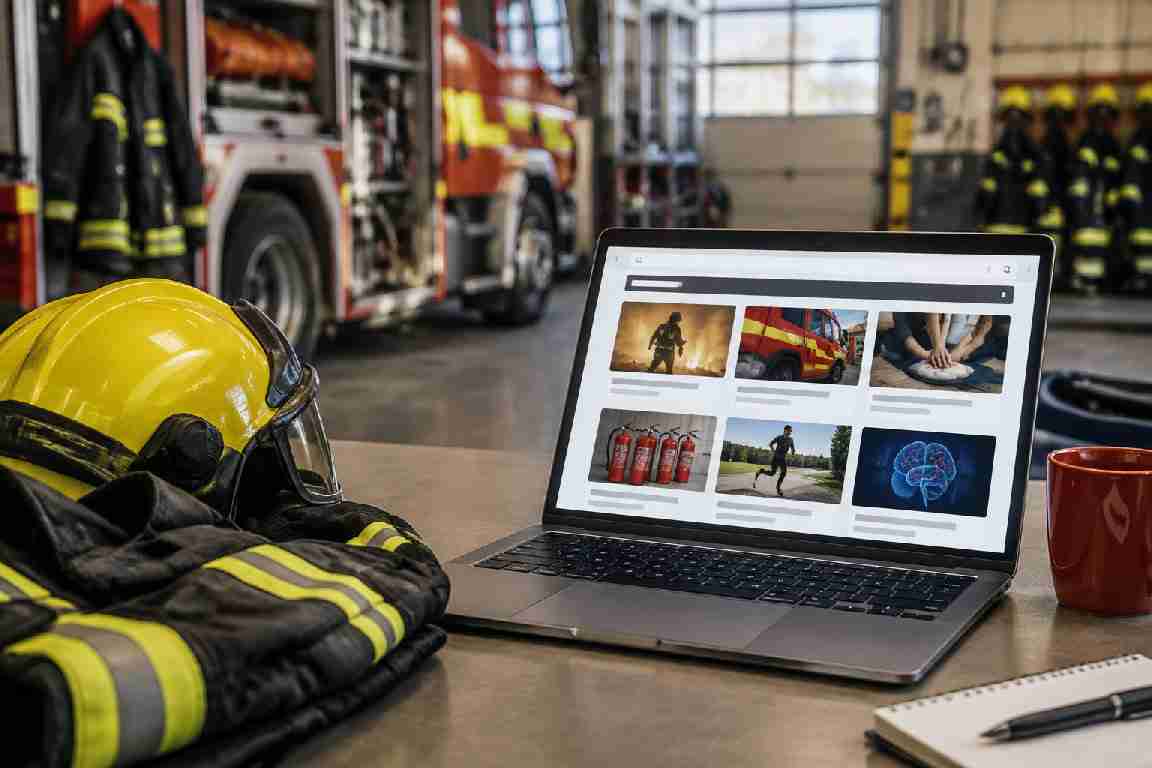
A firefighters’ group in the United States has launched an online library of health and safety resources that lets users search by subject and narrow results by year, project time and other filters. The collection covers topics including occupational health, illness and injury, building and fire codes, nutrition and fitness, and behavioural health.
The move is aimed at making technical information easier to find for people working in a high-risk sector where training, safe systems of work and reliable reference material matter every day. Rather than leaving teams to dig through scattered documents, the library brings material together in one place.
A searchable library of health and safety resources
The library is designed as a practical reference tool rather than a static archive. Users can search for material by topic and then refine the results, which makes it easier to focus on a specific issue without trawling through unrelated guidance.
That approach will be familiar to UK facilities managers, responsible persons and safety leads who have to keep up with procedures, inspection records, competency requirements and site-specific risk assessments. In real terms, the value of health and safety resources often comes down to whether staff can find the right document quickly when they need it.
The subject areas listed in the library are broad, but they reflect the day-to-day concerns of emergency responders: physical injury, occupational illness, building and fire standards, and wider health issues such as fitness and mental wellbeing. That mix matters because workplace safety is rarely just one discipline.
Why accessible information matters on site
In any workplace, guidance only helps if it is usable. A well-organised repository of health and safety resources can support training, refresher briefings, method statements and supervisory checks, especially where work involves multiple contractors or changing hazards.
For landlords, building owners and employers, the practical lesson is straightforward: documents should not be buried in email chains or split across different systems with no clear owner. Fire risk assessments, asbestos records, maintenance logs, contractor instructions and emergency procedures all need to be available to the people who may need them at short notice.
That is particularly relevant in higher-risk settings such as healthcare, housing, education, logistics, manufacturing and construction, where incidents can escalate quickly if staff are working from outdated or incomplete information. A tidy library will not remove risk on its own, but it does make poor control harder to excuse.
What this means for UK dutyholders
Although the new library is a US initiative, the principle is the same on this side of the Atlantic. UK dutyholders are expected to keep relevant information current, understandable and accessible, and that starts with organising health and safety resources in a way that reflects how people actually work.
That means thinking beyond compliance folders. Site teams need the current version of procedures, not old PDFs. Contractors need clear instructions before they start work. Managers need a simple route to find inspection histories, competence evidence and any outstanding actions.
There is also a wider wellbeing angle. The inclusion of behavioural health and fitness material shows that good safety systems do not stop at slips, trips and fire exits. Fatigue, stress and mental health can all affect performance, judgement and the likelihood of error, especially in physically demanding jobs.
Keeping records useful, not just complete
Many organisations already hold plenty of health and safety resources, but the problem is often structure rather than content. A folder full of documents is no use if staff cannot tell which version is current, or if the person on site cannot get at it when needed.
That is why many compliance teams now focus on simple naming conventions, document control, review dates and clear ownership. If records are easy to search, they are more likely to be used properly and less likely to be ignored when conditions change.
“Users can search the library by topic – such as occupational health, illness/injury, building and fire codes, nutrition and fitness, and behavioral health – and filter results by year, project time …”
The launch also underlines a broader point for anyone responsible for buildings or workplaces: information management is part of risk control. Whether the issue is fire safety, maintenance, contractor oversight or worker wellbeing, the right health and safety resources need to be easy to find, current and relevant to the task in hand.
For busy estates and compliance teams, that can be the difference between a system that supports safe work and one that only looks organised on paper.