Explore this post with your favourite AI tool:


Share this article with AI tools to summarise, remember, or explore the content further.
garage asbestos removal in Rainham has come under scrutiny after a council contractor reportedly removed the wrong garage roof and left asbestos debris behind. The incident underlines how quickly a routine job can turn into a contamination and compliance issue if the scope of work is not properly controlled.
A Havering resident has criticised the council after contractors were said to have taken off his garage roof by mistake, leaving asbestos debris on his property. The case has drawn attention because what should have been a straightforward removal job ended up raising concerns about exposure, site control and follow-up clean-up.
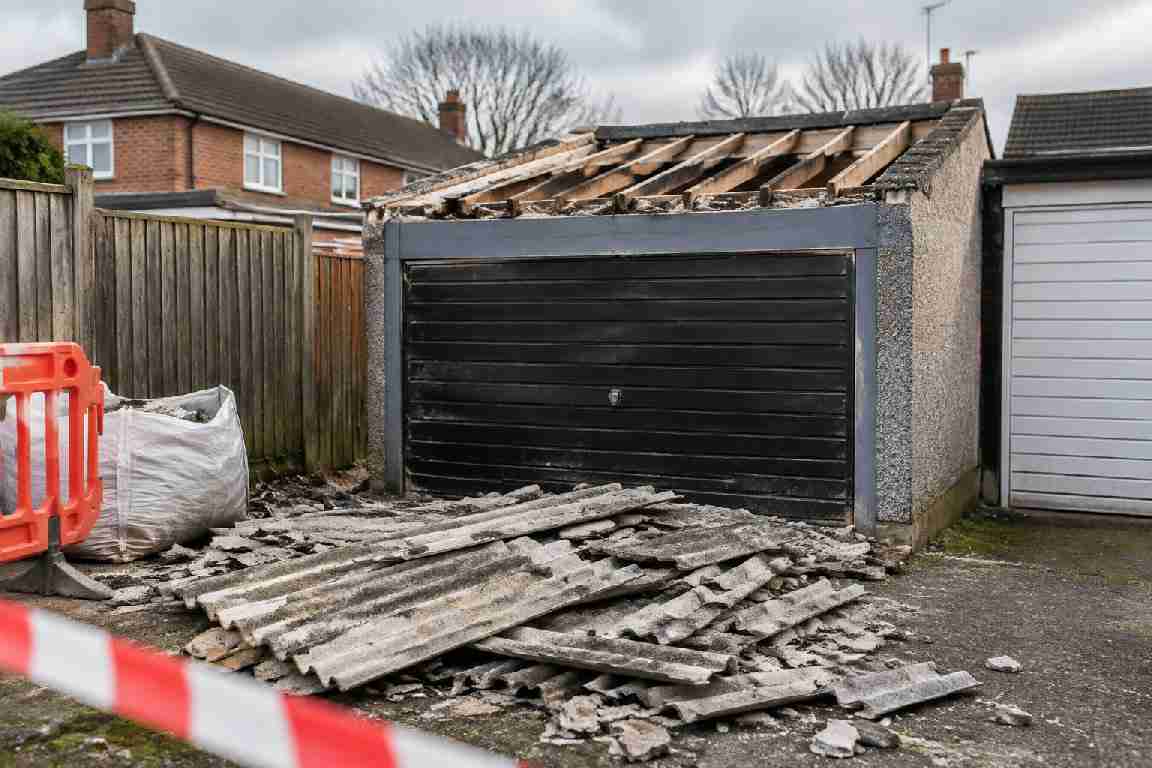
According to the report, the work took place in Rainham in 2026 and involved a garage roof that was removed in error. The resident said the result was debris consistent with asbestos being left on site, which immediately shifts the matter from a simple property mix-up to something that needs proper handling as a contamination incident.
garage asbestos removal and the risk of getting the wrong structure
Incidents like this are not just about a contractor making a mistake. When asbestos-containing materials are involved, even a basic error can affect nearby residents, workers and anyone who later enters the area without knowing what was disturbed.
Garage roofs are a common source of asbestos in older homes and outbuildings, especially where corrugated cement sheets were used. If garage asbestos removal is carried out without checking the correct building, marking the work area and confirming the material type first, the result can be damaged sheets, airborne dust and debris left where people live and park.
For landlords, housing managers and councils, the obvious lesson is that asbestos work has to be tied to clear surveying and precise job instructions. A contractor may be experienced, but if the property records are wrong or the work order is unclear, the job can still go off the rails quickly.
Why the debris matters
The main concern in this case is not only the mistaken removal itself, but the fact that asbestos debris was reportedly left on the property. That creates a wider housekeeping and exposure issue, because fragments and dust can be spread further by foot traffic, wind, or later DIY attempts to tidy the area.
Anyone responsible for the site would normally want the area isolated, the material identified by a competent person, and the waste removed using the right controls. If the material is confirmed as asbestos, garage asbestos removal should not end with the roof coming down; it also needs proper containment, packaging, transport and final clearance arrangements.
In practical terms, that means records matter. Dutyholders need to know what was supposed to be removed, what was actually removed, who touched it, and how the site was left afterwards. Without that chain of information, it becomes difficult to show the work was properly managed.
What this means for councils, landlords and property teams
For local authorities and housing providers, the story is a reminder that contractor management is only as good as the information supplied at the start. If asbestos registers are incomplete, address details are muddled, or garages and outbuildings have not been properly checked, a simple maintenance visit can become an avoidable incident.
Facilities managers and property teams should also see the value in better site marking and pre-work verification. Before any garage asbestos removal or similar external works begin, teams need to confirm the exact structure, the condition of the roof, the presence of any asbestos survey information, and whether neighbouring properties could also be affected.
Contractors, for their part, should not assume a garage roof is non-asbestos simply because it looks like a standard sheeted structure. Visual assumptions are a poor substitute for checking the paperwork and, where needed, arranging proper sampling or survey information before anyone starts taking sheets down.
“The resident said the result was debris consistent with asbestos being left on site”
Follow-up, clean-up and records are part of the job
Where asbestos disturbance is suspected, the response needs to be documented, not improvised. That includes deciding who is responsible for the clean-up, whether the area should be cordoned off, and how residents will be told what has happened and what precautions they should take.
This is where many smaller jobs go wrong. A contractor may focus on removing the roof, but garage asbestos removal really involves the entire sequence: checking the material, controlling the work, managing waste, and confirming the site is left in a safe condition.
For building owners and dutyholders, the broader message is straightforward. If the wrong garage can be removed by mistake, then the underlying controls on identification, supervision and handover are not strong enough. In asbestos work, that is exactly the kind of gap that turns an ordinary maintenance call into a much more serious complaint.