Explore this post with your favourite AI tool:


Share this article with AI tools to summarise, remember, or explore the content further.
mine health safety in South Africa’s mines has improved in some areas, but heat exposure and other long-running risks still need tighter control.
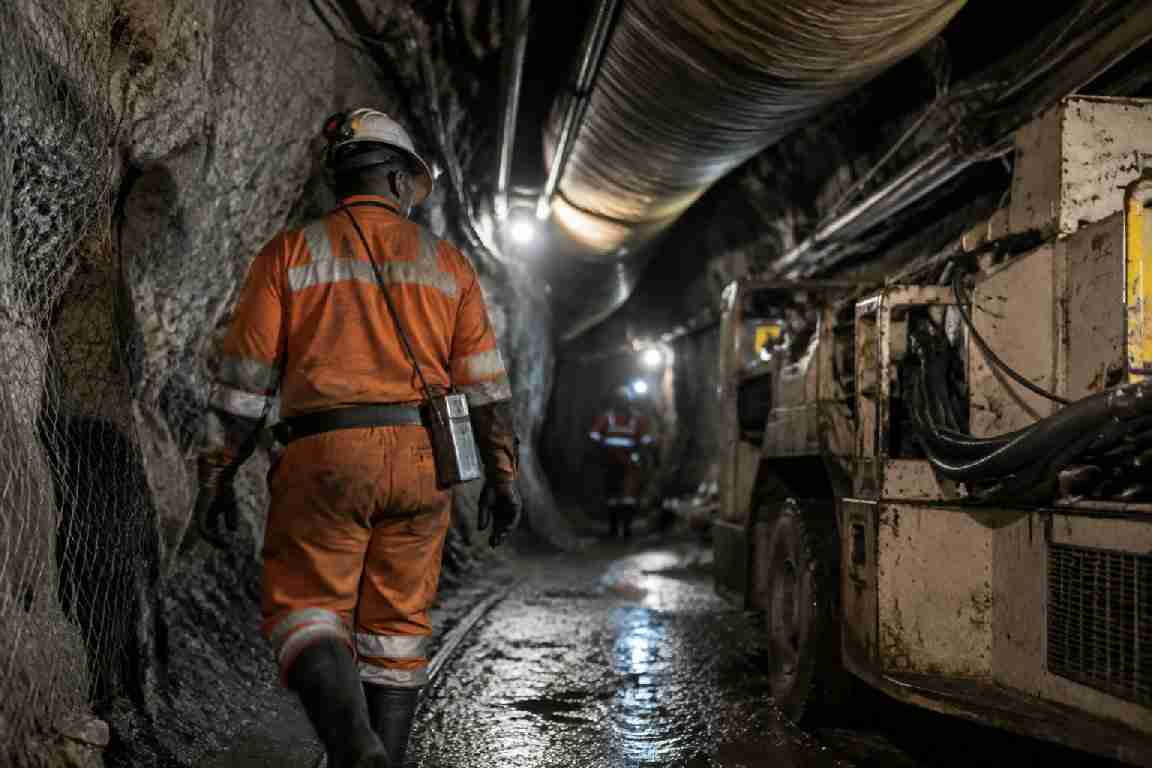
Mine health and safety in South Africa remains a mixed picture, with some progress reported alongside stubborn hazards that continue to affect underground workers. One of the clearest concerns is thermal stress, particularly in deep-level gold and platinum mines where heat exposure remains a day-to-day issue.
The source material points to gains in overall safety performance, but also highlights gaps that have not gone away. For anyone managing high-risk workplaces, the message is straightforward: improvements in one part of a system do not remove the need to keep checking the basics.
Mine health safety and the continuing heat risk
Thermal stress is one of the most difficult hazards to manage in deep mining because it is tied to the working environment itself. Underground crews can face hot, confined conditions for long periods, and that puts pressure on controls such as ventilation, work planning, rest breaks and monitoring.
The article refers to employees being exposed to heat above the occupational exposure threshold, which underlines why mine health safety cannot rely on general policies alone. Where temperatures rise, the practical question is whether the controls in place are actually reducing risk, not just sitting in a folder.
That matters beyond mining as well. Any employer responsible for hot processes, enclosed plant rooms, service tunnels, boiler spaces or other difficult environments will recognise the same basic problem: if workers are expected to perform in heat, the site needs a proper assessment, not assumptions.
What the gains actually mean for dutyholders
The mention of gains and gaps suggests a sector that has made progress but has not closed off its main exposure points. In compliance terms, that usually means better systems may be in place on paper, while day-to-day supervision, maintenance or worker fatigue controls still need attention.
For mine operators, the issue is not only whether a hazard has been identified, but whether the response is consistent across shifts, contractors and different production areas. Mine health safety failures often start with uneven implementation: one section is well managed, while another is left to local custom.
That is familiar territory for facilities managers and contractors too. A site can have decent risk assessments and still fall short if ventilation is poor, equipment is not checked, or workers are not given clear instructions when conditions change.
Why thermal stress deserves more attention
Heat exposure is easy to underestimate because it does not always look dramatic at first. Workers may just become tired, slow or less alert, but those are exactly the conditions that increase the chances of mistakes and incidents in already hazardous settings.
In deep mining, the effects can build over a shift. If crews are working in hot conditions without adequate recovery time, supervisors need to be watching for signs of dehydration, reduced concentration and physical strain. In practice, mine health safety depends as much on operational discipline as on technical controls.
For employers outside mining, the lesson is similar. Heat stress is not only a summer issue and not only a construction problem. It can affect warehouses, manufacturing, waste operations, and any workplace where workers are exposed to enclosed heat or heavy physical work.
What this means for UK readers managing risk
UK dutyholders will not be dealing with South African mine conditions, but the compliance principles travel well. Where workers are exposed to environmental stress, there should be evidence of assessment, monitoring and action, especially if conditions change during the day or across seasons.
That means checking whether risk assessments reflect real conditions, whether supervisors know when to stop work or rotate staff, and whether workers have been trained to recognise early signs of heat-related illness. Records matter too, because without them it is hard to show that controls were more than a one-off exercise.
Mine health safety also illustrates a wider point for landlords and building owners who manage specialist environments. Whether the risk is heat, ventilation failure, confined space entry or poor maintenance, the weak link is often the gap between written procedure and what actually happens on site.
Mine health safety and the need for consistent controls
The value of the South African example is that it shows how progress can coexist with risk. A sector may improve its headline performance while still leaving workers exposed to avoidable hazards if the most difficult conditions are not properly controlled.
That is why mine health safety remains a useful reminder for the wider compliance market. Systems only work when they are maintained, checked and enforced in real working conditions, not just during audits or after an incident.
For employers, dutyholders and contractors, the practical test is simple: if staff are working in heat, confined spaces or other harsh environments, can the organisation show that it knows the risk, controls it, and keeps those controls under review? In mining, as elsewhere, that question is rarely answered by policy alone.