Explore this post with your favourite AI tool:


Share this article with AI tools to summarise, remember, or explore the content further.
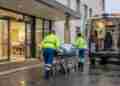
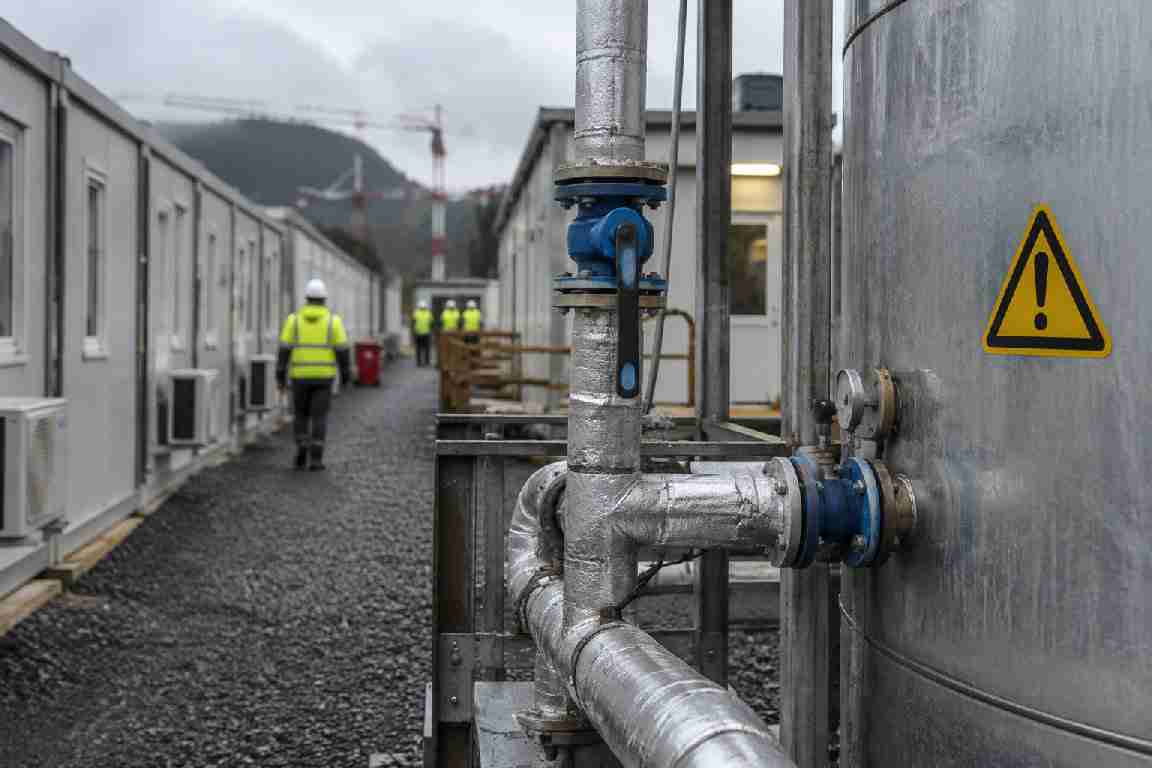
A legionella outbreak has prompted precautionary measures at a base camp in Campagna, where around 800 workers are housed while they work on the first section of the Battipaglia-Romagnano al Monte high-speed rail project.
Concern has spread through the logistics and residential camp after legionella was identified in the water system, triggering immediate controls for a site that accommodates a large, mixed workforce living and working in close quarters.
The camp supports workers involved in the first lot of the high-speed rail scheme between Battipaglia and Romagnano al Monte. With accommodation, washing facilities and other shared services on site, any water hygiene issue becomes a direct operational and welfare problem rather than a back-office compliance matter.
legionella outbreak prompts action at worker accommodation site
The source report says measures have now been introduced at the Campagna base camp following the detection of legionella. While the article does not set out the full technical findings, the response appears to have been treated as urgent because of the number of people using the facility every day.
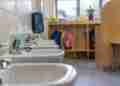
That matters because sites of this sort rely heavily on consistent water management. Accommodation blocks, showers, sinks and other outlets can create the right conditions for legionella if water sits stagnant, temperatures drift outside safe ranges, or systems are not properly monitored and cleaned.
For construction and infrastructure projects, the risk is not just confined to one building. Where a camp houses hundreds of workers, a legionella outbreak can interrupt welfare arrangements, affect labour availability and quickly raise questions about how the water systems were designed, maintained and checked.
Why this matters for employers and dutyholders
Legionella control is one of those issues that often stays invisible until something goes wrong. For employers, landlords, responsible persons and site managers, the practical duty is to keep water systems under review and to act when conditions change, especially in temporary or high-occupancy accommodation.
That means looking beyond paperwork. Water hygiene plans need to reflect how the site is actually being used: whether outlets are in regular use, whether rooms are occupied in full, whether storage tanks or plant are being altered, and whether hot and cold water temperatures are being maintained as intended.
The Campagna case is a reminder that large worker camps need the same level of attention as more permanent premises. Temporary does not mean low risk. In some cases, it can mean the opposite, because systems are more complex, occupancy patterns shift quickly and responsibility may sit with several contractors or operators at once.
What a legionella outbreak usually means on site
Where legionella is suspected or confirmed, the usual priorities are to identify affected systems, restrict use where needed, and put proper controls in place before people continue to use the water supply as normal. That can involve flushing, disinfection, testing and rechecking how the system is being managed.
The important point for facilities teams is that the response should not stop at emergency measures. A genuine review is needed to understand whether the issue came from design, poor maintenance, dead legs, low usage, temperature control problems or gaps in monitoring and records.
In a camp housing around 800 workers, the scale of the operation makes coordination essential. Accommodation providers, principal contractors, subcontractors and anyone responsible for the site’s welfare arrangements will need clear lines of responsibility, especially if workers move between different buildings or shared amenities.
Practical lessons for construction and accommodation sites
For those running similar sites, the main lesson is straightforward: water safety needs to be built into day-to-day management, not left to periodic checks that are never really tied to how the site is used. That includes regular review of risk assessments, maintenance records and corrective actions when patterns change.
It is also worth noting the role of competent people. Legionella control is not an area for guesswork, particularly on occupied sites with showers and sleeping accommodation. Testing, cleaning regimes and remedial work should be handled by people who understand the system and can interpret what the results mean.
“Concern” was reported at the base camp after legionella was identified, and measures were put in place to deal with the problem.
For landlords and building operators, the same principle applies in estates, HMOs, student blocks, care settings and any other premises where water systems are used heavily or intermittently. A well-documented risk assessment is only useful if it reflects current conditions and leads to visible action on site.
The Campagna incident will also be watched by those working on large infrastructure projects, where welfare compounds often run for months or years and support a substantial transient workforce. If water hygiene slips in those environments, the consequences can be disruptive very quickly, even before anyone is harmed.
At this stage, the key issue is not just that a legionella outbreak was identified, but that it has immediately affected a major worker accommodation site. For dutyholders, that is a familiar warning sign: shared water systems need constant attention, particularly where large numbers of people depend on them every day.