Explore this post with your favourite AI tool:


Share this article with AI tools to summarise, remember, or explore the content further.
Managing legionella infection risk remains a critical priority for property managers as public health officials highlight recent exposure cases linked to infrastructure and holiday accommodation.
Recent reports regarding a woman who contracted Legionnaires’ disease following exposure to water systems at a major transport hub have sparked renewed warnings from medical professionals. The case, linked to the Piaţa Victoriei 2 station area, underscores the persistent threat posed by Legionella bacteria in poorly maintained water systems, particularly where aerosolisation occurs in public spaces.
As the travel season peaks, health experts are urging both facility managers and the public to be vigilant. While the immediate focus often falls on large-scale industrial cooling towers, these recent developments remind dutyholders that the risk is equally prevalent in domestic-scale systems found in hotels, holiday rentals, and public transport infrastructure.
For UK property and facilities managers, the incident serves as a stark reminder of how quickly a localized maintenance failure can escalate into a public health issue. Legionella bacteria thrive in man-made water systems where temperatures sit between 20°C and 45°C, particularly where there is stagnation or a build-up of biofilm and scale.
Assessing legionella infection risk in holiday accommodation
The medical advice surrounding these cases highlights a specific danger for those returning to properties that have stood empty, or for guests arriving at seasonal holiday lets. When water systems are left unused for even a few days, the lack of flow allows bacteria to multiply to dangerous levels. When a tap is eventually turned on or a shower head is used, the resulting fine mist or aerosol can be inhaled, leading to infection.
Experts suggest that travelers taking precautions, such as flushing showers and taps in their holiday accommodation for several minutes before use, can reduce their personal exposure. However, the primary responsibility remains with the building owners and operators to ensure that their water management regimes are robust enough to prevent the bacteria from colonizing the system in the first place.
In a commercial or managed residential context, this means ensuring that risk assessments are not just “tick-box” exercises. A legionella infection risk can fluctuate based on occupancy levels, changes in ambient temperature, and the physical condition of the plumbing. A property that was safe during a busy period may become a hazard after a week of low occupancy if flushing regimes are not strictly followed.
Health professionals note that the symptoms of Legionnaires’ disease—a severe form of pneumonia—can be easily mistaken for heavy flu or even COVID-19. This diagnostic confusion often leads to delays in treatment. For employers and landlords, this highlights the importance of keeping clear records of maintenance, as these documents are the first thing investigators will request if a case is traced back to a specific site.
Dutyholder responsibilities and system maintenance
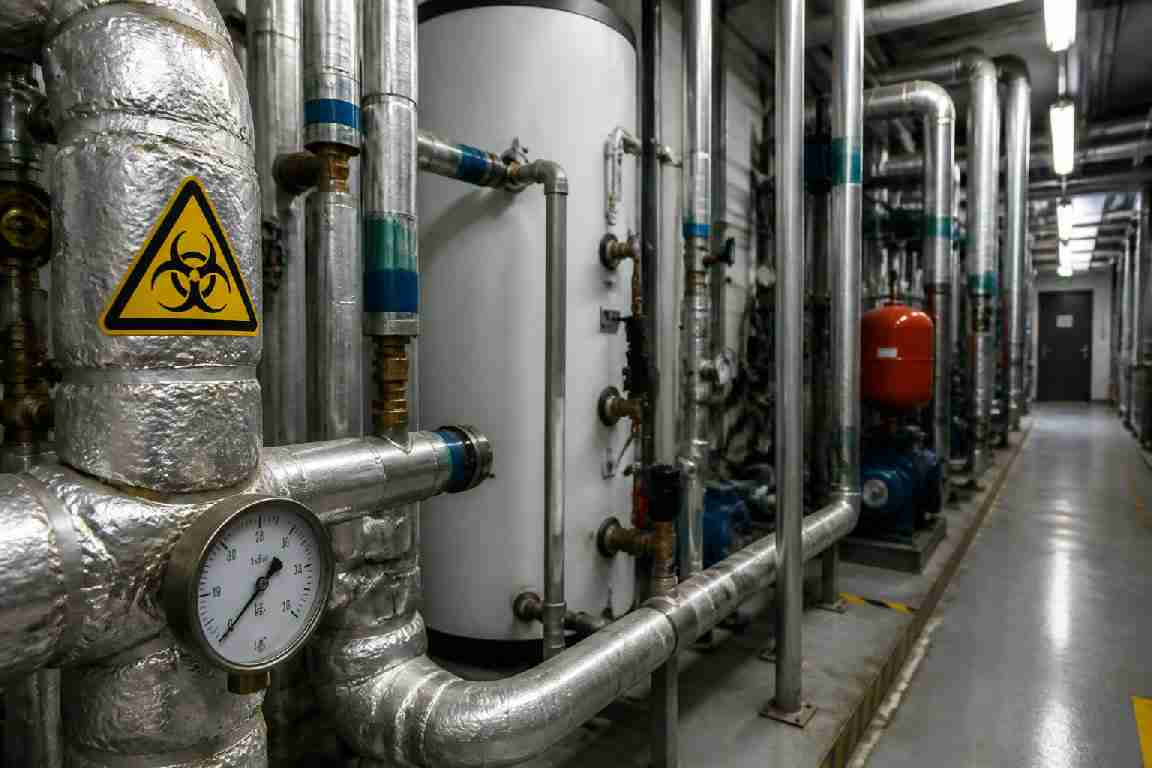
The core of managing legionella infection risk lies in temperature control and movement. Cold water must be kept cold (below 20°C) and hot water must be stored and distributed at temperatures that kill the bacteria (typically above 60°C at the calorifier). Any “dead legs”—sections of pipework that are no longer in use—must be removed, as they provide the perfect stagnant environment for bacterial growth.
For those managing public infrastructure or large commercial buildings, the challenge is often the complexity of the pipework. The recent case involving transport infrastructure suggests that even in transit environments, where water might not be the primary service, the presence of cleaning systems, decorative fountains, or air conditioning units can create a significant legionella infection risk if they are not integrated into a master water safety plan.
Facilities managers should also consider the role of contractors. It is common for specialized water treatment firms to handle sampling and disinfection, but the legal duty to ensure the safety of the premises remains with the “responsible person.” Simply hiring a contractor does not absolve a building owner of their duty of care. You must ensure the contractor is competent and that their recommendations are actually being implemented on the ground.
Regular cleaning and descaling of shower heads and hoses is a simple but frequently overlooked task. Limescale provides a nutrient source and a protective home for Legionella, making chemical treatments less effective. By maintaining a strict schedule of physical cleaning alongside temperature monitoring, managers can significantly lower the overall threat profile of their buildings.
Ultimately, the latest warnings from the medical community serve as a call to action for anyone overseeing water systems. Whether it is a small Airbnb, a large hotel, or a busy railway station, the fundamentals of water hygiene remain the same. Proactive management is far more cost-effective—and safer—than dealing with the legal and reputational fallout of an outbreak.