Explore this post with your favourite AI tool:


Share this article with AI tools to summarise, remember, or explore the content further.
The launch of a new health safety wearable by Luffu signals a shift in how monitoring technology is being positioned for both personal and professional environments. By expanding the focus from individual fitness to collective safety, the device aims to bridge the gap between lone worker protection and family welfare.
James Park and Eric Friedman, the co-founders of Fitbit, have introduced their latest venture, Luffu, marking a significant departure from their previous focus on general consumer fitness. While their earlier work revolutionised how individuals track steps and heart rates, this new hardware aims to provide a continuous safety net for vulnerable individuals, workers, and their families through a coordinated monitoring ecosystem.
Originally launched as a digital health log for families to track medications and medical appointments, Luffu has now integrated a physical device into its platform. The shift reflects a growing demand for reliable, always-on connectivity in high-risk scenarios, whether that involves an elderly relative at home or a professional working in a remote or hazardous environment.
Beyond consumer fitness: The health safety wearable in a professional context
For health and safety professionals in the UK, the entry of experienced tech leaders into the safety hardware market is a notable development. The Luffu device operates on the principle of proactive monitoring rather than reactive response. By allowing multiple “circles” of responders—ranging from family members to professional monitoring services—the device ensures that an alert is never missed, a common failure point in traditional lone worker systems.
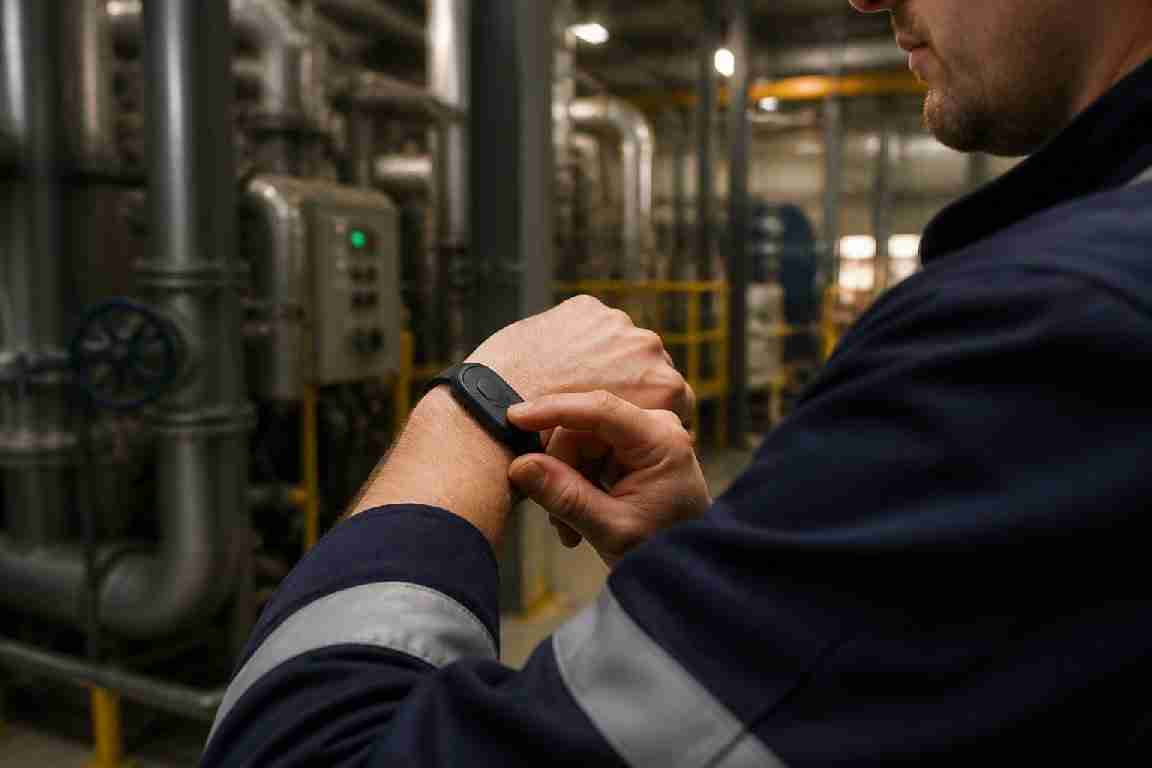
The hardware itself is designed to be unobtrusive, prioritising battery life and ease of use over the complex features found in modern smartwatches. This simplified approach is often preferred in workplace settings where distraction-free equipment is essential for maintaining site safety. By focusing on core safety metrics and emergency signalling, the health safety wearable avoids the “notification fatigue” that often leads users to abandon more complex devices.
The platform’s origins as a medical logging app provide a unique advantage for those managing health-related risks. The ability to integrate historical health data, such as chronic conditions or specific medication requirements, alongside real-time location and status tracking, allows for a more informed response during an incident. This level of detail can be critical for emergency services or designated first aiders arriving on the scene.
From a compliance perspective, the introduction of this health safety wearable aligns with the ongoing need for dutyholders to provide adequate protection for lone workers and those with underlying health issues. Under UK law, employers have a duty to assess and mitigate risks for employees who work by themselves or in isolated areas. While a device alone does not constitute a full risk management strategy, it serves as a vital component of a robust communication and monitoring plan.
Facilities managers and property owners may also see applications for such technology within multi-occupancy buildings or during complex maintenance projects. When contractors are working in confined spaces or at height, having a reliable health safety wearable that can trigger an immediate alert to a site manager can drastically reduce response times. The “family” aspect of the Luffu model could easily be adapted to a “team” structure, where peers and supervisors are the first line of alert for a colleague in distress.
One of the challenges often cited with wearable technology in the workplace is data privacy and the intrusive nature of constant tracking. Park and Friedman appear to be addressing this by positioning the device as a tool for safety rather than surveillance. The emphasis is on the “safety circle” model, where data is shared only with trusted individuals and used specifically for wellbeing purposes, which may help improve worker uptake and trust in the technology.
As the market for specialised safety hardware matures, the line between consumer-grade products and industrial safety tools continues to blur. The Luffu health safety wearable represents a new generation of devices that prioritises the “human” element of risk—the connection between the person at risk and those responsible for their safety. For UK safety managers, this provides another option in the toolkit for managing the complex needs of a diverse and mobile workforce.
Looking ahead, the success of such devices will depend on their reliability in areas with poor connectivity and their ability to integrate with existing emergency protocols. As Luffu rolls out its hardware, the industry will be watching to see if the Fitbit founders can replicate their previous success by making safety monitoring as ubiquitous as the daily step count.