Explore this post with your favourite AI tool:


Share this article with AI tools to summarise, remember, or explore the content further.
Recent reports concerning legionella hospital cases have prompted a formal clarification from health officials in Sardinia regarding the safety of water systems at a major medical facility.
The University Hospital of Sassari (AOU) has issued a statement to address concerns surrounding the Santissima Annunziata hospital, following local reports of potential waterborne contamination. Hospital management confirmed that no patients have contracted legionnaires’ disease during their stay at the facility, despite ongoing monitoring and maintenance of the site’s complex plumbing infrastructure.
The clarification comes at a time when healthcare providers across Europe are under increased pressure to demonstrate the effectiveness of their water safety plans. For facilities managers in the UK, the situation in Sassari serves as a reminder of the scrutiny that follows any suspected outbreak and the importance of having verifiable data to hand when questions are raised about environmental safety.
Managing risks and monitoring legionella hospital cases
The AOU of Sassari emphasised that their clinical surveillance systems have not detected any hospital-acquired infections. This distinction is critical in a clinical setting, where vulnerable patients are at a significantly higher risk of developing severe pneumonia if they inhale aerosolised water droplets containing the bacteria.
In the UK, the healthcare sector operates under the stringent requirements of HTM 04-01, which provides specific guidance on the design, installation, and testing of water systems in hospitals. The absence of legionella hospital cases in the Sassari facility, despite the presence of the bacteria in the wider environment, suggests that their internal control measures—likely including temperature control and chemical dosing—are functioning as intended to protect the patient population.
Health officials noted that while the bacteria may be present in low levels within many large-scale water systems, the goal is to prevent the colonisation and proliferation that leads to human infection. For the Santissima Annunziata hospital, the focus remains on rigorous sampling and ensuring that the hot and cold water services meet the necessary safety thresholds for a high-risk environment.
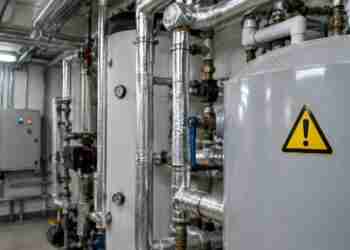
Building managers know that hospitals are particularly challenging environments for legionella control. Large, sprawling estates often have complex pipework, areas of low water usage, and “dead legs” where water can stagnate. These conditions are ideal for the growth of biofilm, which protects legionella from standard disinfection treatments.
The situation in Sassari highlights that transparency is just as important as technical compliance. By proactively stating that there have been no legionella hospital cases, the AOU is attempting to maintain public confidence in the face of environmental monitoring that might otherwise be misinterpreted by the public or the media.
The role of the dutyholder in healthcare settings
For UK dutyholders and responsible persons, this case reinforces the necessity of the Legionella Risk Assessment (LRA). Under the Health and Safety at Work etc. Act 1974 and the COSHH Regulations, employers must identify and assess sources of risk. In a hospital, this assessment must be a living document, frequently updated to reflect changes in building use or system modifications.
The prevention of legionella hospital cases relies heavily on the “competent person” role. Whether an internal staff member or an external consultant, this individual must ensure that the written scheme of control is followed to the letter. This includes regular flushing of outlets, temperature monitoring, and the cleaning and disinfection of cooling towers or water storage tanks.
If a facility fails to manage these risks, the consequences extend beyond the immediate health threat. The HSE has a history of taking enforcement action against healthcare trusts and private providers where systemic failings in water management are identified, even in instances where no clinical cases have yet occurred.
The management at Sassari has made it clear that their testing protocols are designed to catch issues before they reach the patient. This “pre-emptive” approach is the standard expected in UK compliance, where the emphasis is on the prevention of exposure rather than reacting to a cluster of illnesses.
Ultimately, the ability to categorically deny the existence of legionella hospital cases depends on the quality of a facility’s record-keeping. In the event of an investigation, a building owner or manager must be able to produce a robust audit trail showing that all required maintenance and monitoring tasks have been completed and reviewed by a responsible person.
As the Sardinian authorities continue their environmental monitoring at Santissima Annunziata, the case serves as a prompt for UK facilities teams to review their own water safety groups (WSG) and ensure that their communication strategies are ready to deal with public enquiries regarding water quality and patient safety.