Explore this post with your favourite AI tool:


Share this article with AI tools to summarise, remember, or explore the content further.
Managing legionella in schools has become a central focus for authorities in Ferrara following the discovery of the bacteria within the water systems of four local educational facilities.
The detections occurred at the Neruda, Cavallari, Trenino, and Mongolfiera sites, prompting immediate interventions and a wider debate on how public buildings are maintained. While the incident is specific to the Italian region, the technical failures and the subsequent calls for more rigorous preventative programming mirror the challenges faced by facilities managers and dutyholders across the UK educational sector.
Local health officials identified the presence of the bacteria during routine sampling, a process designed to ensure that water quality remains within safe parameters for vulnerable populations. In the wake of these findings, the focus has shifted from reactive flushing and disinfection to a demand for a more structured, long-term approach to water hygiene management. Stakeholders are now calling for better “programming”—essentially a more robust lifecycle approach to building services rather than relying on emergency fixes when a test comes back positive.
The operational challenges of legionella in schools
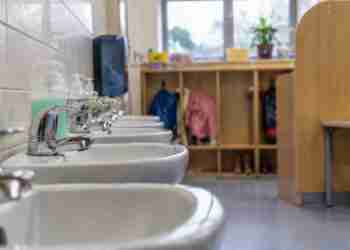
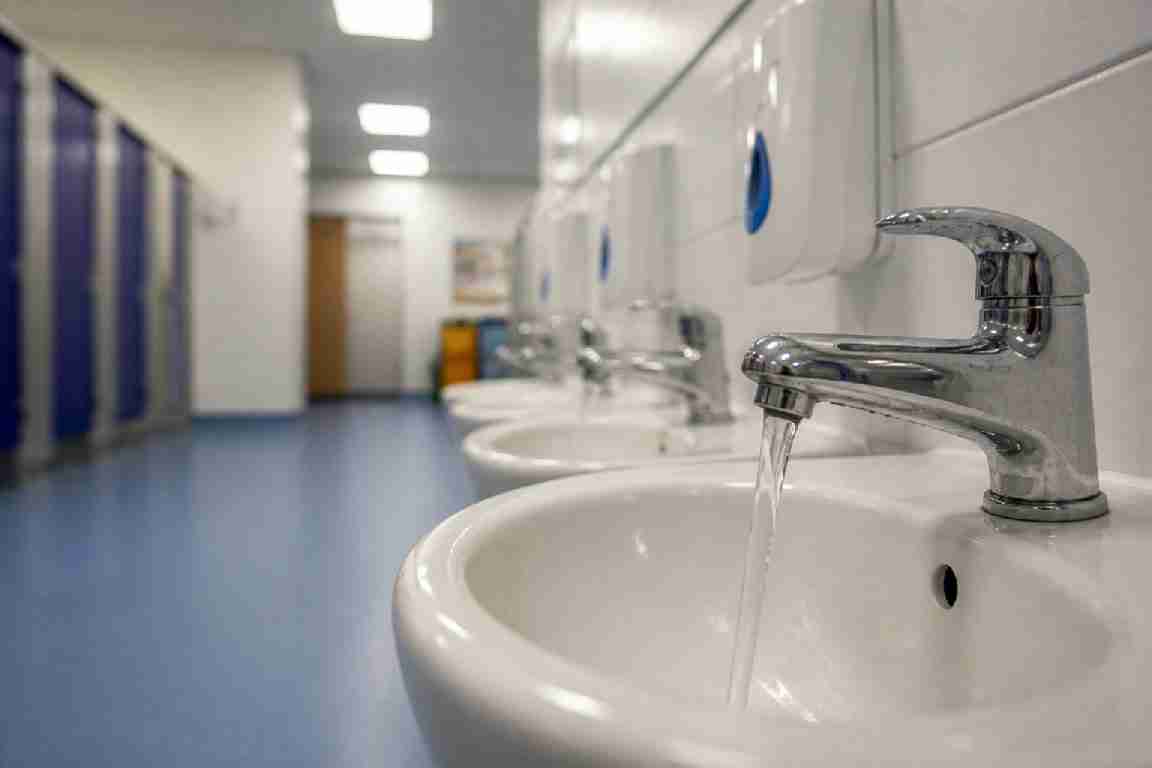
Schools present a specific set of risks when it comes to waterborne pathogens. The primary issue is often intermittency of use. During half-terms, summer breaks, and even weekends, water demand drops significantly. This leads to stagnation in dead legs or little-used outlets, providing the ideal environment for biofilm to develop and for Legionella bacteria to proliferate.
In the Ferrara cases, the discovery has highlighted that simply having a risk assessment is not enough; the plan must be active. For UK school business managers and local authority leads, the situation serves as a reminder that legionella in schools requires a constant cycle of flushing, temperature monitoring, and, where necessary, chemical dosing or thermal shock treatments. When these processes lapse, especially in older buildings with complex pipework, the risk of colonisation increases rapidly.
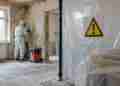
The technical response in Ferrara involved isolating affected areas and implementing disinfection protocols. However, the local discourse has moved toward the necessity of preventative maintenance. The argument is that waiting for a positive laboratory result before acting is a failure of the management system. Instead, the building’s plumbing infrastructure should be managed so that the conditions for bacterial growth never arise in the first place.
For those responsible for estate management, this means looking closely at the physical state of the assets. In many older educational buildings, redundant pipework—remnants of old kitchens or removed washbasins—can harbour stagnant water that re-contaminates the rest of the system. Identifying and removing these dead legs is often a more effective long-term strategy than repeated chemical cleaning.
Compliance and the dutyholder’s role
The situation in Italy underscores a universal truth in building compliance: the “Responsible Person” must ensure that the control scheme is fit for purpose. In a UK context, this falls under the requirements of the Health and Safety at Work etc. Act 1974 and the specific guidance found in ACoP L8 and HSG274. The discovery of legionella in schools often points to a breakdown in the communication between the site-based staff and the specialist contractors hired to manage the water system.
If a school’s logbook shows that weekly flushing of infrequent outlets has not been recorded, or if monthly temperature checks are missing, the dutyholder is in a vulnerable position. The Ferrara incident has shown that public scrutiny follows quickly when children’s environments are compromised. It highlights the need for clear accountability—knowing exactly who is turning the taps, who is checking the calorifiers, and who is reviewing the results.
Effective management of legionella in schools also requires a clear understanding of the difference between a hazard and a risk. While the bacteria may be present in many water systems at low levels, the risk arises when it is allowed to multiply and then become aerosolised through showers, spray taps, or even toilet flushing. Proper maintenance of thermostatic mixing valves (TMVs) is another critical area; these devices are essential for preventing scalding in schools, but if not maintained, they can become hotspots for bacterial growth.
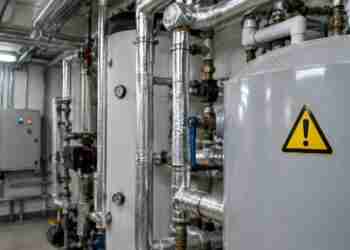
The call for “more programming” in the Ferrara case is a call for integrated facilities management. It suggests that water safety should not be a standalone task but part of the broader building fabric strategy. This includes ensuring that insulation on pipes is intact to prevent “heat gain” in cold water lines and ensuring that water storage tanks are clean, covered, and properly sized for the building’s current occupancy levels.
Ultimately, the detection of legionella in schools serves as a prompt for all educational providers to review their current regimes. Whether in Ferrara or the UK, the move from reactive to proactive management is the only way to ensure long-term safety. As these four schools undergo remediation, the focus will remain on how the local authority can tighten its schedules to prevent a recurrence, proving that in compliance, consistency is just as important as the initial risk assessment.