Explore this post with your favourite AI tool:


Share this article with AI tools to summarise, remember, or explore the content further.
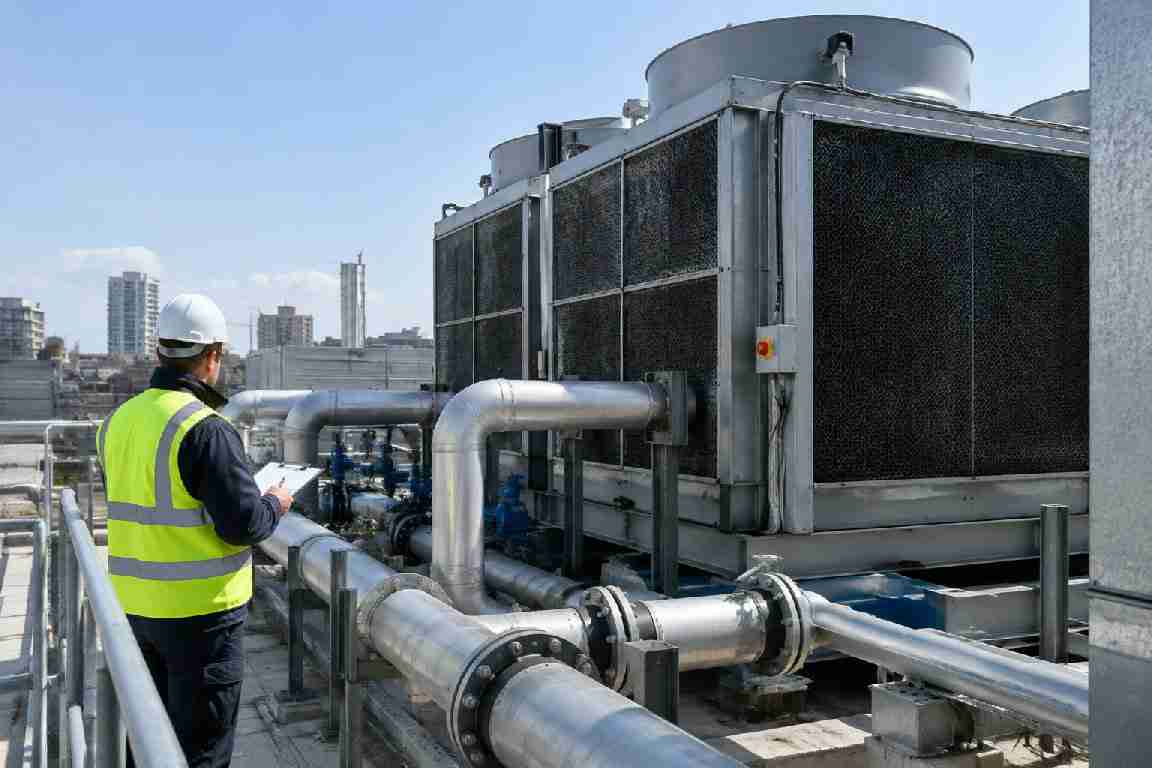
A legionella outbreak in the South Bronx has prompted fresh concern after health authorities confirmed live Legionella in seven cooling towers. For anyone responsible for buildings and plant, it is a reminder that water systems need regular control, not occasional attention.
Health officials in New York have confirmed live Legionella in seven cooling towers in the South Bronx as part of an investigation into an outbreak that has left people dead and others in hospital.
The finding points to cooling systems as a likely source of exposure and puts the spotlight back on water management in large buildings, where stagnant or poorly maintained systems can create the right conditions for bacterial growth.
Legionella outbreak linked to cooling towers
Legionella bacteria spread in tiny water droplets, known as aerosols, that can be inhaled. Cooling towers, evaporative condensers, spa pools, showers and other stored water systems are all familiar risk points if they are not cleaned, maintained and monitored properly.
In this case, authorities said laboratory cultures confirmed live bacteria in seven cooling towers in the area under investigation. That does not by itself prove each tower was the source, but it is the sort of finding that investigators use to narrow down where the exposure may have come from.
For building owners and facilities managers, the practical message is simple enough: if a system can generate spray or mist and the water is warm enough for growth, it needs active control. Paperwork alone will not deal with a legionella outbreak.
Why this matters for UK dutyholders
Although this incident is in the United States, the compliance lessons are directly relevant to UK dutyholders. In offices, hospitals, residential blocks, leisure sites, industrial premises and mixed-use buildings, the same basic hazards exist wherever water is stored, recirculated or allowed to sit unused.
UK employers, landlords, property managers and responsible persons are expected to understand their water systems, assess where legionella risk exists and keep control measures in place. That usually means identifying plant, checking temperatures, flushing rarely used outlets, cleaning and disinfecting where needed, and keeping maintenance records that actually match what is on site.
Where cooling towers are installed, the expectations are even sharper because these systems can create a wider aerosol spread than many other plant items. A missed clean, a weak monitoring regime or poor contractor oversight can quickly become more than a maintenance issue.
What a legionella outbreak exposes
A legionella outbreak often exposes familiar weaknesses: missing logbooks, incomplete risk assessments, work that has been signed off but not done, or a handover between contractors and in-house teams that leaves nobody clearly accountable. Those failings are rarely dramatic on their own, but together they can leave a building wide open.
That is why competent management matters. A competent person should know the system, understand the control scheme and be able to spot when the regime has drifted from what the building actually needs. If a site has had changes to occupancy, plant use or periods of shutdown, the risk profile can shift quickly.
In older or more complex buildings, the issue can be compounded by patchwork upgrades, unused pipework, or plant rooms where no one has a full picture of how the water system behaves. That is often where outbreaks begin to look avoidable in hindsight.
What facilities teams should be checking
The immediate priorities for facilities teams and dutyholders are usually straightforward: know where aerosol-generating plant is located, confirm that inspection and cleaning regimes are up to date, and make sure any remedial findings are closed out rather than left on a list.
They should also check whether contractors are being supervised properly and whether records show consistent testing, cleaning and corrective action. If there are temporary shutdowns, low-use areas or changes in building operation, flushing and monitoring arrangements may need tightening rather than relaxing.
A building can look clean and still present a serious water hygiene problem. Legionella control depends on routine discipline, not appearances.
“The sites …”
The current investigation is still unfolding, but the confirmation of live Legionella in multiple cooling towers is a reminder that outbreaks are often built on a chain of small failures rather than one obvious incident. For the UK property and compliance sector, that is exactly why water systems need the same level of attention as fire alarms, asbestos records and other core risk controls.