Explore this post with your favourite AI tool:


Share this article with AI tools to summarise, remember, or explore the content further.
construction safety technology is moving from trial projects into day-to-day site management, according to a new industry report that looks at how contractors are using wearables, AI, drones, data and connected tools to reduce risk.
A new report from the Associated Builders and Contractors says digital tools are increasingly being used to spot hazards earlier, monitor work in real time and tighten up decision-making on site. The sixth annual construction technology report focuses on how contractors are applying these systems to health and safety as well as productivity.
The report looks at a mix of technology now familiar on larger jobs and increasingly seen across smaller schemes too, including wearables, artificial intelligence, drones, data platforms and connected jobsite equipment. The theme running through it is that contractors are no longer treating these tools as a novelty. They are being folded into practical site controls.
construction safety technology is being used to cut exposure to risk
For anyone managing construction risk, the main point is straightforward: technology is being used to reduce the amount of time people spend exposed to hazards and to improve how quickly supervisors can react when conditions change. That matters on sites where work shifts fast, plant moves constantly and temporary arrangements can create new risks by the hour.
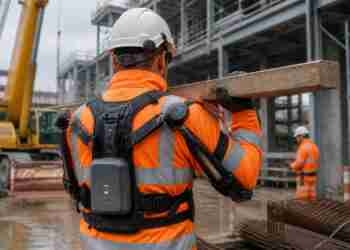
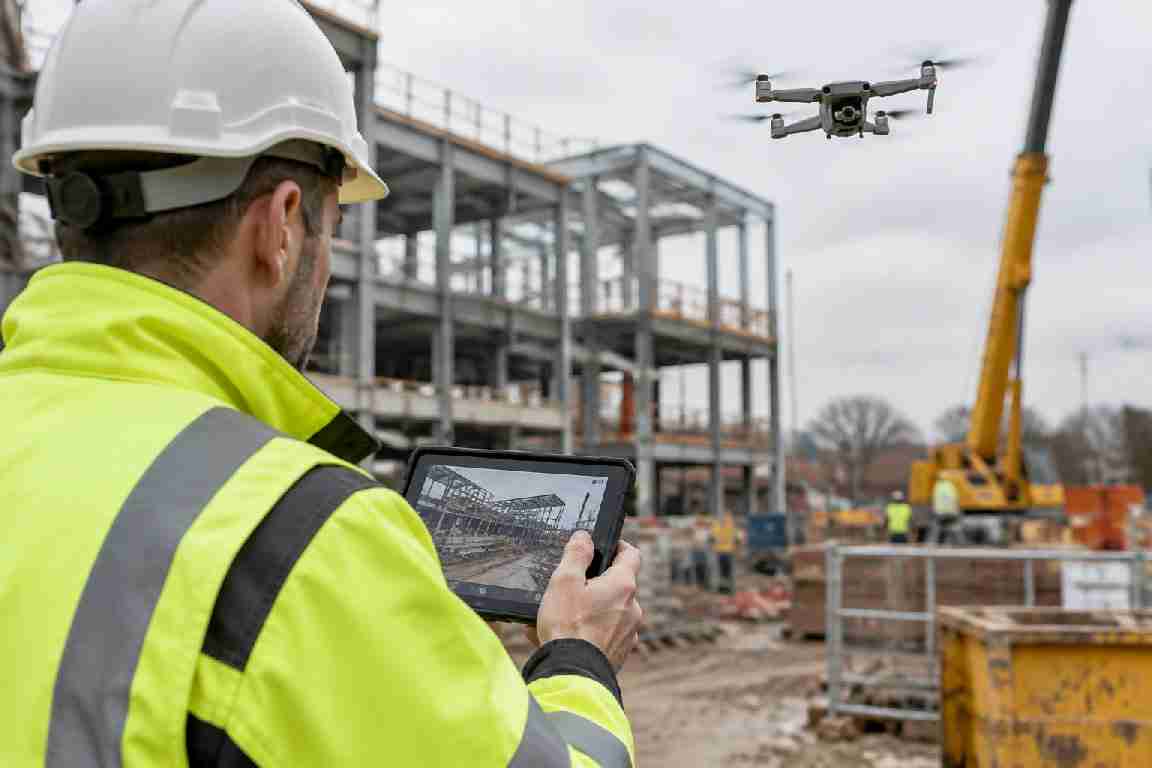
Wearables can be used to track movement, proximity or environmental conditions. Drones can reduce the need for people to access awkward or dangerous areas just to inspect progress. AI-supported systems can help turn large amounts of site data into something a manager can actually use, rather than another set of spreadsheets sitting untouched.
The report suggests contractors are also looking for better integration between systems. In practice, that means safety information from one source can be linked with plant monitoring, access control, inspection records or site reporting, giving a fuller picture of what is happening on the ground.
Why this matters for dutyholders and principal contractors
For principal contractors, site managers and other dutyholders, the attraction of construction safety technology is not simply efficiency. It is about improving control of routine risks that can be hard to supervise consistently with paper systems alone, especially on busy or multi-trade sites.
That includes monitoring whether exclusion zones are being respected, checking whether plant and people are being kept apart, and identifying patterns that point to repeated unsafe behaviour. On larger projects, connected systems can also support better briefings and more targeted interventions, instead of relying entirely on general reminders.
None of this replaces competent supervision, inspections or risk assessments. The report’s value is more basic than that: it reflects a sector in which digital tools are becoming part of ordinary site control, rather than sitting off to one side as an optional extra.
From data collection to better site decisions
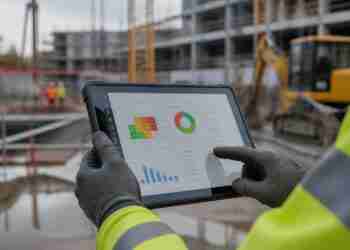
One of the more practical points in the report is the shift from collecting data for its own sake to using it to make decisions. A steady stream of information is only useful if managers can interpret it and act on it quickly.
That is where construction safety technology can help, provided it is properly set up and the workforce understands how it is being used. If alerts are ignored, sensors are poorly maintained or the data is never reviewed, the system may add cost without improving safety at all.
Contractors using drones or remote monitoring still need clear procedures for who checks the images, how often inspections are reviewed and what happens if a defect or unsafe condition is identified. The same applies to wearables and AI-based tools: the technology may be advanced, but the management process around it still needs to be sound.
“The sixth annual construction technology report examines how contractors are using wearables, AI, drones, data and connected jobsite tools to reduce risk.”
What this means for construction teams and property owners
The report will be of interest beyond main contractors. Developers, clients, landlords, property managers and facilities teams commissioning construction or refurbishment work increasingly need to understand what technology is being used on their sites, how it is being managed and whether it actually supports the control measures promised in the construction phase plan or site rules.
Where projects involve higher-risk work, good construction safety technology can help demonstrate that hazards are being monitored rather than assumed away. It may also help with record keeping, especially where access, inspections, maintenance or temporary works need to be evidenced later.
For smaller contractors, the message is slightly different. The market is moving towards more connected tools, but the basics still matter most: competent people, clear supervision, practical training and reliable checks. A site with expensive kit and weak management can still go wrong very quickly.
The report underlines a wider shift in the sector. Technology is no longer being discussed only as a productivity issue. It is increasingly part of how contractors expect to manage safety, reduce avoidable exposure and keep a better grip on what is happening across the jobsite.