Explore this post with your favourite AI tool:


Share this article with AI tools to summarise, remember, or explore the content further.
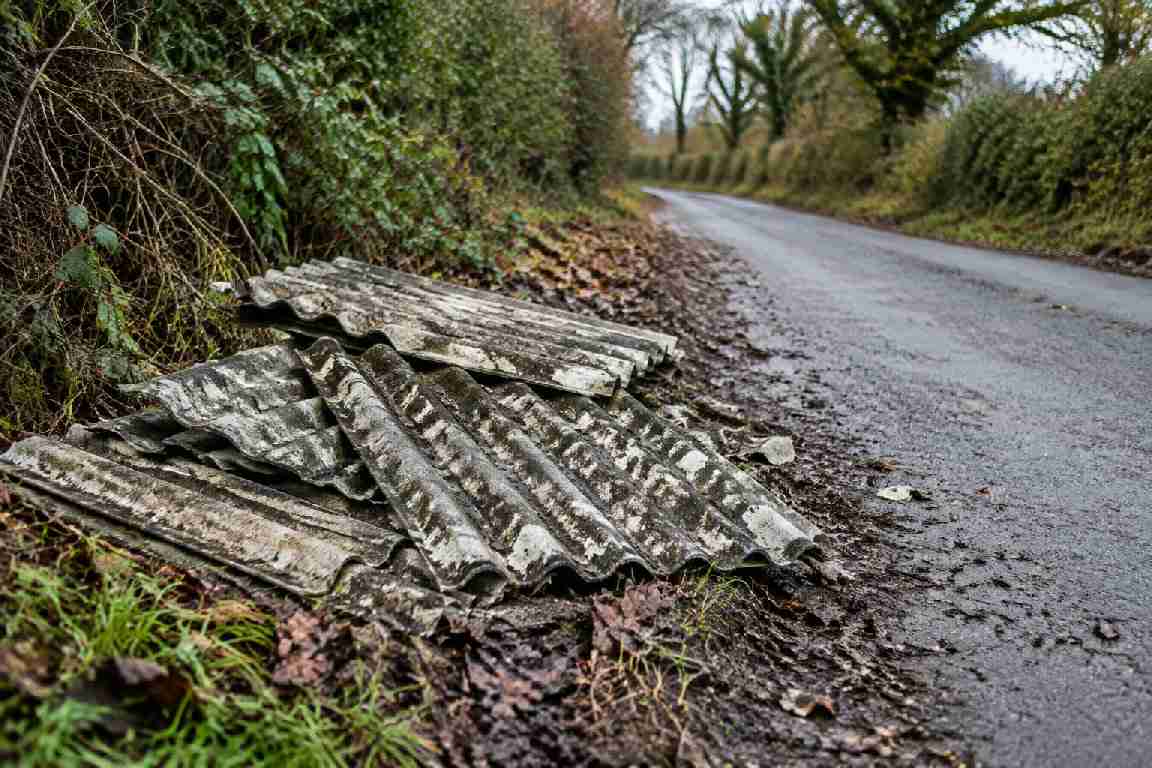
asbestos fly-tipping left on a village road in York for months has prompted fresh concern about how quickly hazardous waste is dealt with when it turns up in public places.
A complaint has been raised after asbestos was reportedly left dumped in a York village road for an extended period before it was removed. The case has been cited as one of a number of fly-tipping incidents now being used to press for a tougher response from the authorities.
asbestos fly-tipping and the problem of slow removal
The complaint centres on material that had been dumped and remained in place for months. While fly-tipping is often treated as a nuisance and an eyesore, asbestos changes the picture completely because it is a hazardous material that needs to be handled carefully and removed by people who know what they are doing.
For anyone responsible for a site, estate or stretch of land, the obvious concern is not just that waste was dumped in the first place, but that it appears to have stayed there for so long. When asbestos is left exposed, even if it is not obviously damaged, it can still create anxiety for nearby residents, contractors, grounds staff and anyone else who comes into contact with the area.
The source report does not set out the exact form of asbestos involved, and that matters. Different asbestos-containing materials present different risks depending on whether they are intact, broken, weathered or disturbed. But the basic issue remains the same: once asbestos fly-tipping has happened, delay in dealing with it is not a neutral position. It leaves uncertainty in place and can make later clearance more complicated.
Why this matters for councils and landowners
Local authorities are often the first point of contact when illegal dumping is reported, but roadsides, verges and village edges can also sit in a grey area where responsibility is slower to pin down than it should be. That is awkward for councils, landowners, highways teams and managing agents, because the public usually cares less about ownership and more about how long hazardous waste is left sitting there.
For landlords, estate owners and managing agents, the wider lesson is straightforward. If waste is found on land you control, especially anything that might be asbestos, it needs quick assessment rather than assumptions that someone else will sort it out. Waiting for a complaint to escalate is a poor substitute for a proper inspection and removal plan.
The same applies to contractors working on refurbishment, demolition or maintenance jobs. If a fly-tip includes suspect material, it should be treated as a potential asbestos issue until checked by a competent person. That means keeping people away, avoiding disturbance and arranging the right route for disposal rather than allowing site operatives to deal with it informally.
What asbestos fly-tipping tells us about site control
The York case also reflects a wider problem with environmental and property control. Fly-tipping is often linked to weak perimeter security, poor oversight of access routes and gaps in routine inspection. Where a site is left open or only intermittently checked, dumped waste can sit unnoticed for long periods, especially on less visible roadsides or backland areas.
For dutyholders, that raises practical questions about how quickly reports are logged, who checks them and what the escalation route is if asbestos is suspected. A sensible process should include prompt recording, a visual check from a safe distance, clear internal reporting and a decision on whether specialist removal is needed. Those basics are easy to talk about and often missed in practice.
It also underlines the value of keeping good records. If a site has repeated dumping problems, the pattern can point to a wider security or access issue that needs fixing. That may mean better lighting, barriers, locked gates, revised patrols or clearer arrangements with waste contractors. None of that is dramatic, but it can prevent the same problem coming back.
Health and safety implications on the ground
Asbestos exposure is not a matter to treat casually, which is why asbestos fly-tipping is more than a general cleanliness issue. Anyone asked to remove or move the waste needs the right controls in place, and that starts with not disturbing material unnecessarily. Even where the waste is outdoors, the risk does not disappear simply because it is in the open air.
Facilities managers and supervisors should also think about who might encounter the waste first. Grounds staff, caretakers, waste operatives, security staff and local contractors are often the people who spot dumped material before anyone else. They need clear instructions on what to do, who to call and what not to touch.
That means no improvisation. A sweep-up approach is not appropriate if asbestos is suspected. Nor is it sensible to rely on verbal warnings alone, because staff changes, shift patterns and subcontracting can quickly leave gaps. If an organisation manages land or buildings, the response should sit within the normal incident reporting and contractor control process, not be treated as an isolated nuisance call.
The wider compliance lesson for responsible persons
For responsible persons, landlords and building owners, the point is not only about the dumped material itself but about the systems around it. A site with weak inspection routines, poor reporting lines or unclear ownership of waste incidents is more likely to let a hazard sit unresolved. That is true whether the issue is asbestos, construction waste or general fly-tipping.
There is also a reputational angle. Residents and tenants notice how quickly hazards are removed, and delays often become part of the complaint itself. Where asbestos is involved, that can rapidly undermine confidence in estate management or public-sector response, even if the eventual clean-up is carried out correctly.
In practical terms, the York case is a reminder that hazardous fly-tipping should be managed as an operational and safety issue, not just a civic annoyance. When asbestos is left in place for weeks or months, the real problem is not only the original dump but the gap in response that allowed it to remain there.