Explore this post with your favourite AI tool:


Share this article with AI tools to summarise, remember, or explore the content further.
The council has issued an asbestos removal warning to the public as a hazardous decontamination project begins at a prominent town centre site in Paignton.
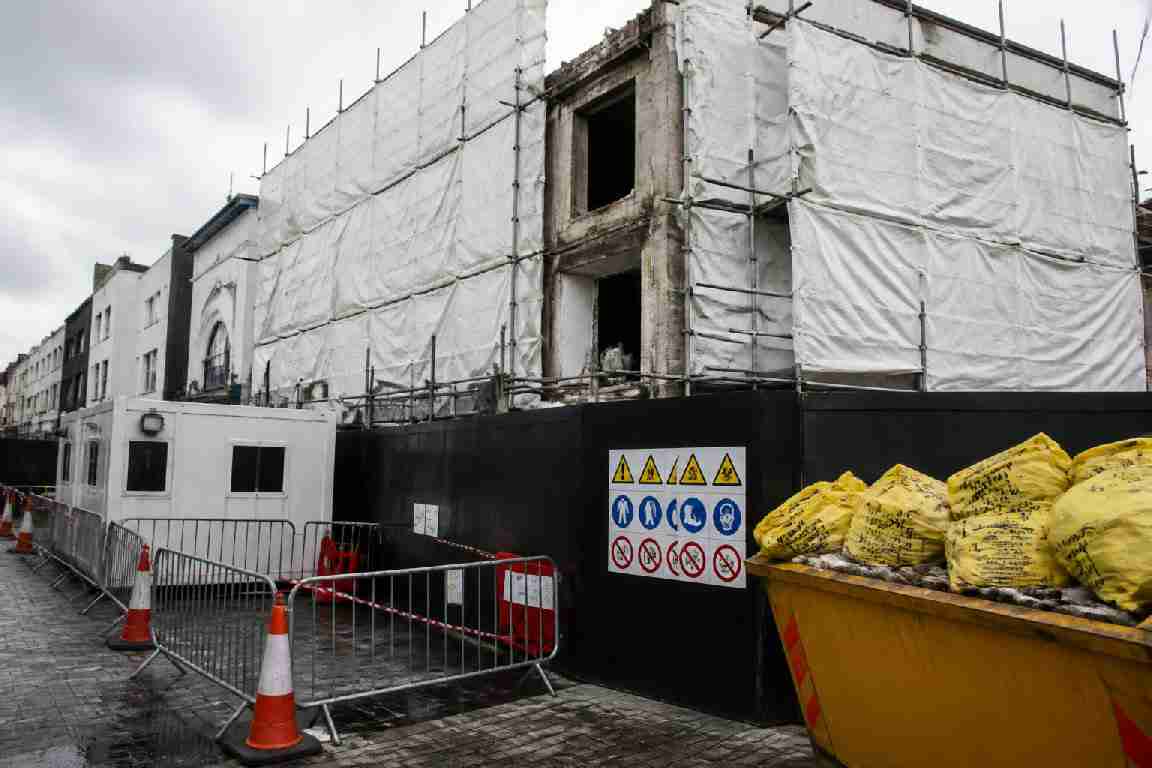
Specialist contractors are preparing to move onto the site at 62-70 Victoria Street next week to begin the high-risk phase of an ongoing demolition project. The work involves the removal of significant quantities of asbestos-containing materials (ACMs) from the privately owned building, which has remained vacant for some time.
Torbay Council has confirmed that the removal process is a necessary precursor to the full demolition of the structure. Given the building’s location in a high-footprint shopping area, local officials are taking the unusual step of asking pedestrians and shoppers to avoid the immediate vicinity while the most sensitive work is carried out.
Public safety and the asbestos removal warning
Managing a project of this nature in a busy town centre presents significant logistical hurdles for the dutyholders involved. The site, which occupies a prominent position on Victoria Street, requires a stringent perimeter and air monitoring regime to ensure that no fibres escape the controlled area.
While the work is being carried out by licensed specialists, the council’s proactive asbestos removal warning serves as a reminder of the heightened risk profile associated with older commercial properties. Many buildings of this era contain a mix of friable and non-friable asbestos, often hidden within the fabric of the structure, including floor tiles, ceiling panels, and pipe lagging.
Local residents and business owners have been informed that the hazardous material removal is expected to take several weeks. During this window, the site will be under strict enclosure, with decontamination units and waste skips positioned to manage the outflow of contaminated material safely.
Implications for town centre demolition projects
For facilities managers and property owners, the situation in Paignton highlights the complexity of managing asbestos during the “end-of-life” phase of a building. Under the Control of Asbestos Regulations 2012, a Refurbishment and Demolition (R&D) survey is a legal requirement before any such work begins. This survey is more intrusive than a standard management survey, designed to uncover ACMs that are normally inaccessible.
The discovery of hazardous materials at the Victoria Street site has clearly dictated the pace of the demolition. In many cases, if asbestos is not correctly identified and removed at the outset, it can lead to project delays, massive cost overruns, and potential enforcement action from the Health and Safety Executive (HSE).
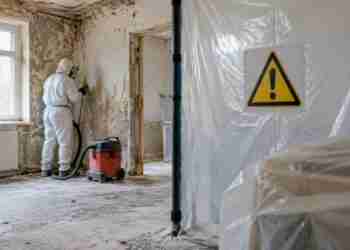
The current asbestos removal warning issued by the council is a strategic move to manage public perception as much as physical safety. In an urban environment, the sight of contractors in full-body respirators and hazardous material suits can cause alarm. Clear communication about the risks and the mitigation measures in place is essential for maintaining local confidence.
Duties of the building owner and contractors
As the building is privately owned, the primary responsibility for the safe conduct of the works lies with the owner and their appointed principal contractor. They must ensure that the removal is carried out in accordance with a detailed plan of work, which should be shared with the relevant authorities where mandatory notification is required.
The presence of such a high-profile site in a pedestrianised area means there is zero margin for error. If the asbestos removal warning is ignored by the public, or if the site security is breached, the risk of secondary exposure becomes a serious liability. The contractor is tasked with ensuring that all waste is double-bagged, labelled, and transported by a licensed carrier to a designated hazardous waste facility.
For those managing similar portfolios, the Paignton project underscores the need for competent project management. The selection of a licensed asbestos removal contractor (LARC) is only one part of the puzzle; there must also be independent air monitoring and a four-stage clearance process to certify the area safe before the final demolition equipment moves in.
Once the hazardous materials are successfully stripped, the wider regeneration of the site can proceed. However, the council has reiterated that the asbestos removal warning remains in place until the specialist teams have officially signed off on the internal decontamination of the structure.
This phase of the Victoria Street project serves as a stark reminder to property managers that even a “simple” demolition in a town centre can quickly become a complex environmental and health challenge. Proper planning, transparent communication, and strict adherence to safety protocols are the only ways to navigate these high-risk compliance hurdles.