Explore this post with your favourite AI tool:


Share this article with AI tools to summarise, remember, or explore the content further.
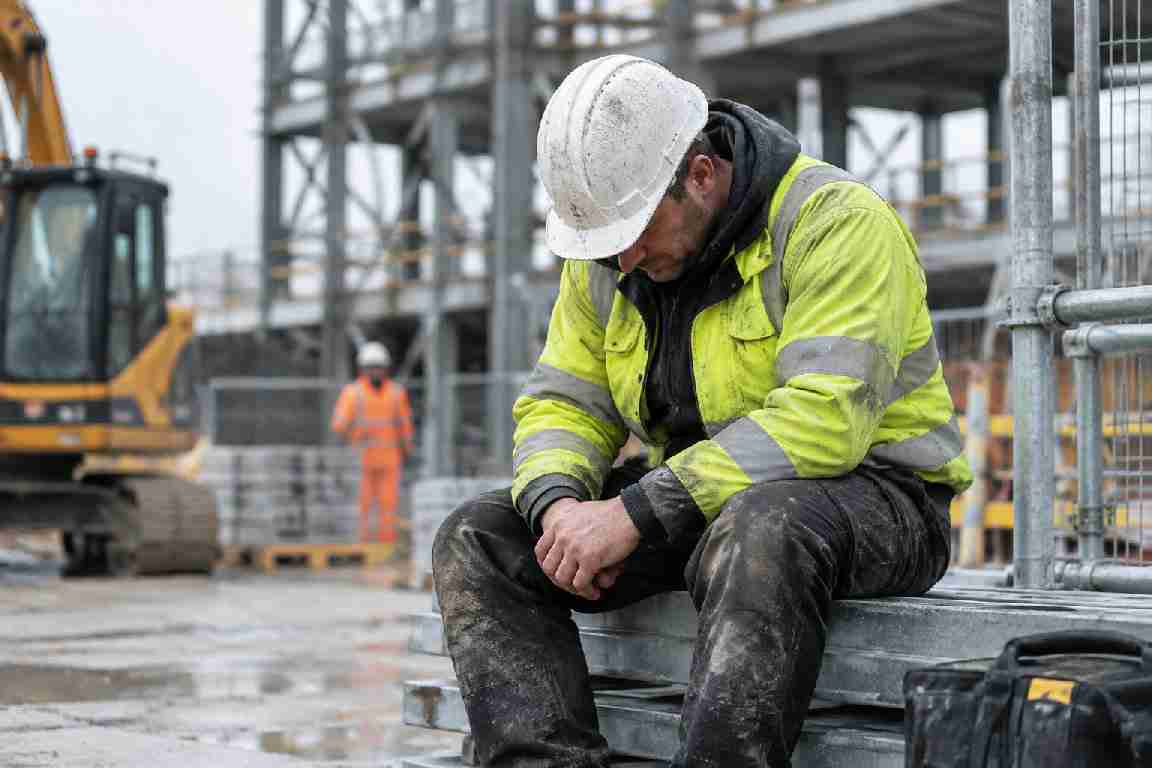
construction mental health is now being pushed further up the agenda as two US safety organisations have formed a formal partnership to tackle suicide prevention, mental wellbeing and wider worker safety in construction.
Two construction safety bodies in the United States have announced a partnership aimed at strengthening mental health support, suicide prevention and safer working practices across the sector. The move brings together CIASP and Safety and Health around a shared message: construction firms cannot treat worker wellbeing as separate from day-to-day safety.
The agreement is intended to link mental health awareness with practical site safety, rather than leaving it as a stand-alone campaign. For contractors and dutyholders, that approach will sound familiar, because the same pressures that affect a worker’s wellbeing can also affect concentration, decision-making and control of risk on site.
construction mental health and safety are being treated as one issue
The announcement reflects a wider shift in construction thinking. Mental health is increasingly being discussed alongside falls prevention, plant safety, work at height, supervision and fatigue, rather than as a separate welfare topic that sits outside operational control.
That matters because construction is still a high-pressure industry with uneven workloads, time pressures, long hours and a strong culture of “getting on with it”. When that culture goes unchecked, problems can be hidden until they affect attendance, behaviour, site discipline or, in the worst cases, someone’s safety.
For UK readers, the relevance is clear even though this is a US development. Employers, principal contractors, clients and managers here are already expected to consider health risks as part of overall workplace control, and construction mental health is now widely recognised as part of competent site management rather than a soft add-on.
What the partnership is designed to do
According to the announcement, the partnership is built around a shared commitment to improving the lives and safety of the men and women who build America. The stated focus is on mental health, suicide prevention and worker safety across construction.
That combination is significant. Construction mental health initiatives tend to work best when they are tied to visible site practices: toolbox talks, supervisor training, access to support services, better management of hours and a willingness to spot when someone is not coping. A stand-alone poster campaign rarely shifts behaviour on its own.
In practical terms, partnerships like this usually help align messaging across contractors, suppliers and trade bodies. That can make it easier to get consistent language into inductions, permit systems, welfare arrangements and supervisor briefings, which is where the day-to-day safety culture is shaped.
Why this matters for UK dutyholders
Although the announcement comes from the US, the compliance lesson for UK employers and property dutyholders is straightforward: workforce wellbeing can affect operational safety, and it needs managing in the same way as other foreseeable risks.
For construction clients, principal contractors and site managers, that means looking beyond generic wellbeing statements. It means thinking about workload, shift patterns, lone working, seasonal pressure, repeat subcontracting, cashflow stress, travel demands and how managers respond when a worker appears withdrawn or unwell.
Facilities managers and building owners will not always lead on construction site culture, but they can still influence contractor behaviour through procurement, tender requirements and site rules. If a project team is expected to work under unrealistic deadlines or with poor supervision, that can quickly become both a welfare issue and a safety issue.
construction mental health also has a direct link to competence. A tired or distracted worker is more likely to make mistakes, miss instructions or cut corners. On a busy site, that can affect everything from lifting operations and traffic management to temporary works checks and housekeeping.
Site culture, supervision and everyday controls
The practical challenge is not to turn mental health into a slogan, but to build it into normal supervision. Site leaders need to know what warning signs to look for, how to have a straightforward conversation and when to escalate concerns through proper channels.
That does not mean supervisors are expected to act as therapists. It does mean they should understand how to respond if someone seems exhausted, agitated, unusually quiet, forgetful or off their normal routine. In construction, those signs can have immediate consequences if they are ignored.
Good welfare arrangements matter too. Rest areas, access to drinking water, predictable breaks and sensible scheduling all feed into construction mental health in a very ordinary way. If those basics are weak, it becomes harder for firms to claim they are taking the issue seriously.
“The agreement brings together two organizations with a shared commitment to improving the lives and safety of the men and women who build America.”
What this signals for the sector
Partnerships like this are also a sign that industry bodies are under pressure to move from awareness-raising to practical delivery. That usually means more emphasis on manager training, contractor engagement and support pathways that workers can actually use without stigma.
For UK businesses, the message is not to copy a headline initiative, but to check whether current controls are really joined up. If a firm has good physical safety systems but no clear approach to stress, fatigue, bullying, substance misuse or suicide awareness, that gap is hard to defend in a modern construction business.
As more organisations talk about construction mental health in the same breath as worker safety, the expectation on employers and contractors is shifting too. The strongest firms will be the ones that treat it as part of competent management, not as a campaign that runs only when something has already gone wrong.