Explore this post with your favourite AI tool:


Share this article with AI tools to summarise, remember, or explore the content further.
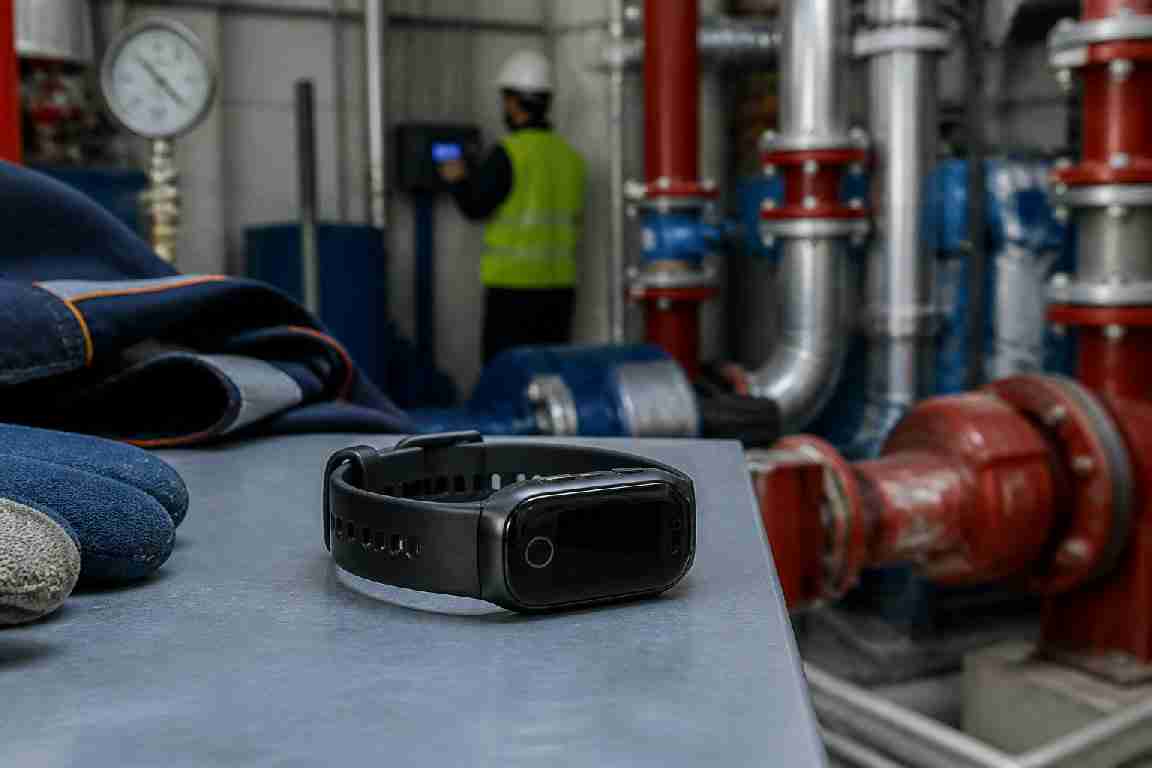
The launch of the Luffu Link health and safety band represents a significant shift in wearable technology for lone workers and high-risk personnel. Developed by the founders of Fitbit, this new LTE-enabled device aims to bridge the gap between consumer fitness tracking and professional-grade safety monitoring.
James Park and Eric Friedman, the figures behind the global success of Fitbit, have unveiled the Luffu Link through their new venture. The device is designed to function as a standalone unit, utilizing built-in LTE connectivity to eliminate the common requirement for a tethered smartphone. By integrating health sensing with real-time communication, the device targets the growing market for personal protection equipment (PPE) that prioritises both physiological data and emergency response.
For UK employers managing lone workers in sectors such as facilities management, construction, or home healthcare, the device offers a streamlined approach to monitoring staff wellbeing. The core functionality includes all-day health sensing, voice logging, and precise location awareness. These features are intended to provide a safety net for individuals working in environments where mobile phone usage is either impractical or insufficient for emergency situations.
Meeting duty of care with a health and safety band
From a compliance perspective, the introduction of this hardware addresses the perennial challenge of verifying the status of remote workers. Under UK health and safety legislation, employers have a specific duty of care to ensure that those working alone are not at a higher risk than those in a supervised environment. The ability to access “help from trusted contacts” directly from the wrist could potentially reduce response times during accidents or medical emergencies.
The health sensing aspect of the device adds a layer of preventative monitoring that traditional lone worker alarms often lack. By tracking physiological metrics throughout the day, the device may help identify signs of fatigue, heat stress, or sudden illness before they escalate into a reportable incident. This data-driven approach aligns with modern risk management strategies that favour proactive intervention over reactive emergency response.
Location awareness is perhaps the most critical component for facilities and property managers who oversee large or complex sites. In the event of a fall or a “man down” scenario, the LTE connectivity ensures that the health and safety band can transmit the user’s coordinates even if they are unable to reach for a phone or a radio. This autonomy from a secondary device is a notable improvement for workers who may find smartphones cumbersome or distracting in a technical setting.
The inclusion of voice logging also serves a practical purpose in high-compliance environments. Workers can record verbal notes or status updates, providing an audit trail of their activities or potential hazards encountered during a shift. For dutyholders, this functionality could simplify the process of gathering evidence for dynamic risk assessments or post-incident investigations.
Practical implications for facilities and risk managers
While the Luffu Link is positioned as a sophisticated safety tool, its implementation requires careful consideration by health and safety professionals. The move away from smartphone-dependent apps avoids the issues of battery drain and connectivity drops often associated with mobile software. However, the reliance on LTE means that site surveys will still be necessary to ensure signal coverage in remote areas or reinforced buildings where cellular penetration is traditionally poor.
There is also the matter of data privacy and worker buy-in. When introducing a health and safety band that monitors physiological data, employers must be transparent about how that data is stored and who has access to it. Clear policies must be established to distinguish between legitimate safety monitoring and intrusive personal tracking, ensuring that the technology supports the worker rather than creating a culture of surveillance.
For small to medium enterprises (SMEs) that may not have the budget for complex, integrated safety systems, a standalone wearable like the Luffu Link could offer a more accessible entry point. It simplifies the hardware stack required for a lone worker protection scheme, reducing the number of devices a contractor or engineer needs to carry.
The founders’ background in consumer electronics suggests that the user interface and comfort of the health and safety band will likely surpass many existing industrial safety devices. If the device is comfortable enough for all-day wear, compliance rates among staff are typically higher, leading to better overall safety outcomes across the organisation.
As the workplace continues to evolve toward more decentralised and mobile operations, the demand for integrated safety technology is set to increase. The Luffu Link enters a competitive market, but its focus on standalone connectivity and the pedigree of its creators makes it a noteworthy development for anyone responsible for the safety of a mobile workforce.