
Explore this post with your favourite AI tool:


Share this article with AI tools to summarise, remember, or explore the content further.
The appointment of a new health and safety director at Silfab Solar signals a significant shift in the company’s approach to international risk management and operational oversight. As the renewables sector faces increasing scrutiny over manufacturing standards, the role will be central to maintaining compliance across its expanding North American footprint.
Silfab Solar, a prominent player in the photovoltaic module manufacturing industry, has confirmed the appointment of a new corporate director of health and safety. The move comes at a critical juncture for the company as it ramps up production capacity and navigates the complex regulatory landscapes of the United States and Canada.
The new appointee will oversee the development and implementation of safety protocols across the firm’s manufacturing facilities. While the company has established itself as a leader in high-efficiency solar panels, the rapid scaling of its operations has necessitated a more centralised approach to occupational health and risk mitigation.
For UK-based professionals in the renewables and manufacturing sectors, the appointment highlights a broader trend: the transition from site-specific safety officers to high-level corporate oversight. The role of a health and safety director in this context is rarely just about ticking boxes; it is about embedding a culture of prevention into the supply chain and manufacturing floor.
Strategic oversight for the health and safety director
Transitioning into a corporate leadership role requires a balance between high-level strategy and the granular details of factory-floor hazards. In the solar industry, these risks are diverse, ranging from the handling of hazardous chemicals and high-voltage electrical testing to the ergonomic challenges of high-volume assembly lines.
The health and safety director will be tasked with ensuring that as Silfab Solar grows, its safety performance does not lag behind its commercial success. This involves more than just reactive monitoring of incidents; it requires a proactive audit of existing systems to ensure they remain fit for purpose as headcount increases and new technology is introduced.
Consistency across multiple sites is often the biggest challenge for any manufacturing lead. Discrepancies in how safety is managed between different facilities can lead to legal vulnerabilities and, more importantly, increased risk to personnel. The centralisation of this function suggests an effort to harmonise standards across the board.
For those managing compliance in the UK, the logic remains the same. Whether dealing with solar fabrication or general construction, the presence of a dedicated health and safety director ensures that safety isn’t treated as a secondary concern to production targets. It provides a direct line of accountability to the board, ensuring that resource allocation matches the actual risks present on site.
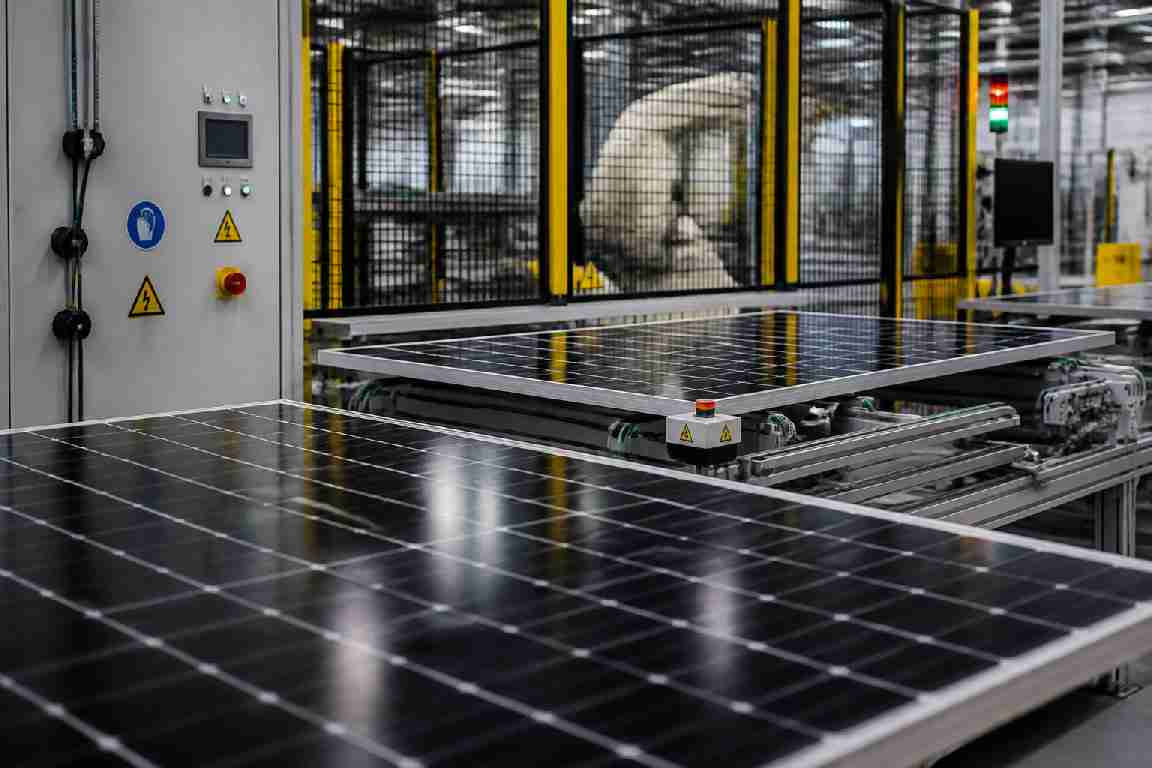
The solar manufacturing process involves specific risks that require specialist knowledge. From the management of silicon wafers to the lamination and framing processes, each stage presents unique physical and chemical hazards. Effective leadership in this area requires a deep understanding of how these technical processes interact with human factors.
Beyond the immediate physical risks, the role will also likely encompass environmental compliance. In the modern regulatory environment, health, safety, and environmental (HSE) functions are increasingly intertwined. Managing the waste streams and energy consumption of a solar plant is now considered a core part of a health and safety director remit in many global organisations.
The appointment serves as a reminder to dutyholders and business owners of the importance of competent leadership. In the UK, the Health and Safety at Work etc. Act 1974 and the Management of Health and Safety at Work Regulations 1999 place clear burdens on employers to provide adequate supervision and management. Having a qualified professional at the helm is often the most effective way to meet these legal obligations.
As Silfab Solar continues its expansion, the success of this new appointment will likely be measured by the company’s ability to maintain a low Lost Time Injury Frequency Rate (LTIFR) while hitting aggressive production milestones. It is a delicate balancing act that many in the UK industrial sector will be familiar with.
Ultimately, the move underscores the reality that in high-growth industries like renewable energy, safety must be designed into the business model, not bolted on as an afterthought. A corporate-level health and safety director provides the necessary authority to ensure that safety remains a core pillar of the company’s operational identity.



