Explore this post with your favourite AI tool:


Share this article with AI tools to summarise, remember, or explore the content further.
p>Health officials have confirmed a legionella outbreak hotel incident in Forio d’Ischia, leading to an immediate emergency closure and remediation order.
The Mayor of Forio has issued an urgent decree following the discovery of Legionella bacteria within a local hotel’s water systems. Ordinance No. 185, signed on 28 August, mandates the immediate disinfection and remediation of all water circuits at the property to protect public health and prevent further infections.
The intervention comes after routine environmental sampling or suspected clinical cases—often the trigger for such investigations in high-occupancy buildings—flagged the presence of the pathogen. Local health authorities have moved quickly to isolate the source, focusing on the complex plumbing networks that typically serve guest rooms, kitchens, and leisure facilities in such establishments.
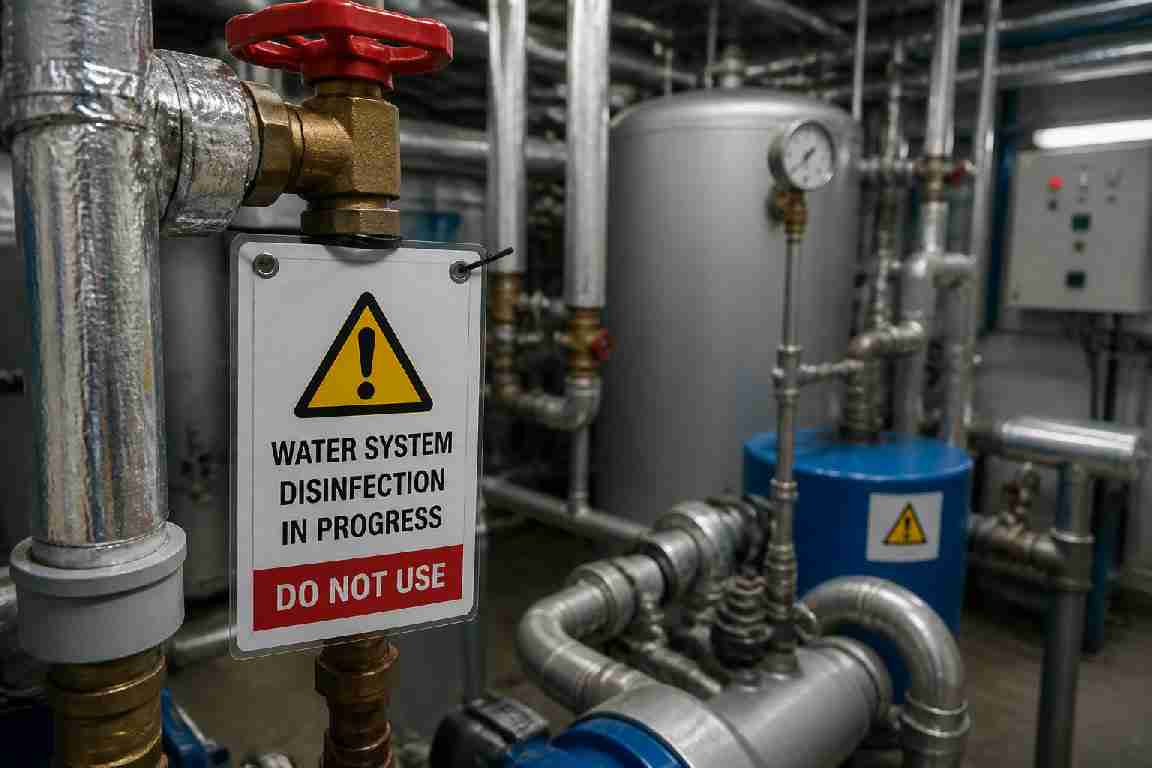
Under the terms of the emergency order, the hotel management must now carry out a comprehensive shock treatment of the water system. This usually involves thermal disinfection, raising water temperatures to levels that kill the bacteria, or chemical dosing using high concentrations of chlorine. The site will likely remain under scrutiny until follow-up testing confirms that the bacteria levels have returned to safe parameters.
Risk management lessons from the legionella outbreak hotel case
While this specific incident occurred in a popular Italian tourist destination, the technical failings that lead to a legionella outbreak hotel event are a universal concern for UK facilities managers and building dutyholders. In the UK, the legal framework under the Health and Safety at Work etc. Act 1974 and the COSHH Regulations places a strict burden on employers and landlords to manage the risk of Legionnaires’ disease.
The primary issue in hospitality settings is often the complexity of the pipework and the fluctuating occupancy levels. When rooms remain vacant for even a few days, water stagnates in the “dead legs” of the plumbing. This stagnation, combined with warm ambient temperatures, creates a perfect breeding ground for Legionella pneumophila. For UK compliance managers, this serves as a reminder that a legionella outbreak hotel scenario is rarely the result of a single failure, but rather a breakdown in routine flushing and temperature monitoring regimes.
Following the discovery, the Forio authorities have emphasised that the remediation must be “immediate.” This reflects the high stakes involved in hospitality compliance; once a pathogen is detected, the window for voluntary corrective action closes, and the matter becomes one of statutory enforcement and potential liability.
For UK-based operators, the HSE’s ACoP L8 and the technical guidance in HSG274 provide the blueprint for avoiding a legionella outbreak hotel situation. These documents stress the importance of a valid risk assessment, which must be reviewed whenever there is reason to suspect it is no longer valid—such as a change in the water system or a positive sample result.
The practical implications for the Forio hotel are significant. Beyond the immediate costs of specialist water treatment contractors, the business faces substantial reputational damage and the loss of revenue during the remediation period. In the UK, similar failures frequently result in intervention by the HSE or local authority environmental health officers, potentially leading to Improvement Notices or prosecution if systemic negligence is found.
Effective management requires more than just a periodic visit from a water treatment consultant. It demands a culture of daily and weekly checks, including monitoring flow and return temperatures at the calorifiers and ensuring that sentinel outlets (the taps furthest and nearest to the heat source) reach the required temperatures within a specific timeframe.
This incident in Forio d’Ischia underscores the fact that water safety is not a “fit and forget” aspect of property management. As the hotel begins the process of cleaning its systems and verifying the results through independent laboratory analysis, the case serves as a prompt for UK dutyholders to audit their own records and ensure their cooling towers, showers, and decorative water features are not harbouring similar risks.
The local municipality has indicated that the hotel will be closely monitored to ensure full compliance with the ordinance. Only after successful disinfection and clear test results will the building be considered safe for guests to return, highlighting the zero-tolerance approach authorities are increasingly taking toward waterborne pathogens in the built environment.