Explore this post with your favourite AI tool:


Share this article with AI tools to summarise, remember, or explore the content further.
Health officials managing the legionella outbreak navarra have confirmed that the number of infections has risen to 34, highlighting the severe risks posed by poorly maintained industrial cooling systems. This developing situation serves as a stark reminder for UK dutyholders about the speed at which Legionnaires’ disease can spread when aerosol-generating assets are not strictly controlled.
Public health authorities in the Chartered Community of Navarra, Spain, have reported that 30 of the 34 individuals affected by the cluster have required hospitalisation. Currently, two patients remain in intensive care. The spike in cases has prompted an urgent investigation into local infrastructure, focusing specifically on an industrial area situated between the municipalities of Burlada and Villava.
Investigators from the Navarra Public Health and Occupational Health Institute (ISPLN) believe they have identified the source of the bacteria. Preliminary findings point to cooling towers located within the industrial zone. While officials suggest the focus of the outbreak is now under control, the high hospitalisation rate underscores the virulence of the strain involved and the vulnerability of the local population to environmental colonisation.
Industrial cooling towers and the legionella outbreak navarra
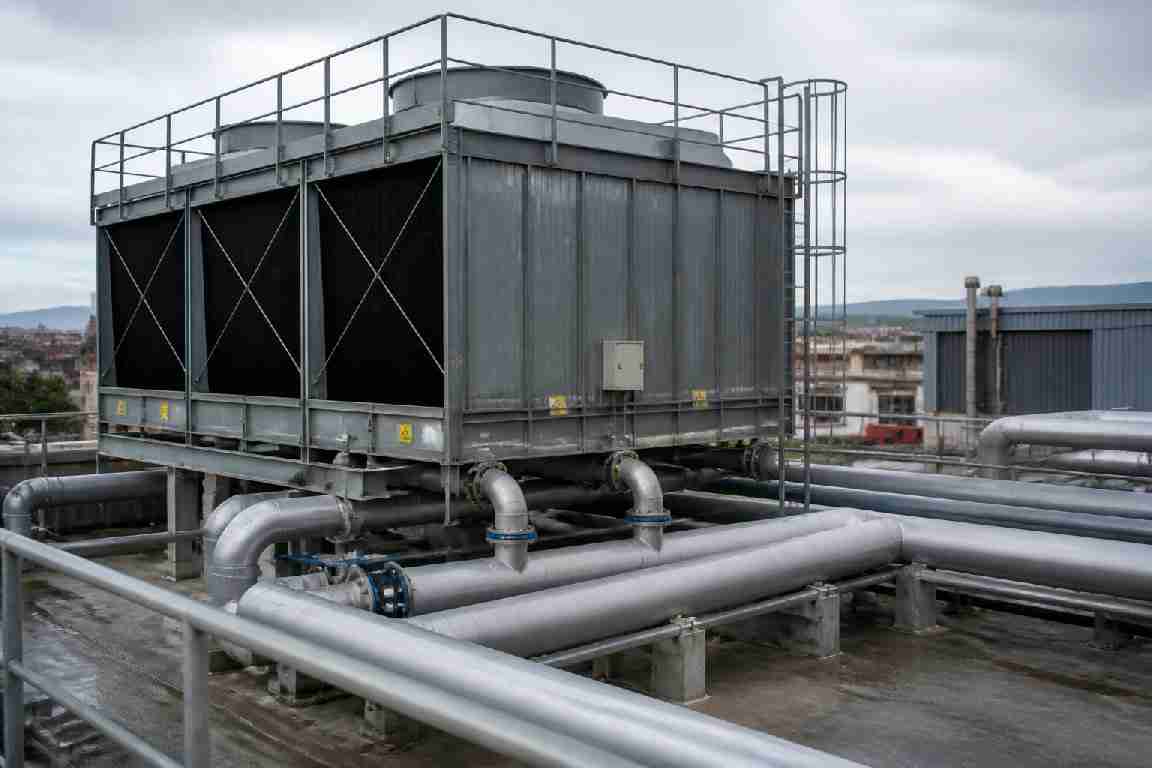
The concentration of cases in a specific geographical corridor led environmental health teams to sample several high-risk installations. Cooling towers are notorious for legionella proliferation if the water chemistry is not managed correctly. They operate by evaporating water to dissipate heat, which naturally creates an aerosol or “drift.” If Legionella pneumophila is present in the system, these fine droplets can carry the bacteria over significant distances, potentially infecting people several kilometres away depending on wind conditions.
In the legionella outbreak navarra, the proximity of the industrial estate to residential areas in Burlada and Villava appears to have been a critical factor. Health teams have implemented shock dosing and disinfection protocols at the suspected sites. The regional health department has stated that while new cases may still emerge due to the incubation period of the disease—which can be up to two weeks—the primary environmental source has been neutralised.
For UK facilities managers and building owners, this incident mirrors historical UK outbreaks where industrial cooling systems were neglected. Under the Health and Safety at Work etc. Act 1974 and the COSHH Regulations, UK dutyholders have a non-negotiable responsibility to prevent or control the risk of exposure to legionella. The Navarra incident demonstrates that a failure in a single industrial asset can have massive public health consequences and lead to significant legal and reputational fallout.
Lessons for UK dutyholders and compliance managers
While this incident is unfolding in Spain, the technical failures leading to the legionella outbreak navarra are universal. UK guidance, specifically the HSE’s ACOP L8 and the technical manual HSG274 Part 1, provides a clear roadmap for managing cooling towers. The situation in Navarra highlights why these guidelines must be followed to the letter, rather than treated as a “tick-box” exercise.
One of the most concerning aspects of the legionella outbreak navarra is the high percentage of patients requiring acute clinical care. Out of 34 confirmed cases, the fact that 30 were hospitalised suggests either a high bacterial load in the atmosphere or a particularly susceptible demographic in the affected area. This reinforces the need for site-specific risk assessments that account for “off-site” risks, including the proximity of care homes, hospitals, or dense residential housing to industrial cooling plant.
Maintenance teams should view this outbreak as a prompt to review their own cooling tower registers. In the UK, cooling towers and evaporative condensers must be notified to the local authority under The Notification of Cooling Towers and Evaporative Condensers Regulations 1992. This allows environmental health officers to quickly identify potential sources during an outbreak, much like the process seen in Navarra.
Effective control requires more than just adding chemicals; it demands a holistic approach to water hygiene. This includes regular cleaning and disinfection (usually twice a year), drift eliminator inspections, and monthly microbiological testing for aerobic counts, with quarterly testing for legionella bacteria. If a system is found to be colonised, the Navarra case shows that the time to act is measured in hours, not days.
The regional government in Navarra has confirmed that the investigation remains open as they track the recovery of the 30 hospitalised patients. As the environmental investigation concludes, the focus will likely shift to whether the owners of the cooling towers adhered to mandatory maintenance and sampling schedules. For now, the priority remains the clinical management of those in the ICU and ensuring no secondary sources remain active in the Burlada-Villava corridor.