Explore this post with your favourite AI tool:


Share this article with AI tools to summarise, remember, or explore the content further.
Focusing on physician health and safety is becoming a central priority for healthcare providers as new tools emerge to help medical teams manage workplace risks. As clinical settings face increasing pressure, the need for structured safety protocols that protect both staff and patients has never been more acute.
The Community Physician Health and Safety Program (CPHS) has recently undergone a significant expansion, introducing new features designed to streamline how medical practices handle compliance and risk management. This initiative, developed through a partnership between Doctors of BC and the Ministry of Health, serves as a dedicated resource for community-based doctors who often lack the extensive health and safety departments found in large hospital trusts.
For those managing smaller clinics or independent practices, the challenge is often finding the time to translate complex regulatory requirements into daily operational habits. These latest updates to the program aim to bridge that gap, providing practical templates and guidance that move safety away from being a “box-ticking” exercise and toward a functional part of the clinic’s culture.
Improving physician health and safety through digital integration
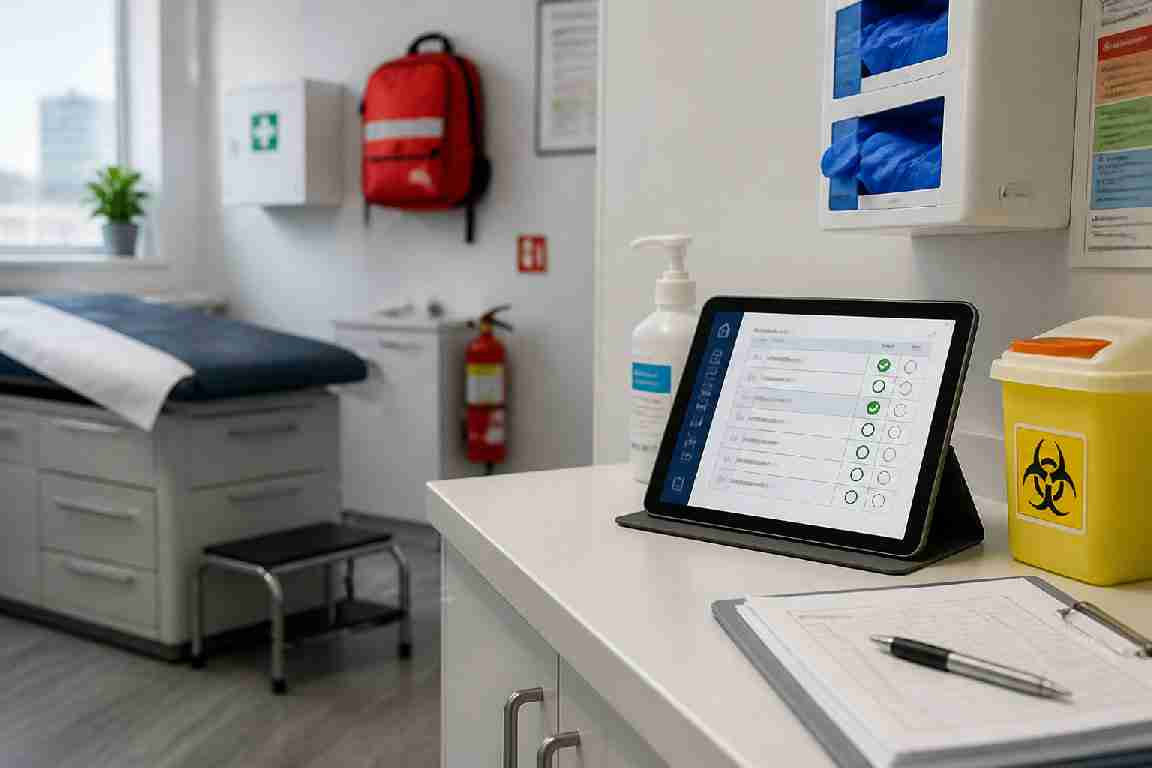
One of the primary updates to the program involves the digitisation of risk assessment tools. In any clinical environment, the range of hazards is broad, encompassing everything from sharps disposal and chemical handling to the physical security of staff working in isolation or after hours. The CPHS now offers enhanced digital checklists that allow practice managers to identify gaps in their current safety arrangements more efficiently.
The program emphasizes that physician health and safety is not just about avoiding immediate injury; it is about long-term sustainability. High levels of burnout and stress-related absences are often linked to poorly managed work environments. By providing a framework for psychological safety alongside physical risk management, the program attempts to address the holistic wellbeing of the medical workforce.
New features also include updated training modules for office staff and medical assistants. Often, the “responsible person” in a medical setting is a lead clinician who may not have formal training in health and safety legislation. These modules are designed to delegate knowledge across the team, ensuring that safety isn’t the sole burden of one individual.
The shift towards a collaborative approach reflects a broader trend in workplace compliance. When every member of a team understands their role in maintaining a safe environment, the likelihood of a significant incident decreases. This is particularly relevant in community clinics where the layout and high volume of patient footfall can create unique logistical challenges for fire safety and emergency egress.
Applying safety principles to community clinical settings
From a compliance perspective, the updates to the CPHS highlight a growing recognition that community practices need bespoke support. While larger healthcare facilities have dedicated facilities managers to oversee asbestos registers, Legionella testing, and fire risk assessments, independent practitioners often have to manage these duties themselves while balancing patient care.
The program’s new tools help practitioners document their safety efforts more effectively. In the event of an inspection or a workplace incident, having a clear paper trail—or digital log—of risk assessments and staff training is vital. It demonstrates that the dutyholder has taken reasonable steps to ensure the safety of employees and visitors alike.
Effective physician health and safety management requires a proactive rather than reactive mindset. The updated CPHS resources include “safety huddle” guides—short, structured briefings that teams can use to discuss potential hazards before they lead to an accident. This encourages staff to speak up about near-misses, which are often the best indicators of a future systemic failure.
Furthermore, the program now includes specific guidance on environmental risks within the practice. This covers everything from the correct storage of hazardous substances to ensuring that ventilation systems are adequate for the procedures being performed. For building owners and landlords who lease space to medical professionals, these guidelines provide a useful benchmark for what a safe clinical tenancy should look like.
Practitioners are also being encouraged to look at the ergonomics of their workspace. Long hours spent in repetitive tasks or poorly designed consulting rooms can lead to musculoskeletal issues. By integrating ergonomic assessments into the physician health and safety framework, the program helps prevent the long-term physical strain that often leads to early retirement or reduced working hours among medical professionals.
The focus on physician health and safety also extends to the physical security of the premises. As incidents of verbal and physical aggression toward healthcare staff rise, the CPHS has introduced new protocols for de-escalation and clinic security. These resources help practices evaluate their physical layout to ensure there are clear exit routes for staff and that panic alarms or communication systems are fit for purpose.
Ultimately, the success of these new program features depends on engagement at the local level. Health and safety shouldn’t be seen as an external imposition, but as a core component of high-quality patient care. When the team feels safe and supported, the quality of clinical outcomes inevitably follows. The CPHS continues to evolve, with further updates expected as more practices provide feedback on the utility of these new digital tools.