Explore this post with your favourite AI tool:


Share this article with AI tools to summarise, remember, or explore the content further.
Health officials are investigating a legionella outbreak in New York that has resulted in multiple infections and at least two fatalities. The incident highlights the ongoing risk posed by poorly maintained water systems in high-density urban environments and the critical importance of rigorous cooling tower management.
Authorities in New York City have confirmed a cluster of Legionnaires’ disease cases, sparking a public health investigation into the source of the bacteria. The New York City Department of Health and Mental Hygiene (DOHMH) is currently monitoring several patients who have presented with symptoms of severe pneumonia, while environmental health teams have been deployed to sample local water systems, including cooling towers and potable water supplies.
This latest legionella outbreak serves as a reminder that even in cities with advanced infrastructure, the risk of Legionella pneumophila colonising man-made water systems remains a constant threat. While the specific source of this cluster has not yet been definitively identified, the investigation is focusing on buildings with shared air conditioning systems and large-scale plumbing networks that could aerosolise contaminated water droplets.
Understanding the source of a legionella outbreak
Legionnaires’ disease is a severe form of pneumonia caused by the inhalation of fine water mists containing Legionella bacteria. It is not generally spread from person to person; instead, it is an environmental hazard. The bacteria thrive in warm water between 20°C and 45°C, particularly where there is scale, sediment, or biofilm to provide nutrients.
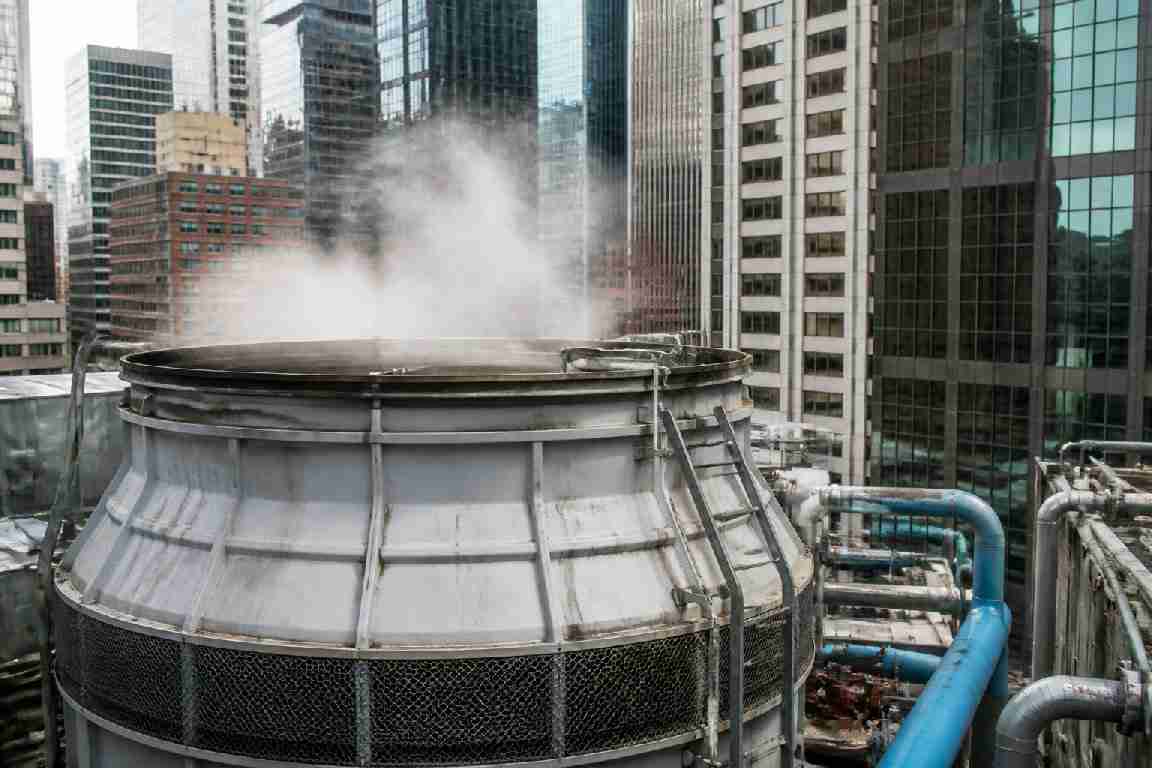
In the New York context, cooling towers are frequently implicated in large-scale events. These units, which are used to dissipate heat from large buildings, can create a plume of aerosolised water that travels significant distances. If the water treatment regime within the tower fails, the bacteria can multiply rapidly. When the tower operates, it effectively sprays these bacteria into the surrounding atmosphere, where they can be inhaled by residents, workers, or passers-by.
For those managing buildings in the UK, the risks are identical. While the regulatory framework differs, the biology of the bacteria does not. Whether it is a cooling tower, a decorative fountain, or a complex hot and cold water system in a hospital or hotel, the absence of effective temperature control and biocidal treatment can lead to a significant public health incident.
Compliance lessons for UK dutyholders
For UK facilities managers and property owners, a legionella outbreak in another major international city provides a moment to reflect on local compliance. Under the Health and Safety at Work etc. Act 1974 and the Control of Substances Hazardous to Health (COSHH) Regulations, UK employers and those in control of premises have a clear legal duty to manage the risk of Legionella.
The HSE’s Approved Code of Practice L8 (ACoP L8) and the technical guidance in HSG274 set out the expectations for dutyholders. This involves carrying out a site-specific risk assessment, appointing a competent person to oversee the management regime, and maintaining a written scheme of control. Crucially, it also requires detailed record-keeping. In the event of an investigation, the ability to prove that testing, cleaning, and maintenance have been carried out is the primary defence for any responsible person.
One of the challenges highlighted by the New York cases is the speed at which a situation can escalate. By the time symptoms appear in the community—usually between two and ten days after exposure—the bacteria may have already reached high concentrations in the source system. This lag time makes proactive sampling and temperature monitoring essential rather than reactive.
Practical steps for risk mitigation
Building managers should ensure that their risk assessments are not just “tick-box” exercises but active documents that reflect the current state of the building. If occupancy levels have changed, or if certain wings of a building are rarely used, the risk of water stagnation increases. Stagnant water is a primary breeding ground for the bacteria, and dead legs in plumbing systems must be identified and removed or flushed regularly.
Maintenance teams should pay particular attention to:
• Regular temperature monitoring: Ensuring hot water is stored at 60°C and distributed so it reaches at least 50°C at outlets, while cold water is kept below 20°C.
• Cooling tower hygiene: Ensuring that towers are cleaned and disinfected at least twice a year and that automated chemical dosing systems are functioning correctly.
• Showerhead descaling: Periodic cleaning of showerheads and hoses to prevent the buildup of scale and biofilm where bacteria can hide.
The situation in New York remains fluid as investigators work to match environmental samples with clinical samples from the affected patients. This process, often involving genomic sequencing, allows health officials to pinpoint the exact cooling tower or water source responsible for the legionella outbreak, providing a clear link between a maintenance failure and the resulting illness.
As the investigation continues, the focus for the local health department will be on ensuring all high-risk systems in the affected zone are disinfected. For the wider property and compliance industry, it serves as a sobering prompt to review current water safety plans and ensure that the “responsible person” fully understands their obligations. Failure to manage these systems does not just lead to regulatory intervention; as the New York case demonstrates, it can have fatal consequences.