Explore this post with your favourite AI tool:


Share this article with AI tools to summarise, remember, or explore the content further.
Health officials have confirmed legionella bacteria found at Sporthal Oostzaan during routine water quality monitoring, leading to the immediate closure of showering facilities. The discovery has triggered a series of remediation measures as the site operators work to bring the water system back within safety limits.
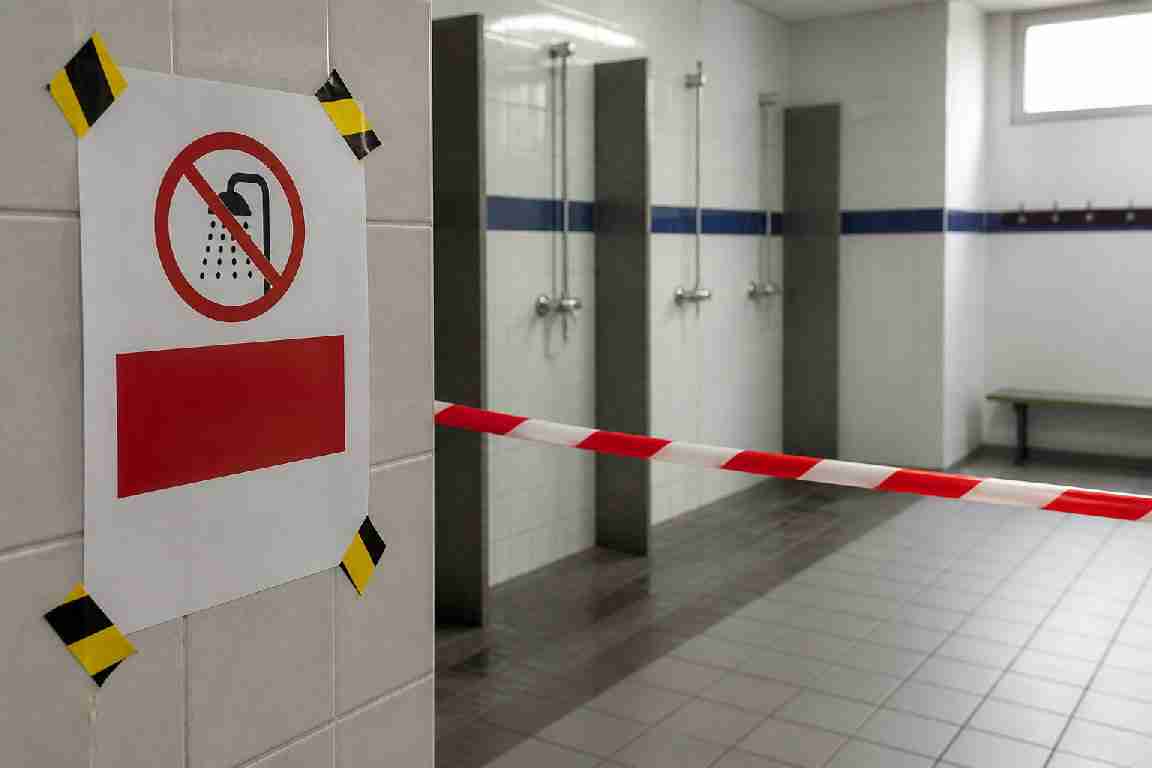
The contamination was identified following a scheduled inspection of the sports hall’s water supply. While the facility remains open for sporting activities, the showers have been decommissioned as a precautionary measure to protect users from the risk of Legionnaires’ disease. This respiratory infection is typically contracted by inhaling small droplets of water suspended in the air which contain the bacteria.
Following the initial detection, the management team at the sports hall initiated a deep clean and disinfection of the system. However, subsequent testing indicated that the issue persists. Results from the most recent samples are expected to take between eight and ten days to process, a standard timeframe for laboratory cultivation of the bacteria to determine exact colony-forming unit (CFU) counts.
The impact of legionella bacteria found in public leisure facilities
For facilities managers and dutyholders, the situation at Sporthal Oostzaan highlights the difficulties of eradicating contamination once it has taken hold in a complex plumbing network. Initial cleaning cycles do not always reach every dead leg or biofilm-coated pipe, which is why follow-up sampling is a non-negotiable part of the recovery process. Until the lab results confirm the water is safe, the risk of aerosolisation in a shower environment is considered too high for public use.
The local municipality and the sports hall management have stated that the showers will only be reopened once the water quality meets the stringent standards required for public health. In the meantime, signage has been posted throughout the building to inform athletes and visitors of the restrictions. The rest of the building’s taps, which do not produce the same level of fine mist as showers, are often managed through different risk profiles, though caution remains the priority.
This incident serves as a reminder of the importance of temperature control and regular flushing. In many sports facilities, water usage can be intermittent, particularly in areas where certain changing rooms are used less frequently than others. This stagnation, combined with temperatures that fall within the “danger zone” of 20°C to 45°C, creates an ideal environment for legionella bacteria found in domestic hot and cold water systems to multiply.
Managing the risk of stagnant water
Under UK health and safety frameworks, such as the HSE’s ACOP L8 and HSG274, dutyholders are required to maintain a written scheme of control. While this specific case is based in the Netherlands, the technical challenges faced by the site team are identical to those managed by UK facilities managers. When legionella bacteria found in a system exceed threshold levels, the immediate priority is always the cessation of high-risk activities—specifically anything that creates an aerosol.
The remediation process often involves thermal disinfection, where water is heated to high temperatures and flushed through every outlet, or chemical dosing using chlorine or chlorine dioxide. The fact that the sports hall requires further testing suggests that the initial cleaning may not have fully penetrated the biofilms where the bacteria thrive. Biofilms act as a protective layer, shielding the bacteria from heat and chemicals, which is why a single “shock” treatment is not always a permanent fix.
For those responsible for building compliance, the delay caused by laboratory turnaround times is often the most frustrating part of an outbreak response. Legionella testing requires a culture period where the bacteria are grown on agar plates; there is no shortcut to this process if a reliable count is required to prove the system is safe for the public. Relying on rapid DIY test kits can provide an early warning, but they rarely carry the legal weight of a UKAS-accredited laboratory report when deciding to reopen a public facility.
Lessons for dutyholders and property managers
The situation in Oostzaan underscores the need for robust record-keeping and a proactive maintenance regime. When legionella bacteria found in a water system result in facility closures, the financial and reputational impact can be significant. It is far more cost-effective to invest in regular temperature monitoring and monthly flushing of sentinel outlets than it is to manage a full-scale contamination event and the subsequent loss of service.
Property managers should also consider the age and design of their plumbing. Older buildings often have redundant pipework or oversized storage tanks that encourage stagnation. If a system is difficult to clean or repeatedly fails tests, it may be time to consider physical modifications, such as removing dead legs or updating thermostatic mixing valves (TMVs) to ensure they are not harbouring growth close to the point of discharge.
As the management at Sporthal Oostzaan awaits the results of the latest round of samples, the showers will remain off-limits. The case remains a practical example of why water safety cannot be a “fit and forget” aspect of building management. Compliance requires constant vigilance, regular testing, and a ready-to-act response plan for when things go wrong.