Explore this post with your favourite AI tool:


Share this article with AI tools to summarise, remember, or explore the content further.
A legionella risk assessment sits at the centre of a new Spanish standard that tightens expectations on prevention, system design and ongoing control in building water services.
The updated UNE 100030:2026 standard has been presented as a fresh step in Legionella control, with greater emphasis on risk evaluation, preventative measures and the design of centralised hot water installations. For dutyholders in the UK, the detail is a reminder that water hygiene is not just about paperwork but about how systems are specified, run and maintained.
Although the standard comes from Spain, the direction of travel will feel familiar to UK building owners, facilities managers and compliance teams. The focus is on reducing risk before a system is commissioned, and on making sure the way a plant is designed does not create avoidable conditions for bacterial growth later on.
legionella risk assessment and system design
The headline change in UNE 100030:2026 is the stronger link between legionella risk assessment and the actual design of installations. That matters because poor design decisions can make even a well-managed system harder to keep under control, particularly where stored water, dead legs, uneven temperatures or irregular use are involved.
The standard also refers to prevention, the evaluation of risk and the design of centralised domestic hot water systems, which suggests a more joined-up approach than relying on routine treatment alone. In practical terms, that means thinking about the installation at specification stage, not waiting until a problem appears in samples or records.
For those managing larger buildings, the message is straightforward: if the system layout makes cleaning, flushing or temperature control awkward, the compliance burden only gets heavier. A legionella risk assessment should reflect those design features, not just list them after the fact.
What the update is trying to address
Legionella problems are often traced back to conditions that develop over time rather than a single failure. Water stagnation, inconsistent use, unsuitable materials, weak monitoring and poorly planned plant rooms can all play a part.
By placing more weight on design, UNE 100030:2026 appears to recognise that prevention starts well before handover. That will be relevant to consultants, contractors and asset managers who are involved in refurbishments, extensions or the replacement of hot water services in occupied buildings.
It also reinforces a point UK dutyholders already know well: a legionella risk assessment is only as good as the system it describes. If the building keeps changing, the assessment and controls need to change with it.
Why this matters for UK dutyholders
UK employers, landlords, responsible persons and property managers will not be bound by this Spanish standard, but the principles behind it mirror the approach expected in good practice here. Water systems need to be assessed, controlled and reviewed by competent people, with records that show the site has been thought through rather than simply signed off.
That is especially important in offices, residential blocks, healthcare settings, education buildings and mixed-use properties where water is stored, recirculated or left idle for periods. The combination of occupancy patterns and building complexity can quickly undermine control measures if the risk assessment is out of date.
“The new UNE 100030:2026 standard updates Legionella prevention, risk assessment, PSLs and the design of centralised domestic hot water installations…”
The reference to PSLs underlines that the standard is not just about broad policy but about the practical limits and controls built into a system. For managers, that is a useful reminder that compliance is about day-to-day operation, not just having a file on the shelf.
Practical implications for buildings and plant rooms
For facilities teams, the obvious lesson is to check whether installation design still matches how the building is used. A system that looked fine on paper can become problematic if parts of the building are mothballed, usage drops, or alterations create blind spots in circulation and maintenance access.
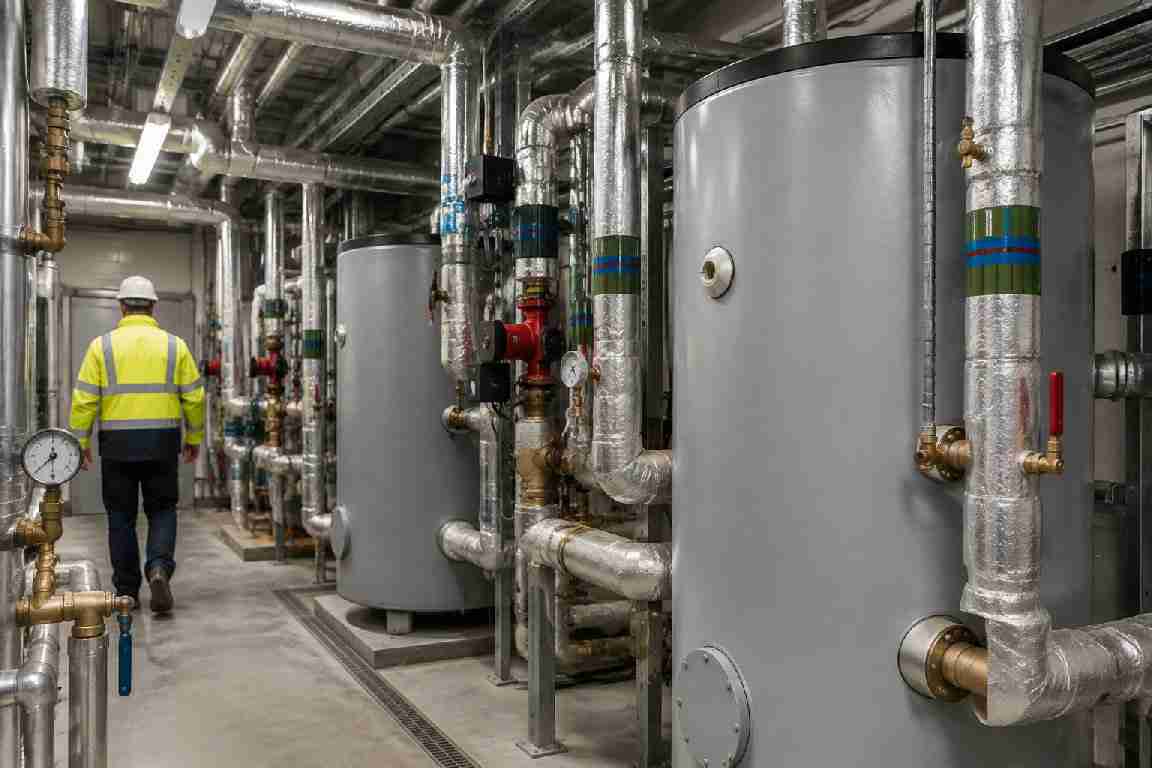
Contractors and consultants involved in design or refurbishment should also expect more scrutiny of how water systems are arranged from the outset. Access for inspection, ease of cleaning, control of temperature and the avoidance of dead legs are all issues that can shape future compliance as much as installation quality does.
Where a site already has recurring water hygiene issues, the answer may not be more treatment alone. A fresh legionella risk assessment may identify the need for physical changes to the plant or distribution system, along with clearer monitoring routines and better record keeping.
For landlords and managing agents, the practical takeaway is to make sure Legionella control is not separated from wider building management. Changes to occupancy, refurbishments, void periods and maintenance arrangements should all feed back into the assessment and the control scheme.
A reminder to keep control measures current
The broader significance of UNE 100030:2026 is that it treats Legionella prevention as a design and management issue together, rather than a narrow testing exercise. That approach is likely to resonate with UK compliance teams already under pressure to keep water systems safe, documented and responsive to change.
In that sense, the new standard adds weight to a familiar message: a legionella risk assessment should be treated as a live management tool, not a one-off report. Where buildings, plant or use patterns change, the controls need to be reviewed at the same pace.