Explore this post with your favourite AI tool:


Share this article with AI tools to summarise, remember, or explore the content further.
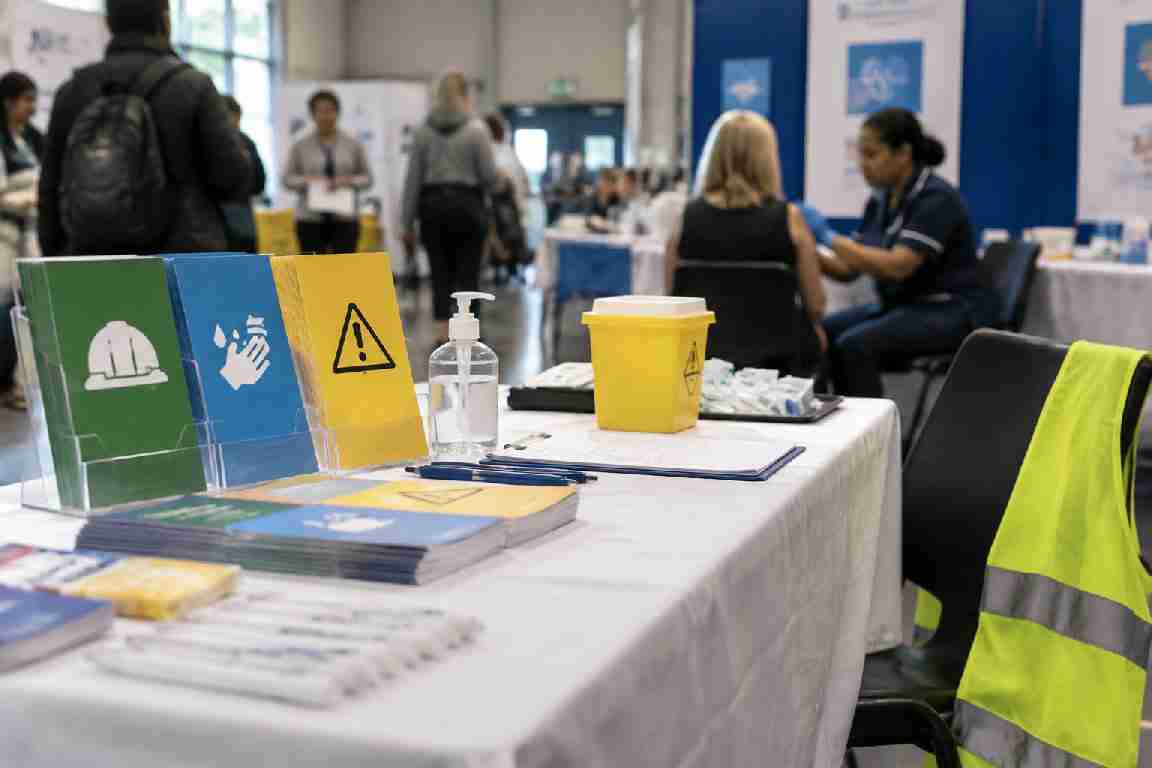
health and safety resources were handed out at a recent Health Connect festival, where visitors could also access free screenings and vaccinations. For employers, landlords and facilities managers, it is a reminder that simple on-site provision can still play a part in keeping people well and reducing avoidable absence.
A community health festival offered attendees a mix of free checks and practical advice, with organisers providing flu shots, blood donation opportunities, mammogram screenings and general safety information.
The event, billed as Health Connect, brought together a range of services under one roof. Alongside the clinical checks, participants were able to pick up information aimed at helping people stay safe, with the emphasis on making access straightforward and immediate.
health and safety resources on offer
Although the source material gives only limited detail, the shape of the event will be familiar to anyone responsible for workplace welfare or site management. Easy-to-access health and safety resources tend to work best when they are visible, practical and available at the point people need them, rather than buried in a policy folder or intranet page that few staff ever open.
That approach matters in workplaces, residential buildings and public-facing sites alike. Whether the issue is seasonal flu, first aid awareness, infection control or basic personal safety, people are more likely to act when the support is simple to find and clearly explained.
Why this matters beyond the festival setting
For employers and dutyholders, events like this underline a point that often gets lost in day-to-day compliance work: health protection is not just about paperwork. It also depends on practical access to services, visible signposting and a culture where people feel able to engage with the help available.
In offices, depots, care settings, hospitality premises and larger managed buildings, that can mean better use of occupational health services, clearer seasonal flu campaigns, more effective wellbeing communications and easier routes to raise concerns. Where people are working long shifts or moving between sites, even basic health and safety resources can make a noticeable difference to attendance and resilience.
There is also a facilities management angle. Site teams are often the people closest to day-to-day welfare issues, from poor ventilation and minor slips risks to questions about hygiene arrangements and access to medical help. A well-run building usually makes these things obvious rather than relying on staff to ask twice.
Practical lessons for workplaces and buildings
The event format is a useful reminder that people tend to use support when it is delivered in a way that fits into their routine. In a workplace or managed property, that might mean brief toolbox talks, noticeboards that are actually kept up to date, seasonal health campaigns, or arranging occupational health input where there is a clear need.
It also points to the value of keeping health and safety resources current. Old leaflets, outdated contact details and generic guidance that does not match the site are of limited use. Dutyholders and managers should be checking that the information people rely on is specific to the setting, easy to understand and linked to the right person or team if something needs reporting.
For landlords, responsible persons and building managers, the same principle applies to shared spaces. If people are expected to use a building safely, they need clear information on the basics: who to contact, what to do in an emergency, where to find welfare arrangements and how to report a problem before it turns into a bigger one.
A simple reminder about everyday prevention
Not every compliance issue is dramatic. Often, the difference between a well-managed site and a neglected one is whether the basics are being reinforced and refreshed. Events such as Health Connect show that people respond when information is accessible and the process is simple.
That is as true for workplace health campaigns as it is for fire safety notices, maintenance reporting, hygiene arrangements or other routine controls. The underlying message is straightforward: good compliance depends not only on written procedures, but on whether people can actually use the health and safety resources placed in front of them.