Explore this post with your favourite AI tool:


Share this article with AI tools to summarise, remember, or explore the content further.
Understanding legionella bacteria symptoms is vital for any dutyholder responsible for managing water safety within a commercial or residential property. Failure to identify these indicators early can lead to severe outbreaks of Legionnaires’ disease, placing both occupants and the business at significant risk.
Legionella remains one of the most persistent biological risks for UK facilities managers and building owners. Found naturally in environmental water sources, the bacteria become a serious health threat when they colonise man-made water systems, such as cooling towers, hot and cold water services, and spa pools. When these systems are poorly maintained, they provide the ideal conditions for the bacteria to multiply and become aerosolised.
The primary concern for health and safety professionals is Legionnaires’ disease, a severe form of pneumonia caused by inhaling small droplets of water containing the bacteria. While many people exposed to the bacteria do not fall ill, those with underlying health conditions, smokers, and the elderly are at a much higher risk of developing life-threatening complications.
Recognising legionella bacteria symptoms in the workplace
For those managing sites, it is important to understand that the initial signs of infection often mirror other respiratory illnesses. Typically, legionella bacteria symptoms begin to appear between two and ten days after exposure, though in some cases, the incubation period can be longer. Early indicators usually include a high fever, chills, and a persistent cough.
As the infection progresses, the patient may experience muscle aches and significant headaches. Because these symptoms are non-specific, they are frequently mistaken for heavy flu or standard pneumonia. However, if an employee or tenant reports these issues alongside chest pains or shortness of breath, and there is a known issue with water temperatures or stagnant pipes on-site, immediate investigation is required.
In addition to respiratory distress, some individuals may suffer from gastrointestinal issues, including nausea and diarrhoea. Confusion or other mental changes can also occur, particularly in older patients. Recognising these signs early is not just a matter of public health; it is a critical trigger for a building’s emergency water management plan.
The risks of Pontiac fever
Not every exposure to the bacteria results in full-blown Legionnaires’ disease. A milder, flu-like illness known as Pontiac fever can also occur. While this condition does not typically result in pneumonia and is rarely fatal, it still presents a significant disruption to the workplace and indicates a failure in water hygiene controls.
Pontiac fever usually resolves on its own without specific medical treatment, but its presence in a workforce is a major “near miss” indicator. It suggests that the bacterial load in the water system has reached a level where it is actively affecting human health. Any uptick in flu-like complaints should prompt a review of the building’s L8 risk assessment and recent sampling results.
Compliance duties for UK landlords and employers
Under the Health and Safety at Work etc. Act 1974 and the Control of Substances Hazardous to Health (COSHH) Regulations, employers and those in control of premises have a legal duty to manage the risk of Legionella. The HSE’s Approved Code of Practice L8 (ACoP L8) sets out the framework for identifying and controlling these risks.
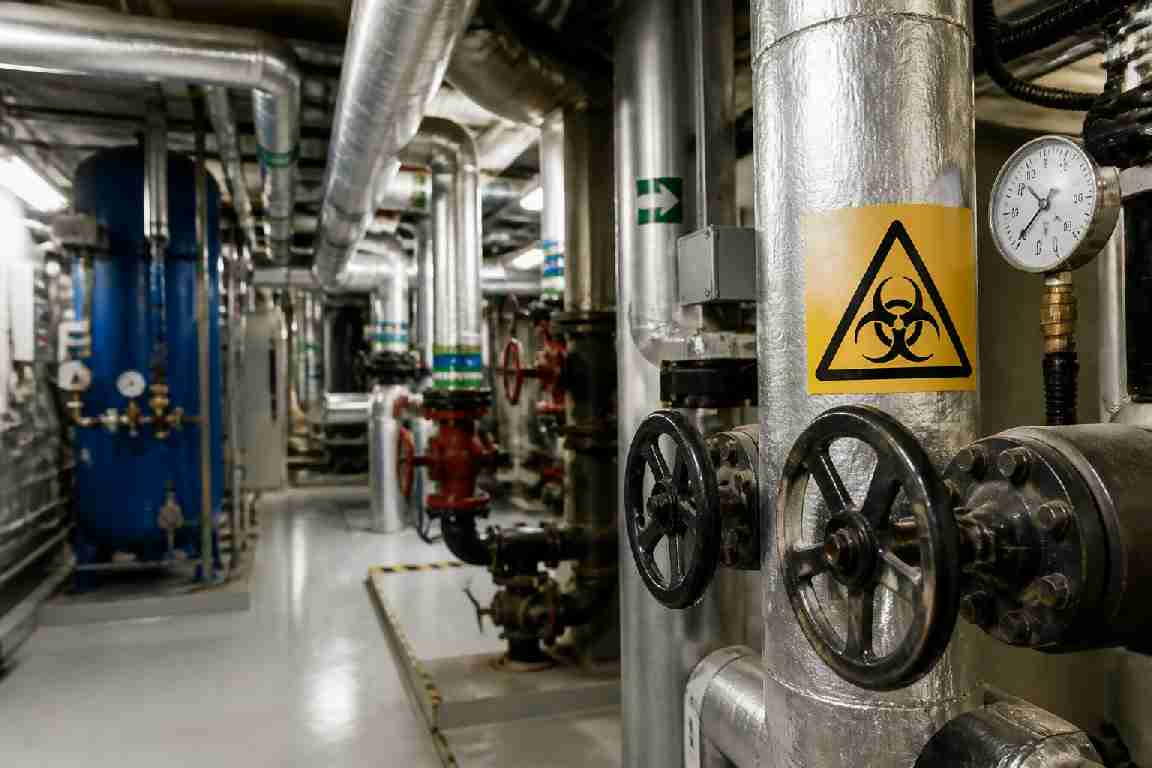
A central part of this duty is the appointment of a “Responsible Person” who has the authority and knowledge to ensure that control measures are implemented. This involves regular temperature monitoring—ensuring hot water is stored above 60°C and distributed above 50°C, while cold water remains below 20°C. Stagnation is another major risk factor, meaning that infrequently used outlets must be flushed weekly to prevent the buildup of biofilm where the bacteria thrive.
If a building manager becomes aware that someone has developed legionella bacteria symptoms, they must act quickly to isolate the suspected source. This often involves shutting down cooling towers or closing off specific zones of a plumbing system until professional sampling and disinfection can be carried out. Documentation is key here; keeping a robust logbook of all maintenance and testing is the best defence in the event of an inspection or legal claim.
Managing the practical implications of water safety
The reality of property management is that water systems are rarely perfect. Older buildings often contain “dead legs”—lengths of pipework that lead nowhere—which are notorious breeding grounds for bacteria. Identifying these through a professional risk assessment is the first step in long-term compliance. Removing redundant pipework is far more effective than relying on chemical dosing alone.
Contractor management also plays a huge role. Facilities teams must ensure that any plumbers or water treatment specialists working on-site are competent and understand the specific requirements of the building’s water safety plan. Changes to a system, such as installing new showers or TMVs (Thermostatic Mixing Valves), can inadvertently create new risks if they are not commissioned correctly.
Educating staff and residents about legionella bacteria symptoms is another practical step, particularly in high-risk environments like care homes or healthcare facilities. While you do not want to cause unnecessary alarm, ensuring that people know to report symptoms if they have been using a specific facility can lead to much faster intervention and potentially save lives.
Ultimately, water safety is an ongoing process of monitoring and adjustment. By maintaining strict temperature controls, eliminating stagnation, and ensuring that all dutyholders are aware of the risks, the likelihood of a major incident is significantly reduced. Compliance should never be seen as a “tick-box” exercise, but as a fundamental part of providing a safe environment for everyone who enters the building.