Explore this post with your favourite AI tool:


Share this article with AI tools to summarise, remember, or explore the content further.
The effectiveness of legionella infection controls is under scrutiny following reports that a firefighter has been hospitalised after contracting the bacteria. Investigators are now working to identify the source of the infection, focusing on both the individual’s workplace and his private residence.
Health officials from the local health authority, Asfo, have launched an environmental investigation at the San Vito al Tagliamento fire station in Pordenone. The move comes after a member of the crew fell ill with a confirmed case of Legionnaires’ disease, a severe form of pneumonia caused by inhaling small droplets of water containing the legionella bacteria. The firefighter is currently receiving treatment in hospital, though his specific condition has not been disclosed.
The investigation is following a dual-track approach. While the fire station is a primary site of interest due to the nature of the facilities and the number of personnel sharing the building, the firefighter’s home is also being sampled. This is standard procedure in sporadic cases where the point of exposure is not immediately obvious, as domestic plumbing systems can often harbour the bacteria if temperatures are not correctly maintained or if outlets are infrequently used.
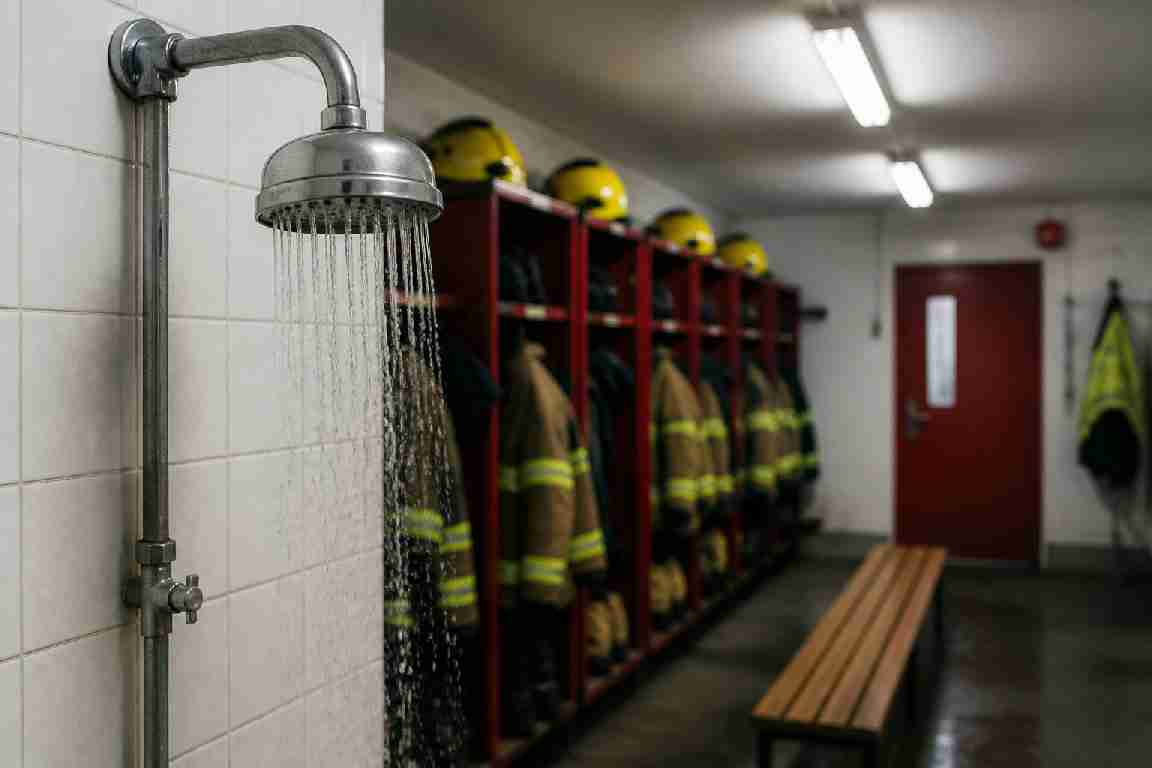
At the fire station, technicians are sampling showerheads, taps, and any water storage tanks. These are common flashpoints for bacterial growth, particularly in buildings where occupancy levels vary or where certain parts of the water system might experience stagnation. For the fire service, the potential for an outbreak within a station presents a significant operational risk, potentially sidelining multiple emergency responders if the water system is found to be colonised.
Evaluating the breakdown of legionella infection controls
For UK dutyholders and facilities managers, this case serves as a reminder that even high-profile public service buildings are not immune to water safety failures. When a case of Legionnaires’ disease is linked to a workplace, the focus quickly shifts to the adequacy of the existing legionella infection controls and whether the written scheme of precautions was actually being followed on the ground.
In the UK, the legal framework under the Health and Safety at Work etc. Act 1974 and the COSHH Regulations requires employers and those in control of premises to identify and assess sources of risk. If the investigation in Pordenone finds that the fire station’s water system was the source, the inquiry will likely look at maintenance logs, temperature monitoring records, and the frequency of showerhead descaling.
The challenge for many emergency service buildings, much like large offices or healthcare facilities, is the complexity of the pipework. Dead legs—sections of pipe leading to nowhere or to unused appliances—are notorious for allowing water to sit and warm up to the “danger zone” between 20°C and 45°C, where legionella thrives. If legionella infection controls do not include a comprehensive schematic of the system to identify these areas, the risk remains hidden until someone falls ill.
Another factor often overlooked is the role of the “responsible person.” In a fire station environment, where the focus is naturally on reactive emergency response, the routine tasks of flushing low-use outlets or recording calorifier temperatures can sometimes slip through the cracks. However, as this case demonstrates, the consequences of a lapse in water hygiene can be just as dangerous to personnel as the hazards they face in the field.
For those managing similar sites, the immediate takeaway is the importance of the risk assessment review. A risk assessment is not a static document; it must be updated whenever there is a change to the system or, crucially, when there is reason to suspect it is no longer valid. A confirmed infection is the most serious indicator that the current legionella infection controls have failed or were never sufficient to begin with.
The results of the laboratory tests in Pordenone are expected in the coming days. These tests involve culturing water samples, a process that takes time but provides a definitive “fingerprint” of the bacteria. If the strain found in the firefighter matches the strain found in the station’s showers, the health authority will likely mandate a full system disinfection, typically involving thermal shock treatment or high-level chlorination.
Until the source is confirmed, the fire station remains under observation. This incident highlights that legionella is not just a concern for cooling tower operators or large hotels; any building with a complex water system and communal facilities requires a disciplined approach to water safety. Ensuring that legionella infection controls are practical and consistently applied is the only way to prevent a single case from turning into a wider site outbreak.