Explore this post with your favourite AI tool:


Share this article with AI tools to summarise, remember, or explore the content further.
Health authorities are currently investigating a significant legionella outbreak affecting multiple districts in the Navarre region of Spain, with 31 suspected cases identified so far. The surge in infections has prompted an urgent review of local water systems and cooling towers to identify the source of the bacteria.
Public health officials in Navarre have confirmed that the cases are concentrated in Burlada and Villava, as well as several neighbourhoods across Pamplona. While the investigation is ongoing, authorities have warned that the number of confirmed infections may rise in the coming days due to the disease’s incubation period, which typically lasts between two and ten days.
The regional health department, Salud, has mobilised environmental health teams to conduct extensive sampling of high-risk installations. This includes checking industrial cooling systems, decorative fountains, and large-scale irrigation networks that could potentially aerosolise the bacteria and expose the public.
Rapid response to the legionella outbreak
The scale of the cluster has triggered a high-level response from environmental health inspectors. Teams are currently mapping the movements of those infected to find a common geographic point of exposure. In many urban cases, the culprit is often found to be a poorly maintained cooling tower or a public water feature that has not been adequately disinfected.
Health officials have stressed that while new cases are appearing, this does not necessarily mean the source of the legionella outbreak is still active. Because symptoms can take up to a fortnight to manifest, many of the patients being admitted now likely inhaled the bacteria a week or more ago, potentially before initial control measures were even put in place.
Local businesses and facility managers in the affected areas have been advised to review their maintenance logs. In these types of investigations, the focus quickly turns to dutyholders who are responsible for the safe operation of water systems. Any equipment found to be colonised with Legionella pneumophila will likely face immediate shutdown and mandatory chemical shock treatment.
Lessons for UK dutyholders and facilities managers
For UK-based facilities managers and building owners, this incident serves as a stark reminder of how quickly a localised maintenance failure can escalate into a public health crisis. Under the Health and Safety at Work etc. Act 1974 and the specific requirements of ACoP L8, the responsibility for preventing such an event rests squarely with the designated dutyholder and the “competent person” appointed to oversee water safety.
A legionella outbreak of this size usually indicates a systemic failure in a high-risk water system. In the UK, the HSE and local authorities take a dim view of firms that cannot produce up-to-date risk assessments or evidence of regular temperature monitoring and biocidal treatment. When 31 people fall ill, the investigation will not just look at the water chemistry; it will look at the culture of compliance within the organisation managing the asset.
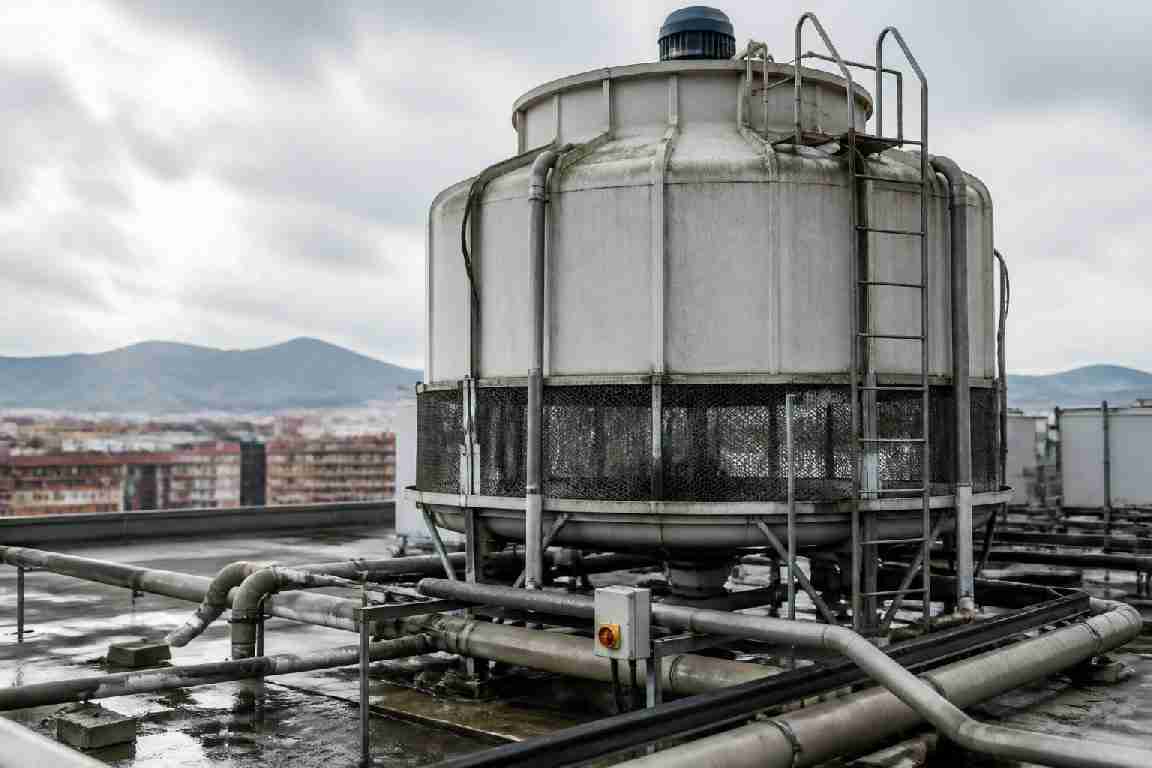
The Spanish authorities are focusing on aerosol-generating systems, which is exactly where UK compliance efforts should lead. Cooling towers remain the highest risk due to their ability to spread contaminated drift over a wide area, potentially miles from the source depending on wind conditions. However, increasingly, complex hot and cold water systems in large residential or commercial blocks are being identified as culprits in urban clusters.
Managing the risks of aerosol transmission
One of the primary challenges in containing a legionella outbreak is the delay between exposure and diagnosis. By the time a cluster is identified by public health surveillance, the window for environmental sampling can sometimes be missed if a system has been flushed or turned off. This is why proactive compliance is the only reliable defence.
Dutyholders must ensure that all water systems are included in a written scheme of control. This isn’t just a paperwork exercise; it requires a physical understanding of the pipework, the identification of “dead legs” where water can stagnate, and a rigorous regime of cleaning and disinfection. For those managing properties in densely populated areas, the stakes are significantly higher, as a single poorly managed cooling unit can affect thousands of residents.
As the investigation in Pamplona continues, the focus will remain on clinical care for the 31 individuals affected. For the wider property and FM sector, the takeaway is clear: water safety is not a “set and forget” task. If the source in Navarre is found to be a commercial or industrial site, the legal and reputational fallout for the owners will be substantial.
Health officials in the region have not yet ordered a blanket shutdown of all public fountains, but they continue to monitor the situation closely. Further updates are expected as laboratory results from the environmental samples become available, which will hopefully pinpoint the exact strain and source of the bacteria.