Explore this post with your favourite AI tool:


Share this article with AI tools to summarise, remember, or explore the content further.
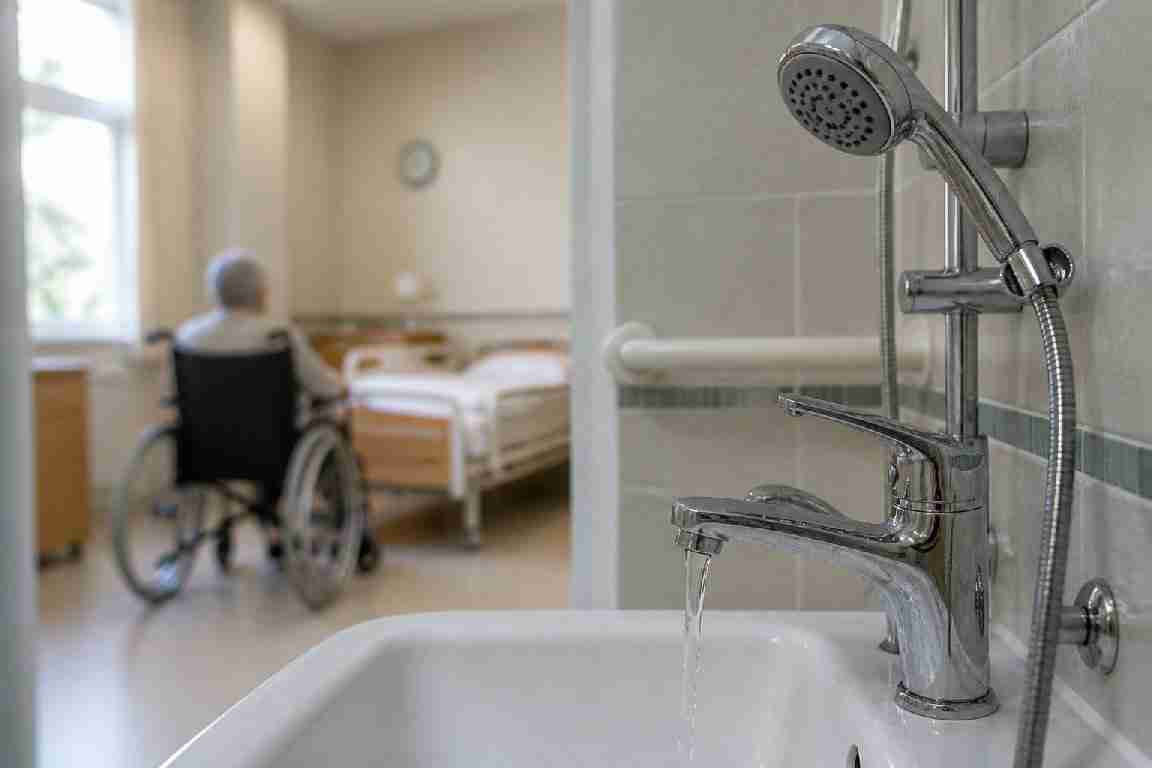
Health officials are investigating a serious legionella outbreak at the Pescaiola residential care facility following the hospitalisation of a 91-year-old resident. The incident highlights the severe risks associated with water system management in high-vulnerability environments where residents are most at risk of contracting Legionnaires’ disease.
The elderly resident remains in a critical condition and is under observation in hospital after testing positive for the bacteria. Local health authorities from the Asl Toscana Sud Est Public Health and Hygiene Service have launched a full epidemiological investigation to identify the source of the contamination within the care home’s infrastructure.
Specialist technicians have been deployed to the site to carry out environmental sampling and water testing. While the investigation is ongoing, the facility has been required to implement immediate safety measures to prevent further exposure to residents, staff, and visitors. The focus of the probe is currently on the domestic hot and cold water systems, which are the most common breeding grounds for the bacteria in residential settings.
Risk management lessons from the latest legionella outbreak
For UK facilities managers and dutyholders in the care sector, this incident serves as a stark reminder of why water hygiene remains a top-tier compliance priority. In a residential care setting, the “susceptible population” isn’t just a theoretical risk category; it is the entire demographic of the building. The 91-year-old patient in this case represents the exact profile of individual most likely to suffer life-threatening complications from inhaling contaminated water droplets.
When a legionella outbreak occurs in a care home, the margin for error is non-existent. The bacteria thrive in stagnant water between 20°C and 45°C, meaning that any part of a complex plumbing system that is not regularly flushed or maintained at the correct temperature becomes a potential source of infection. In large buildings like the Pescaiola facility, “dead legs” in the pipework or rarely used guest bathrooms are often the culprits.
The investigation by the local hygiene service will likely look at the maintenance logs and temperature monitoring records of the facility. If the water temperatures were not consistently kept above 60°C at the calorifier and distributed so that it reaches 50°C at the outlets within one minute, the bacteria could have easily colonised the system.
Regulatory expectations for vulnerable settings
In the UK, the Health and Safety Executive (HSE) is incredibly clear about the expectations for those managing residential care. Under the L8 Approved Code of Practice and HSG274 guidance, dutyholders must have a written scheme for controlling the risk of legionella. This isn’t just a document to sit on a shelf; it must be a living management plan that includes regular temperature checks, showerhead descaling, and periodic sampling where necessary.
The Pescaiola case demonstrates the speed at which a legionella outbreak can escalate into a clinical crisis. Once the bacteria are detected and a person is ill, the local authority or health regulator will usually demand an immediate bypass or shutdown of certain water services, the installation of point-of-use filters, or a full system disinfection. These reactive measures are significantly more expensive and disruptive than a proactive maintenance regime.
For those responsible for building safety, the primary lesson here is the importance of the risk assessment. A standard domestic-style assessment is rarely sufficient for a care home. The complexity of the thermostatic mixing valves (TMVs)—which are required to prevent scalding but can also encourage bacterial growth if not serviced—requires a specialist level of oversight.
As the investigation in Italy continues, the facility remains under close scrutiny. The outcome of the environmental samples will determine whether the site requires a thermal shock treatment or chemical intervention. For now, the priority remains the health of the infected resident and the safety of the remaining 90-plus individuals living within the home.
This incident reinforces the reality that water safety is not a “fit and forget” aspect of property management. Constant vigilance, accurate record-keeping, and a deep understanding of the building’s specific water assets are the only ways to prevent similar tragedies. Compliance professionals should use this news to review their own flushing regimes and ensure that all staff, including housekeeping and maintenance teams, understand their role in preventing a legionella outbreak.