Explore this post with your favourite AI tool:


Share this article with AI tools to summarise, remember, or explore the content further.
Managing legionella risk effectively requires a precise understanding of how water systems are configured, as even well-intentioned plumbing modifications can create dangerous conditions. A recent case involving a domestic property owner discovering two water heaters wired in series has highlighted the technical pitfalls that can lead to bacterial growth and system inefficiency.
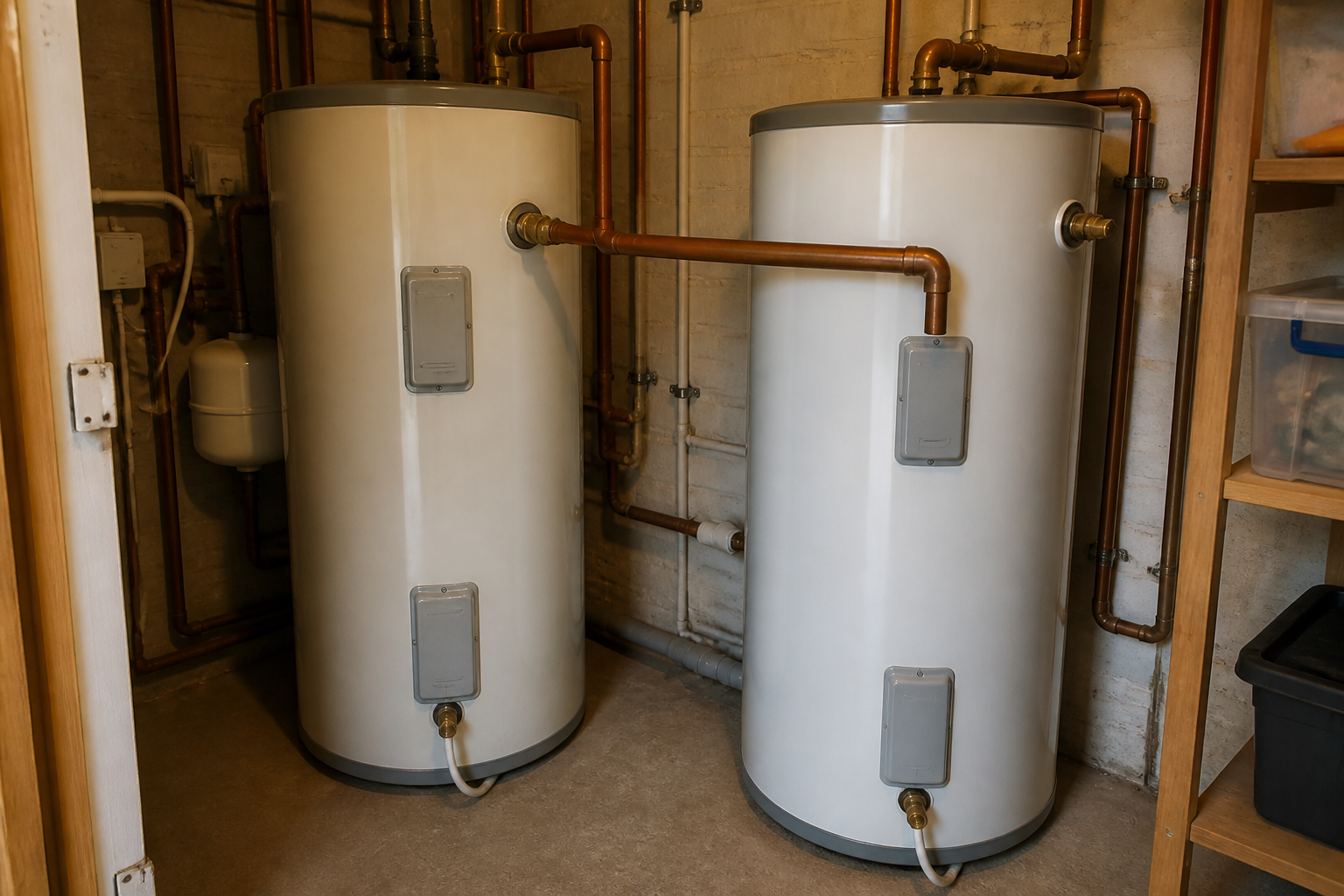
When a new property owner investigated the plumbing in their home, they discovered a non-standard setup where two water heaters were piped in series. While the intention may have been to increase the volume of available hot water, plumbing professionals have warned that this configuration creates a significant imbalance in the system, potentially turning the second tank into a breeding ground for Legionella bacteria.
The layout in question pipes the heated output of the first unit directly into the cold intake of the second. In theory, this provides a larger thermal store, but in practice, it often results in the first heater doing all the heavy lifting while the second remains stagnant or fails to maintain the consistent high temperatures required to kill off pathogens. This “series” approach is increasingly frowned upon in comparison to parallel installations or properly sized single-unit systems.
The mechanics of legionella risk in domestic and commercial tanks
For those responsible for building safety, the primary concern with tanks in series is the temperature of the water sitting in the secondary vessel. If the first heater is operating at its limit, the water entering the second tank may have already cooled slightly. If that second tank is not firing its own heating elements frequently, the temperature can drop into the “danger zone”—typically between 20°C and 45°C—where Legionella bacteria thrive.
Industry experts pointing out the flaws in this setup noted that the first heater is inevitably overworked. Because it is constantly dealing with the influx of cold mains water, its components scale up and wear out much faster than intended. Meanwhile, the second unit may never reach the sustained temperatures needed for thermal disinfection, especially if water is drawn off before the second tank has had a chance to recover. This lack of turnover and inconsistent heating significantly increases the legionella risk within the property’s internal distribution system.
One professional commenting on the discovery noted the futility of the arrangement: “You’ll overwork the first one and there’s no actual gain.” This sentiment reflects a consensus among experienced engineers that such “DIY” or non-standard configurations often bypass the basic principles of safe water storage and delivery.
Implications for dutyholders and property managers
While this specific case arose in a residential setting, the lessons are directly applicable to facilities managers and landlords overseeing small commercial premises or HMOs. In many older UK properties, it is common to find systems that have been “bolted on” or modified over decades by different contractors. If a site has not undergone a recent, thorough assessment, these hidden plumbing quirks can remain undetected for years.
Under the HSE’s ACoP L8 and HSG274 guidance, dutyholders are required to identify and assess sources of risk. A water system that incorporates redundant storage or “dead legs” created by poor piping runs is a major non-compliance. In the case of heaters in series, the second tank can effectively act as a large-scale dead leg if its thermostat is not calibrated correctly to work with the first unit, or if the flow rate through the system is too low to ensure total water replacement.
For compliance managers, this serves as a reminder that “more” is not always “better” when it comes to water storage. Larger volumes of stored water increase the burden of monitoring and maintenance. If a building’s hot water demand has changed, the correct response is a redesigned system—likely involving a single, high-recovery cylinder or a parallel configuration that ensures equal flow and temperature across all units.
Identifying and rectifying plumbing anomalies
The discovery of this setup was only made after a proactive inspection by the new owner. In a professional context, such an anomaly should be caught during a routine legionella risk assessment or during a pre-planned preventative maintenance (PPM) visit by a competent plumber. Those managing properties should ensure their contractors are not just checking temperatures at the tap, but are actually inspecting the plant room or cupboard to understand the system’s schematic.
If a series configuration is identified, the immediate priority is to verify that the water in both tanks is reaching at least 60°C. If the second tank is consistently failing to reach this threshold, or if the thermal gain is negligible, the system should be reconfigured. Most experts recommend a parallel setup, where cold water enters both heaters simultaneously and hot water is drawn from both at an equal rate. This ensures that no single part of the system becomes a stagnant reservoir.
Ultimately, addressing the legionella risk associated with poor system design is about ensuring the “three pillars” of water safety: temperature control, the avoidance of stagnation, and the minimisation of scale and corrosion. Non-standard installations like the two-heater series setup compromise all three, creating a liability for the building owner and a potential health hazard for the occupants.