Explore this post with your favourite AI tool:


Share this article with AI tools to summarise, remember, or explore the content further.
Efforts to improve workplace mental health have taken a step forward with the launch of a new certification scheme specifically designed for higher-risk sectors. Wellness Workdays has introduced the BRAVE Certified Workplace programme, aiming to bridge the gap between traditional safety protocols and psychological well-being in industries such as construction and manufacturing.
The initiative, known as Building Resilience, Awareness, Value, and Engagement (BRAVE), is designed to address the specific stressors found in industrial environments. While corporate wellness programmes often focus on office-based staff, this certification targets the unique challenges faced by site-based workers, where factors like seasonal work, physical strain, and high-pressure deadlines contribute to significant mental health risks.
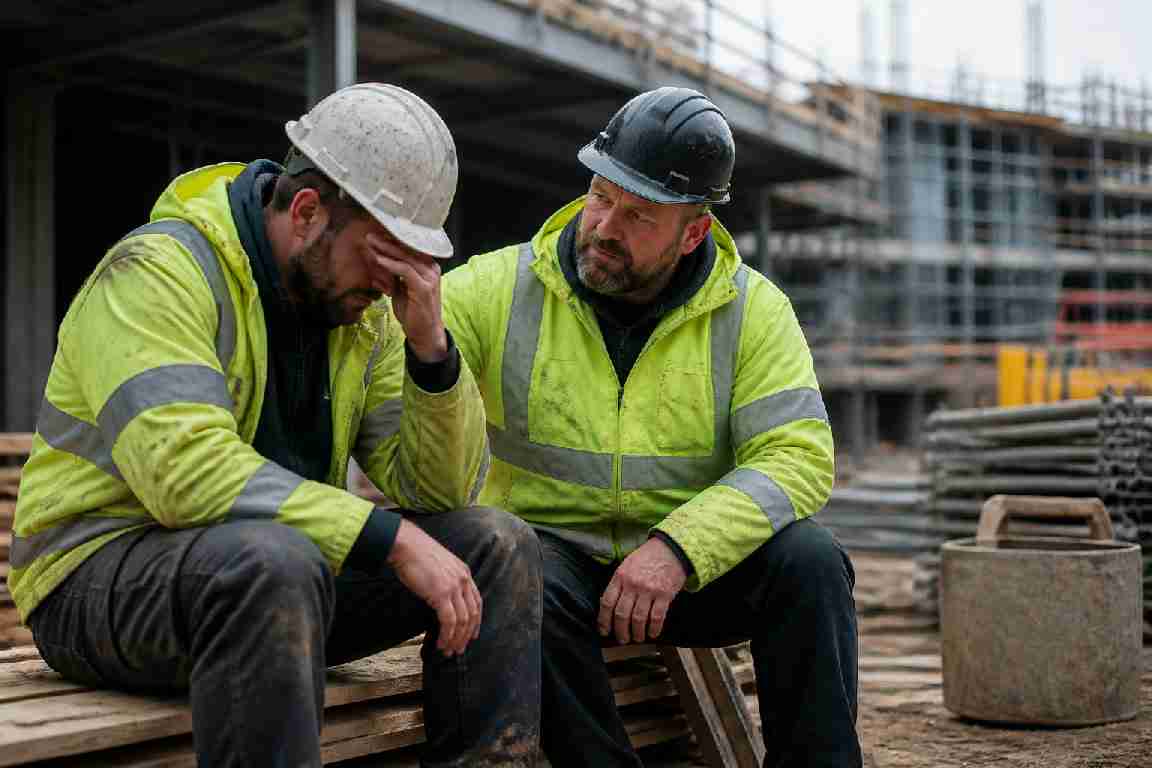
For UK dutyholders and safety professionals, the development reflects a broader shift in how occupational health is managed. The construction sector, in particular, has long struggled with high rates of depression and suicide, often linked to the “macho” culture that can prevent workers from seeking help. The BRAVE programme attempts to formalise mental health support by integrating it into the core culture of the business rather than treating it as an optional extra.
Addressing the unique challenges of workplace mental health in high-risk sectors
The certification process involves a comprehensive assessment of a company’s existing culture and safety practices. It looks beyond basic mental health first aid, focusing instead on how leadership, communication, and work-life balance are managed on the ground. By creating a structured framework, the programme provides employers with a roadmap to improve psychological safety alongside physical site safety.
In the UK context, this aligns with the Health and Safety Executive’s (HSE) ongoing focus on work-related stress. While the HSE’s Management Standards provide a foundation for managing these risks, many firms struggle with the practical implementation of these standards in a fast-paced construction or industrial setting. Certification schemes like BRAVE offer a way for companies to demonstrate that they are actively managing the “health” part of Health and Safety.
Wellness Workdays suggests that the programme is not just about employee well-being, but also about operational efficiency. Unmanaged mental health issues often manifest as increased absenteeism, higher staff turnover, and, crucially, an increased risk of physical accidents. When a worker is distracted or suffering from chronic stress, their ability to identify hazards or follow strict safety procedures is compromised.
From a compliance perspective, managing workplace mental health is no longer a “nice-to-have” element of a business strategy. In the UK, the Health and Safety at Work etc. Act 1974 requires employers to ensure, so far as is reasonably practicable, the health, safety, and welfare of their employees. This duty explicitly includes mental health. Furthermore, the Management of Health and Safety at Work Regulations 1999 require employers to assess the risks of work-related stress.
Facilities managers and property owners also have a stake in this shift. A contractor’s culture directly impacts the safety and quality of work delivered on-site. If a principal contractor or a specialist subcontractor has a robust approach to workplace mental health, it can lead to better safety outcomes for the entire project. Many large-scale developers are now looking for evidence of these cultures when vetting their supply chains during the procurement process.
The BRAVE certification focuses on four key pillars: resilience, awareness, value, and engagement. Resilience involves equipping workers with the tools to handle the inherent pressures of industrial work. Awareness focuses on reducing the stigma associated with mental health struggles. Value refers to the feeling that an employee’s contribution is recognised, while engagement ensures that workers are actively involved in the safety and wellness decisions that affect them.
For many UK small and medium-sized enterprises (SMEs), implementing such a framework can seem daunting. However, the move toward certification suggests that the industry is looking for standardised ways to measure success. Much like ISO 45001 provides a standard for occupational health and safety management systems, programmes like this aim to provide a benchmark for psychological safety.
As the construction and manufacturing industries continue to face a skills shortage, the ability to promote a supportive workplace mental health culture becomes a competitive advantage. Workers are increasingly looking for employers who take their total well-being seriously, and clients are looking for partners who can deliver projects without the hidden costs of poor mental health, such as delays caused by unexpected absences or safety incidents.
The arrival of industry-specific certifications marks a change in the maturity of the sector. It acknowledges that a one-size-fits-all approach to wellness does not work when one half of the workforce is in a boardroom and the other is on a scaffold or a production line. By focusing on the specific needs of industrial workers, these programmes aim to make mental health support as standard as a hard hat or high-vis vest.