Explore this post with your favourite AI tool:


Share this article with AI tools to summarise, remember, or explore the content further.
A lower temperature heat network can change legionella risk, because water that sits in the wrong range gives bacteria more of a chance to grow. For building operators, that shifts the focus from simple hot-water assumptions to tighter control of temperatures, storage and circulation.
A low-temperature district heating system needs a different approach to legionella control, according to the technical discussion behind a recent Dutch industry piece on the subject. The core issue is straightforward: once water temperatures move into the band where bacteria can multiply, the usual comfort that comes with “hot” systems starts to disappear.
Legionella control has always depended heavily on temperature, and that remains true in modern heat networks. The article notes that Legionella pneumophila, the species most relevant to human health, can begin to grow at around 27 to 28°C.
That matters because low-temperature systems are designed to operate efficiently at far lower temperatures than conventional hot water installations. If parts of a network, storage vessel or domestic pipework spend too long in the growth range, the legionella risk is no longer just a theoretical issue for designers; it becomes an operational problem for whoever manages the building.
Low-temperature systems and legionella risk
The challenge with low-temperature heat networks is that they can create more opportunities for water to linger in a range that supports bacterial growth. That does not automatically mean a system is unsafe, but it does mean the assumptions used on older hot-water systems may no longer hold.
For landlords, housing providers, FM teams and other dutyholders, the practical question is whether the system keeps water moving and whether temperatures are being managed properly at every stage. If a system is designed around energy efficiency without enough thought for hygiene control, the legionella risk can be built in from the start.
In UK terms, that usually means looking closely at the risk assessment, the system design and the maintenance plan rather than relying on a one-off check. It also means making sure the people setting the controls understand how low-temperature operation affects water hygiene.
Why temperature control still matters
The source material is clear that temperature remains the main factor. That is not new, but it is easy to lose sight of it when buildings are being upgraded or connected to newer heat networks, especially where energy performance is driving the project.
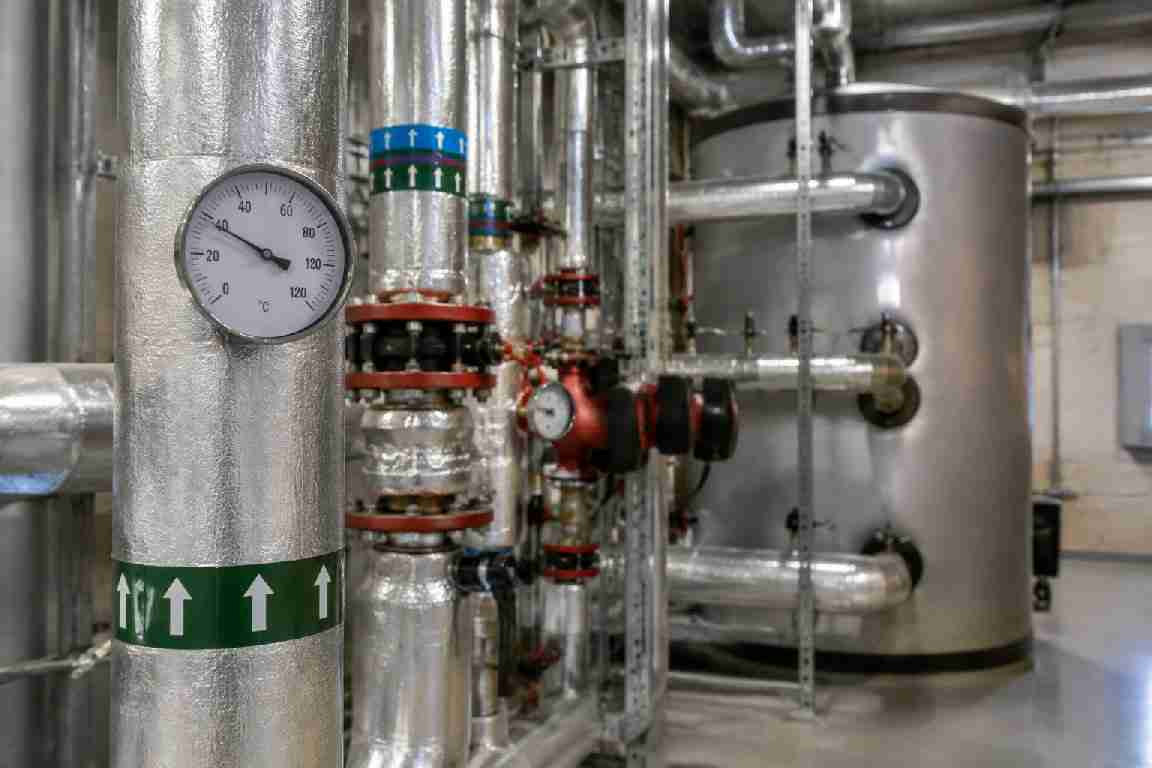
In a well-managed system, temperature should not drift into the band where Legionella can multiply for long periods. That requires more than a thermostat setting on a plant room wall. It depends on actual temperatures in stored water, return lines, outlets and any sections of pipework where water may stagnate.
Where domestic hot water is produced from a low-temperature source, the design has to compensate for the fact that the supply itself may not stay hot enough to suppress bacteria. That may involve local boosting, better circulation, limiting dead legs and checking whether the system can be flushed and monitored properly.
What dutyholders should be reviewing
For those responsible for buildings and workplaces, the article is another reminder that legionella risk control is not just a box-ticking exercise. Systems that looked acceptable in a conventional boiler-based setup may behave very differently once connected to a lower temperature network.
That has practical implications for responsible persons, landlords and facilities managers. They should be checking whether the original design information matches how the system is now being used, whether there have been any alterations to occupancy or demand, and whether control measures still suit the actual operating temperatures.
Regular monitoring also becomes more important. If temperatures are drifting, if water is sitting unused, or if parts of the network are intermittently heated, the risk profile changes. Those are the sorts of issues that can easily be missed if the maintenance routine is too generic.
“Bij Legionella is vooral de temperatuur van belang.”
That simple point is the part most relevant to compliance teams: if temperature is the main driver, then documentation needs to show how it is being controlled. Records of inspections, remedial work and checks on outlets and storage arrangements help show whether the legionella risk has been understood rather than assumed away.
Implications for building design and operation
The broader message is that energy-efficient heating and good water hygiene need to be designed together, not treated as separate jobs. A lower-temperature network can work well, but only if the water system is arranged so bacteria do not get the warm, still conditions they need.
That will be of interest to anyone involved in new-build schemes, retrofit projects, building management or the handover of plant and services. Designers may need to think harder about circulation, temperature loss and usage patterns, while operators need to watch for the quieter failings that develop after occupation begins.
For contractors, the issue is equally practical. If they are modifying pipework, changing controls or working on hot water assets, they should understand how their work affects the wider hygiene regime. Poor alterations can create dead ends, weaken circulation and increase legionella risk even when the system otherwise appears to be functioning normally.
In that sense, the article is less about a new rule than a reminder that heat networks are changing the old habits of building services. As lower-temperature systems become more common, the people responsible for them will need to be more deliberate about temperature monitoring, system design and ongoing maintenance if they want to keep legionella risk under control.